Expert commentary, technical guides, and project highlights from London's leading drone team.
After a storm, every roofer in London is booked, scaffolders are booked, and your insurer wants evidence of damage you cannot see or reach. An aerial inspection produces dated, high resolution proof in under an hour.
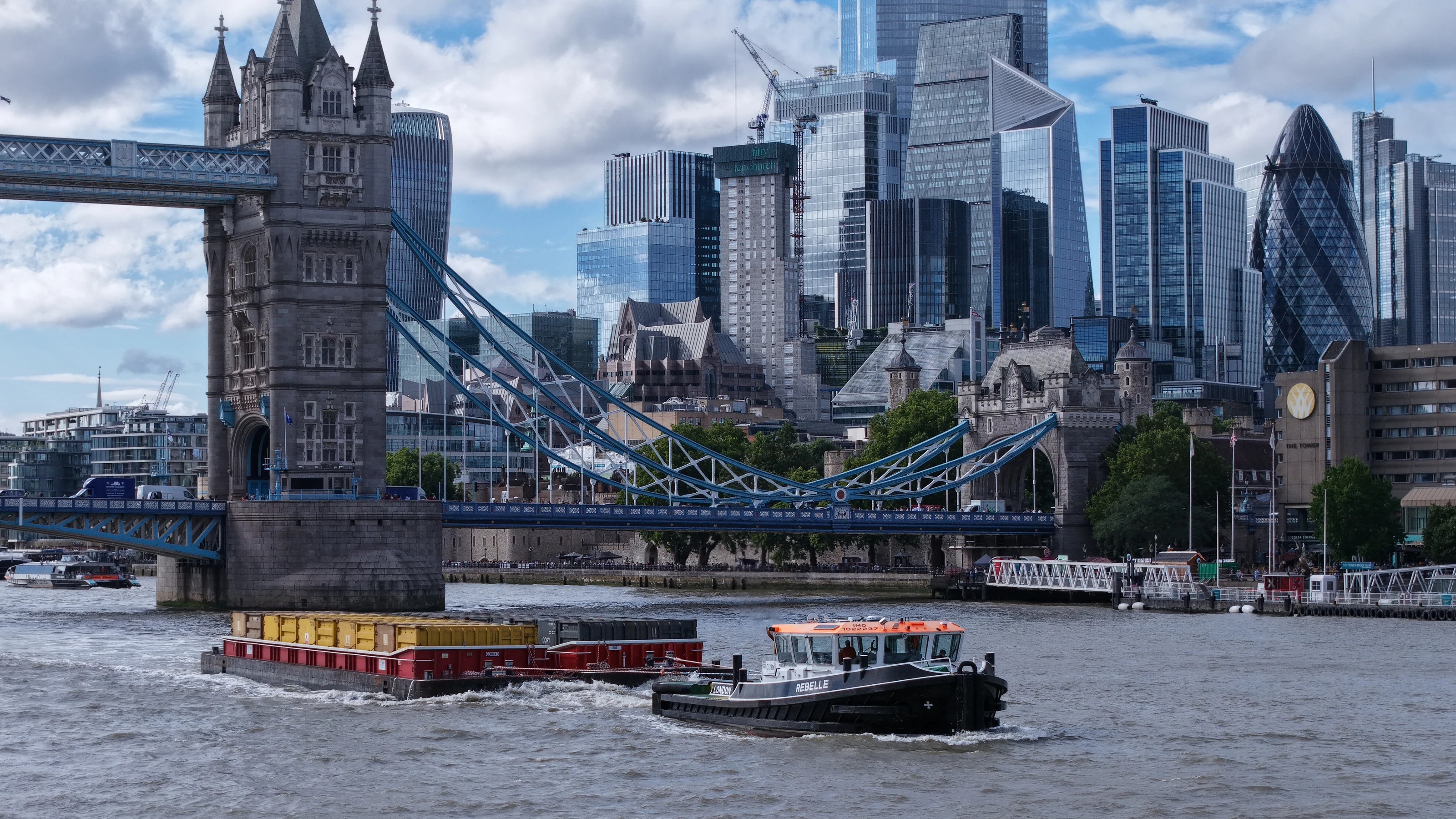
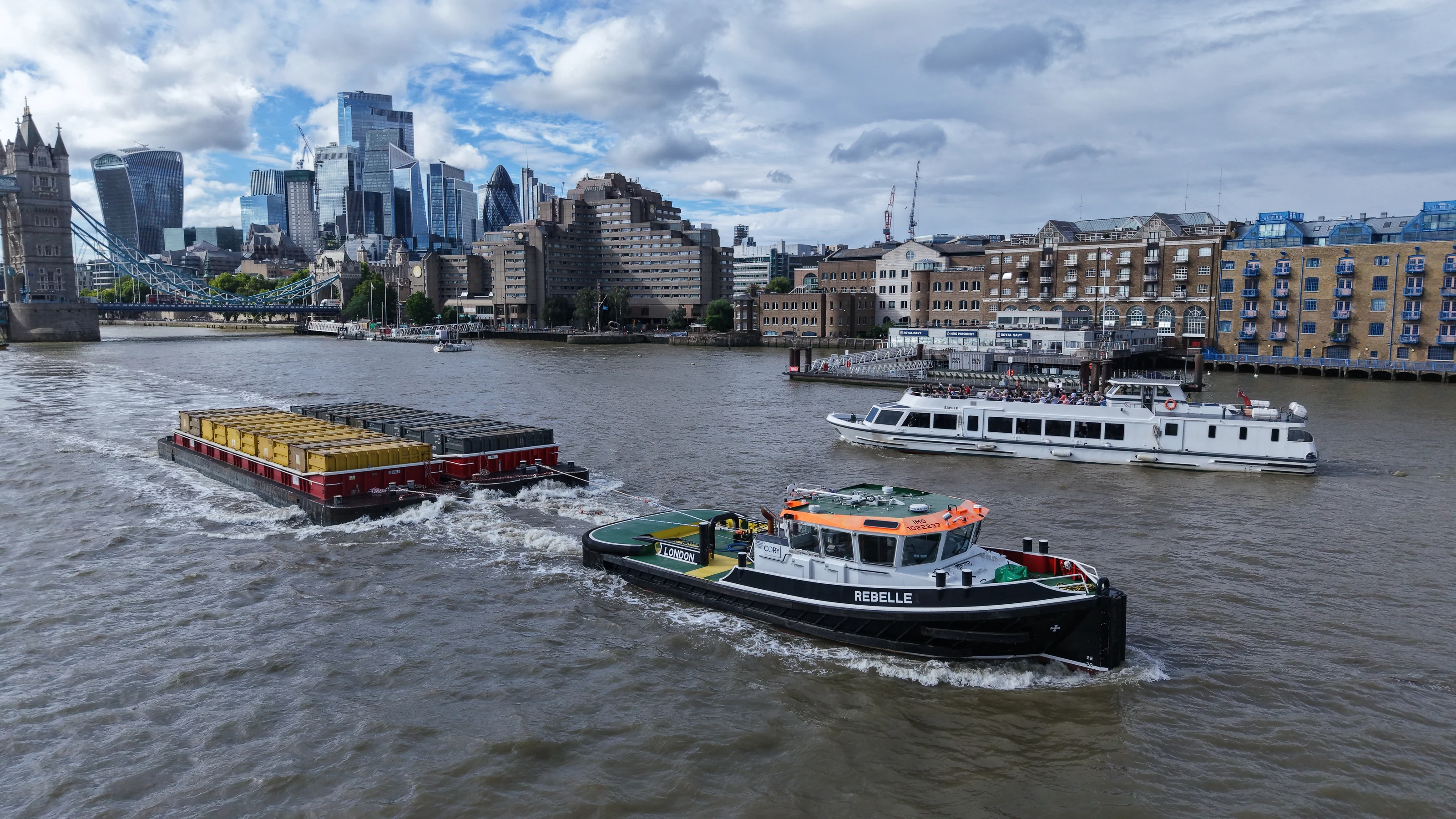
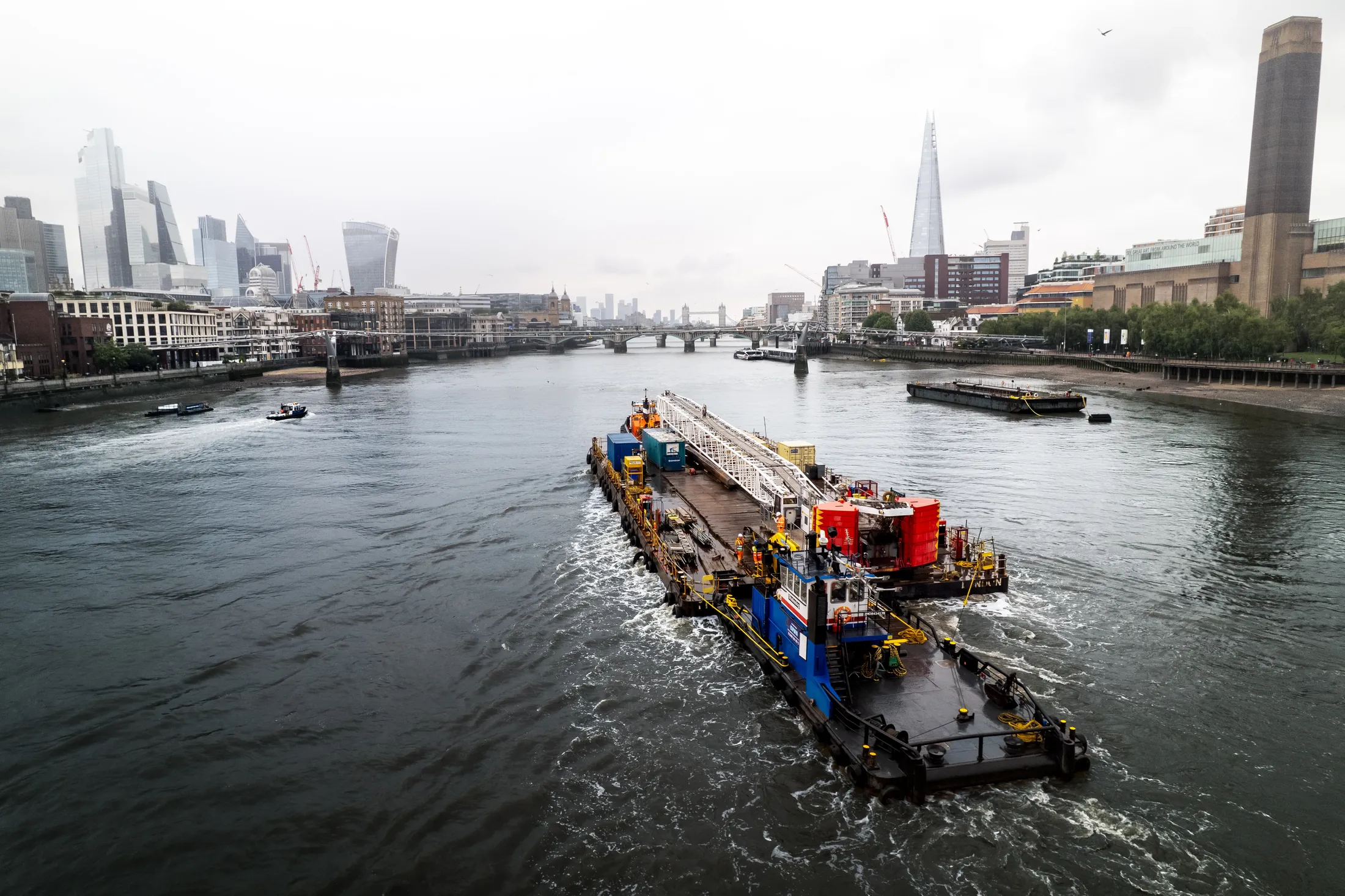
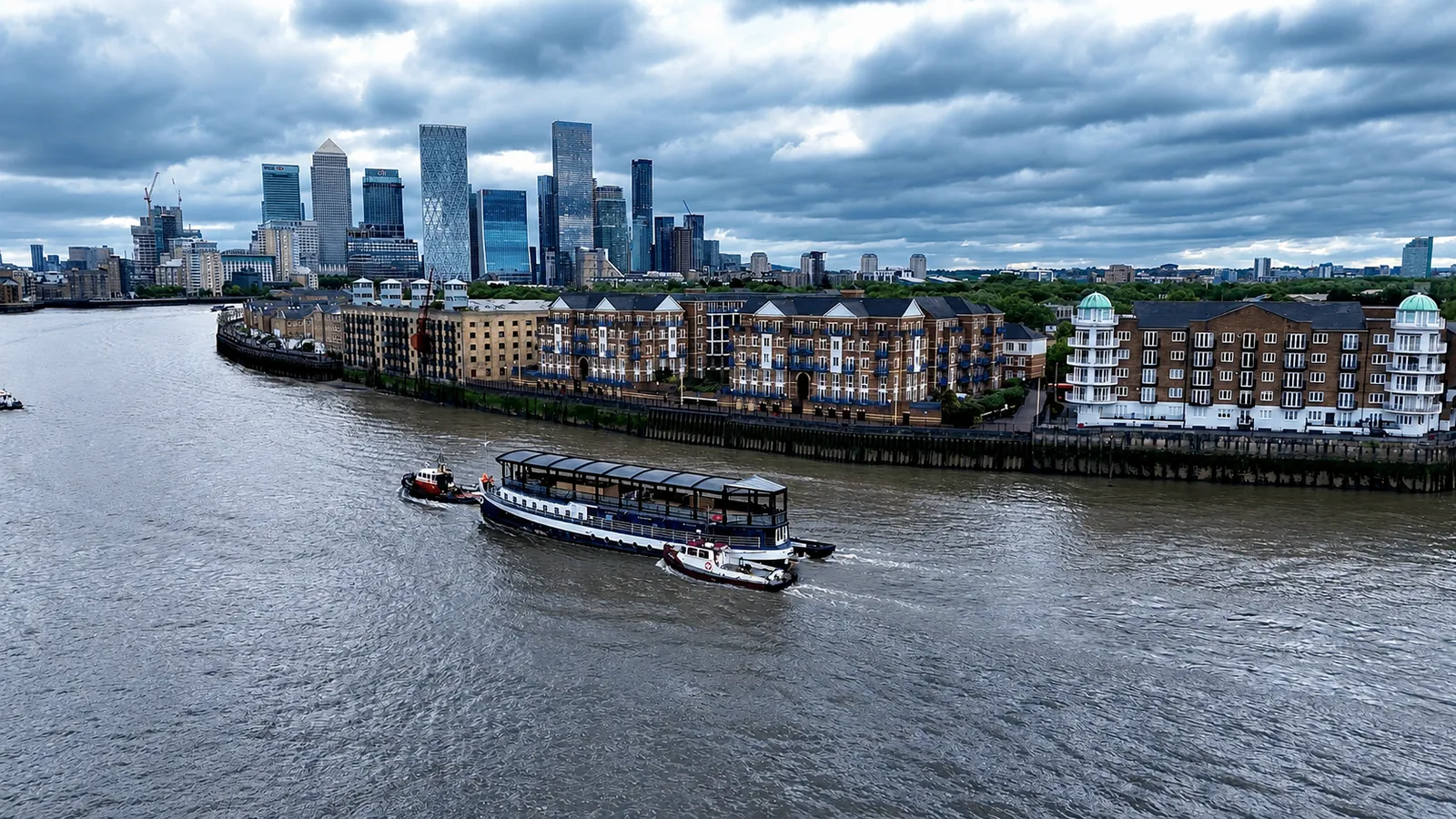
Every day, containers of London's rubbish go downriver by barge instead of by lorry. On 4 August 2026 we photographed the Cory tug Rebelle bringing a loaded barge through Tower Bridge, and this is how the operation actually works.
The honest answer is that it depends on four things, and none of them is the drone. Here is what actually drives the price of an aerial survey, how it compares with the access equipment it replaces, and the questions to ask before accepting a quote.
Clients book a Thames shoot for Tuesday at ten. The river does not work like that. Everything on the tideway is scheduled around high and low water, the timing shifts by roughly an hour a day, and the light window may not coincide with any of it.
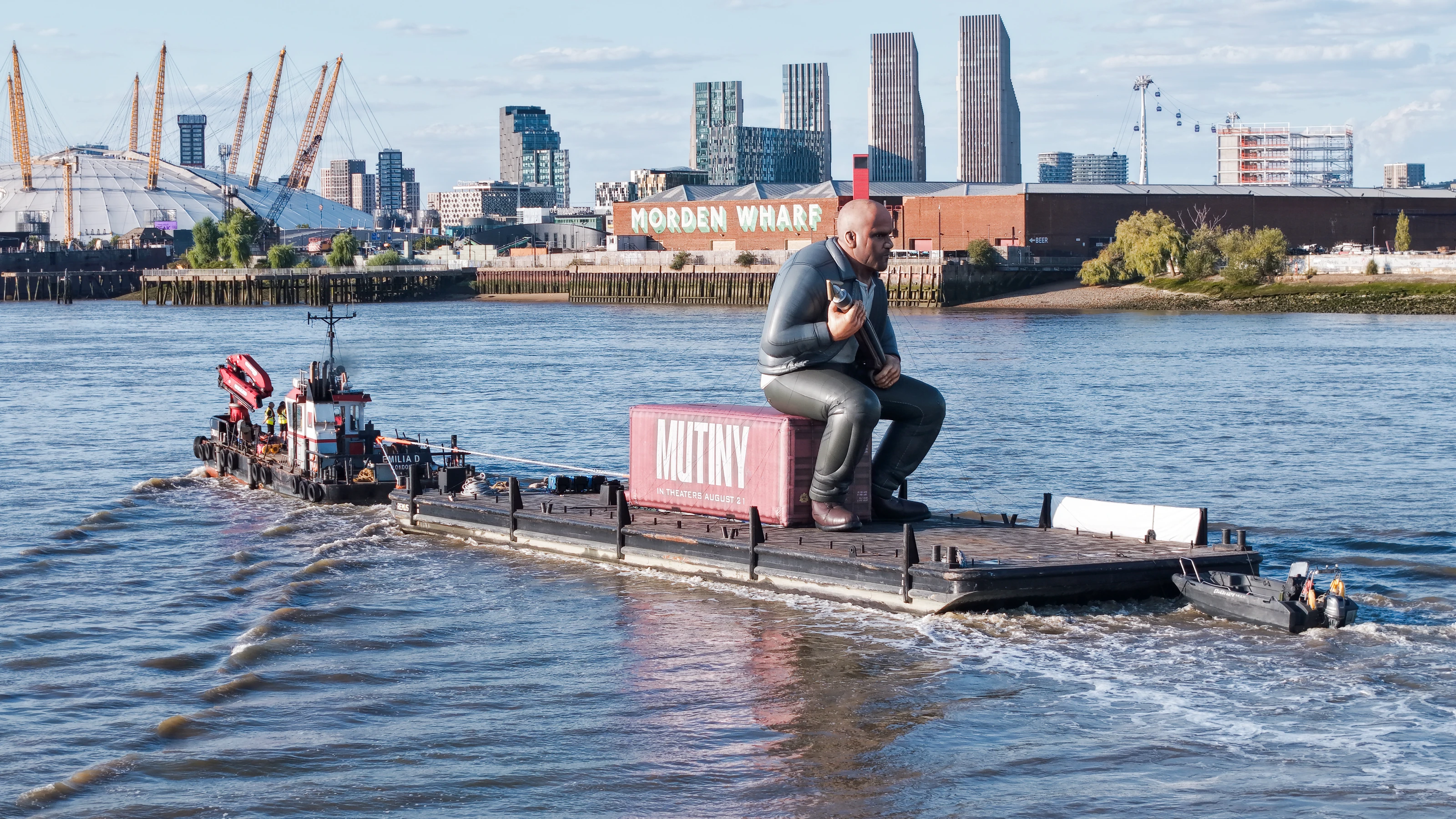
On 31 July 2026 a shipping container branded for the Lionsgate thriller Mutiny was towed through central London with a giant inflatable Jason Statham sitting on it. Here is how the day worked from the air, and what it takes to film a brand activation or PR stunt on the tidal Thames.
These three get used interchangeably in briefs and they are completely different products, with different costs and different uses. A plain explanation of what each one is, what you can do with it, and which one your project needs.
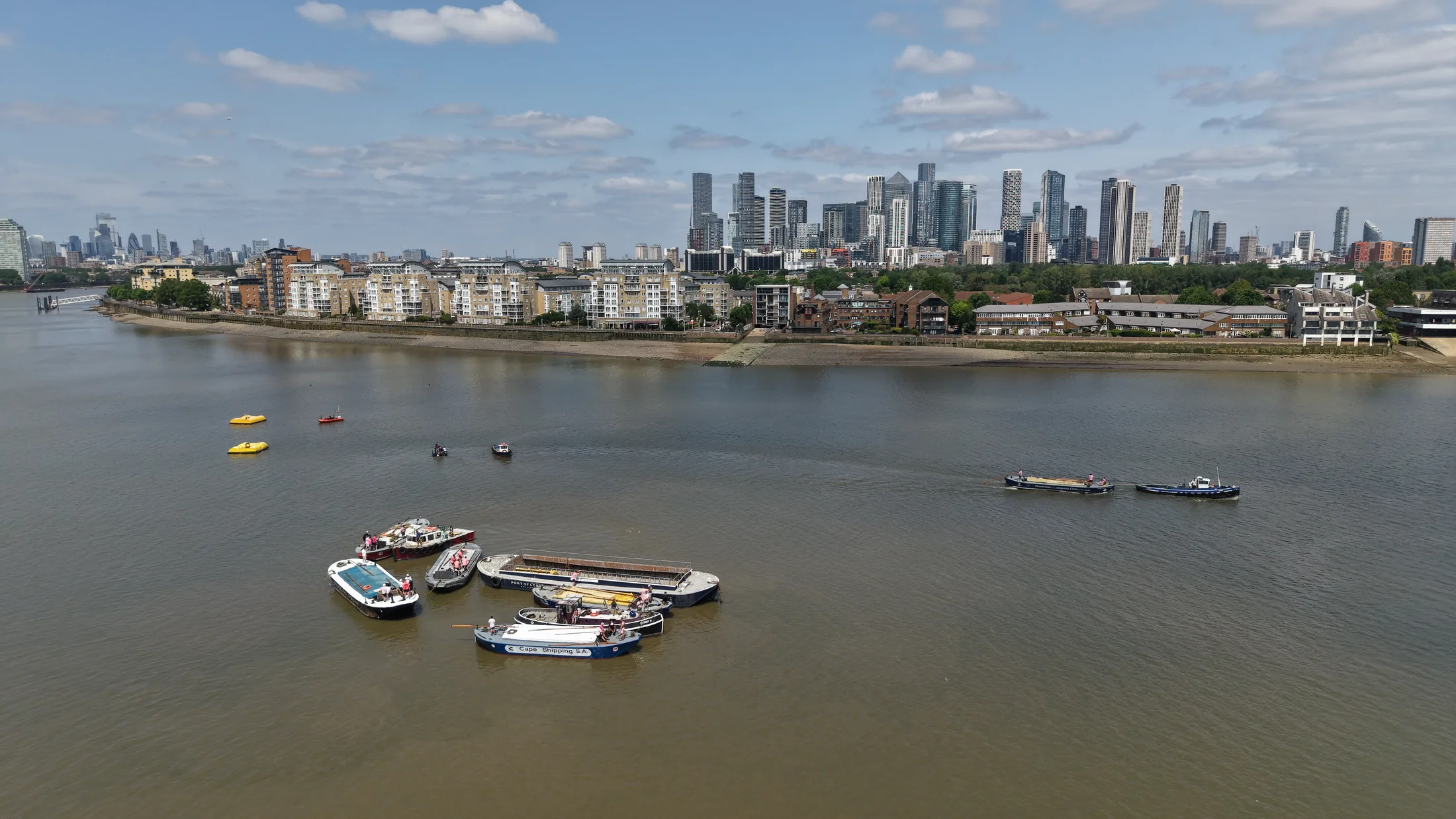
On Saturday 18 July 2026, crews rowed and steered 30-tonne Thames barges seven miles from Greenwich to Westminster. We photographed the day from the air, here is what barge driving actually involves, and why it still matters on the working river.
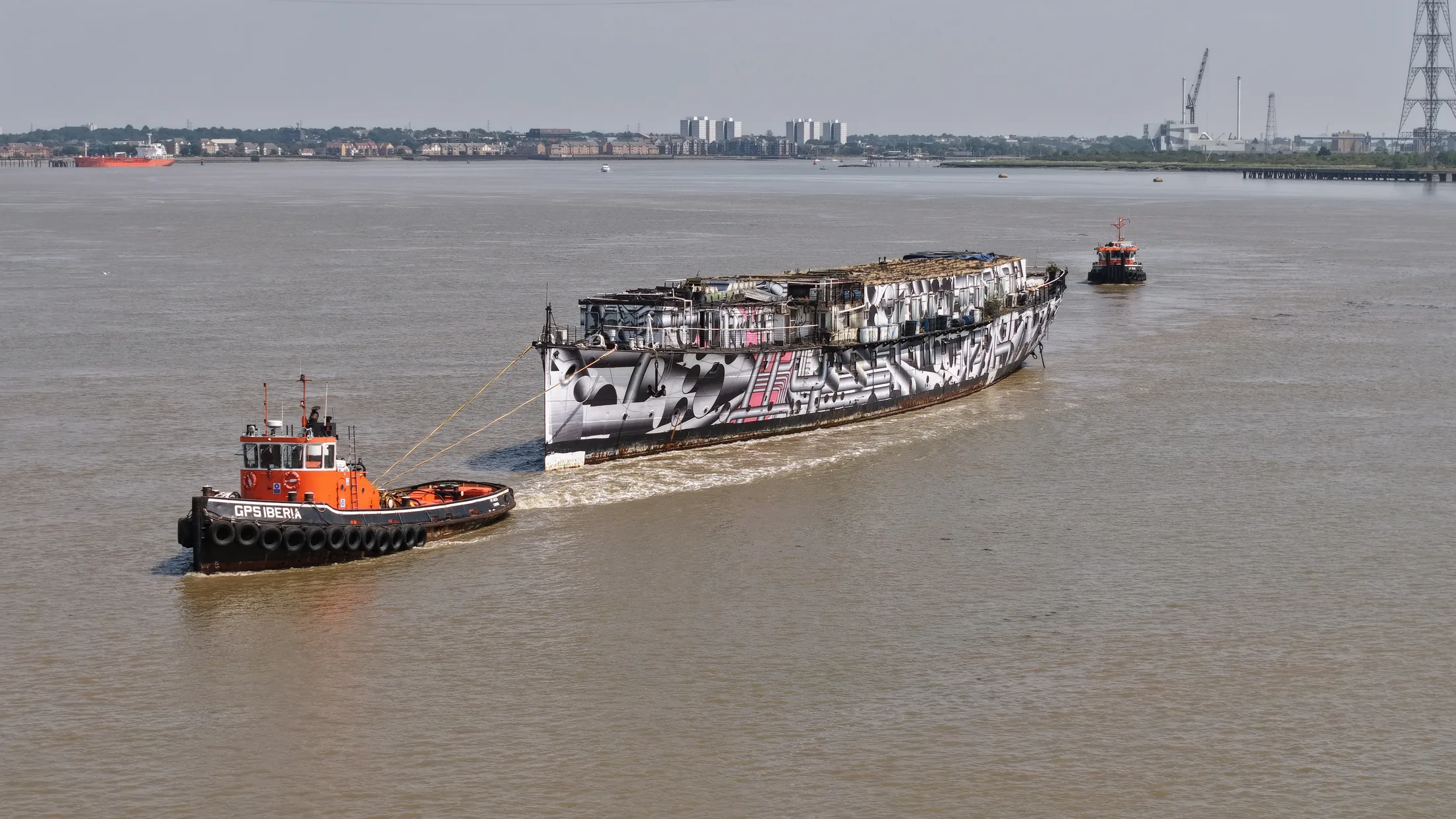
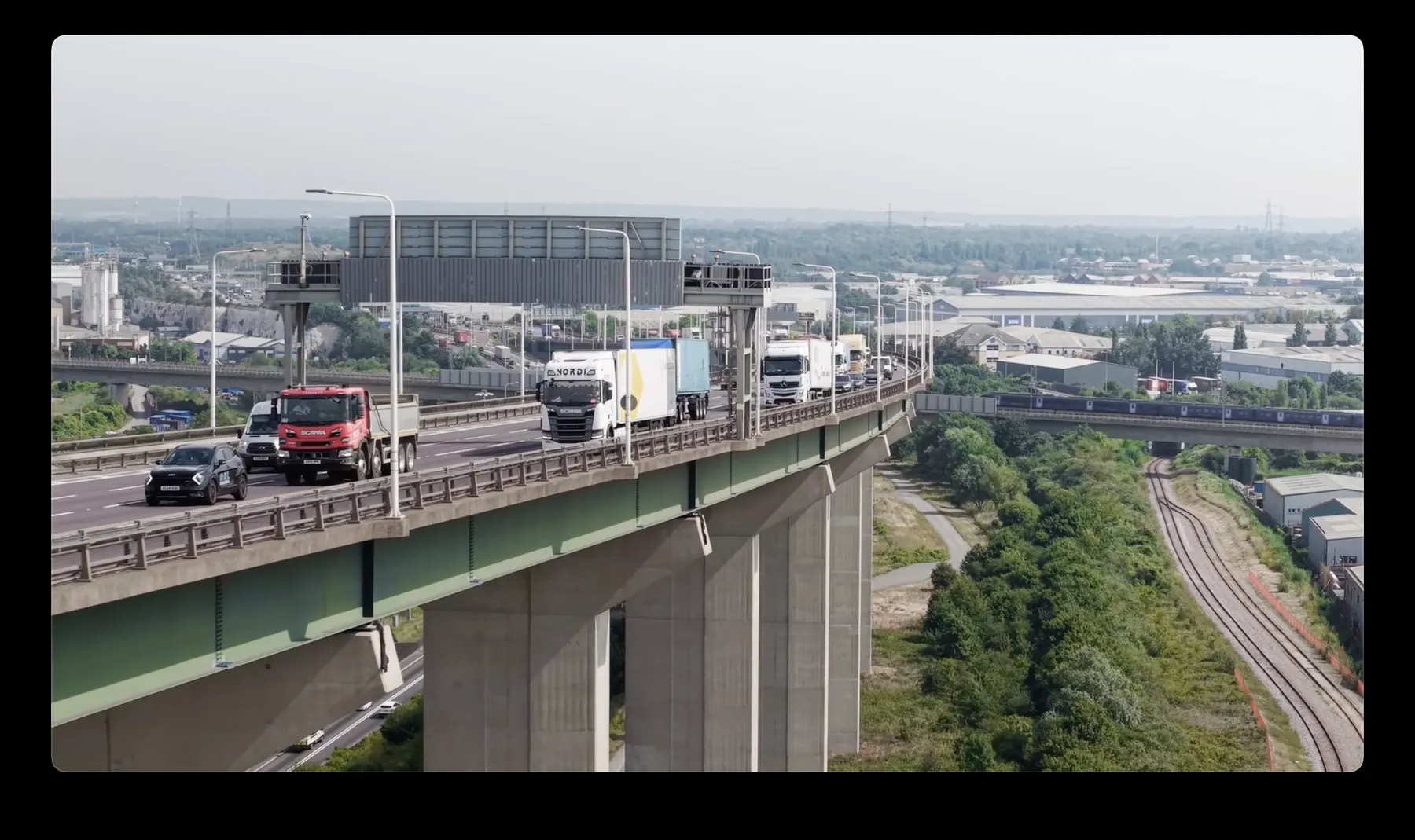
One of the last three surviving Royal Navy warships of the First World War left Chatham under tow on 17 July 2026, bound for a facility at Erith to be dismantled. We photographed her passing the Dartford Crossing, and this is her story, with a carefully sourced account of what has and has not been confirmed.
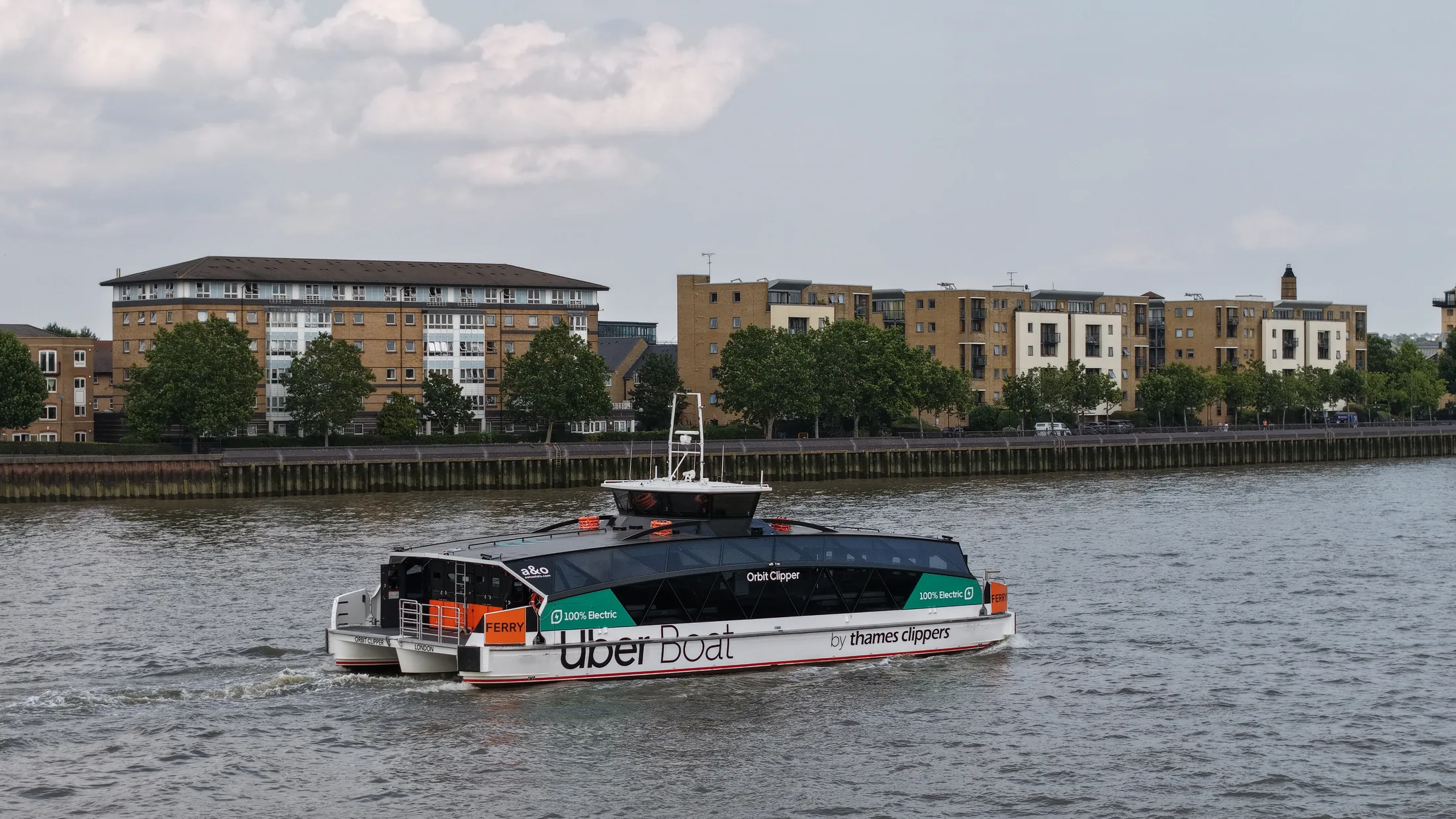
Orbit Clipper is the UK's first fully electric, zero-emission cross-river passenger ferry, running between Rotherhithe and Canary Wharf with room for 150 passengers and 100 bicycles. A vessel profile, and why the bikes are the whole point.
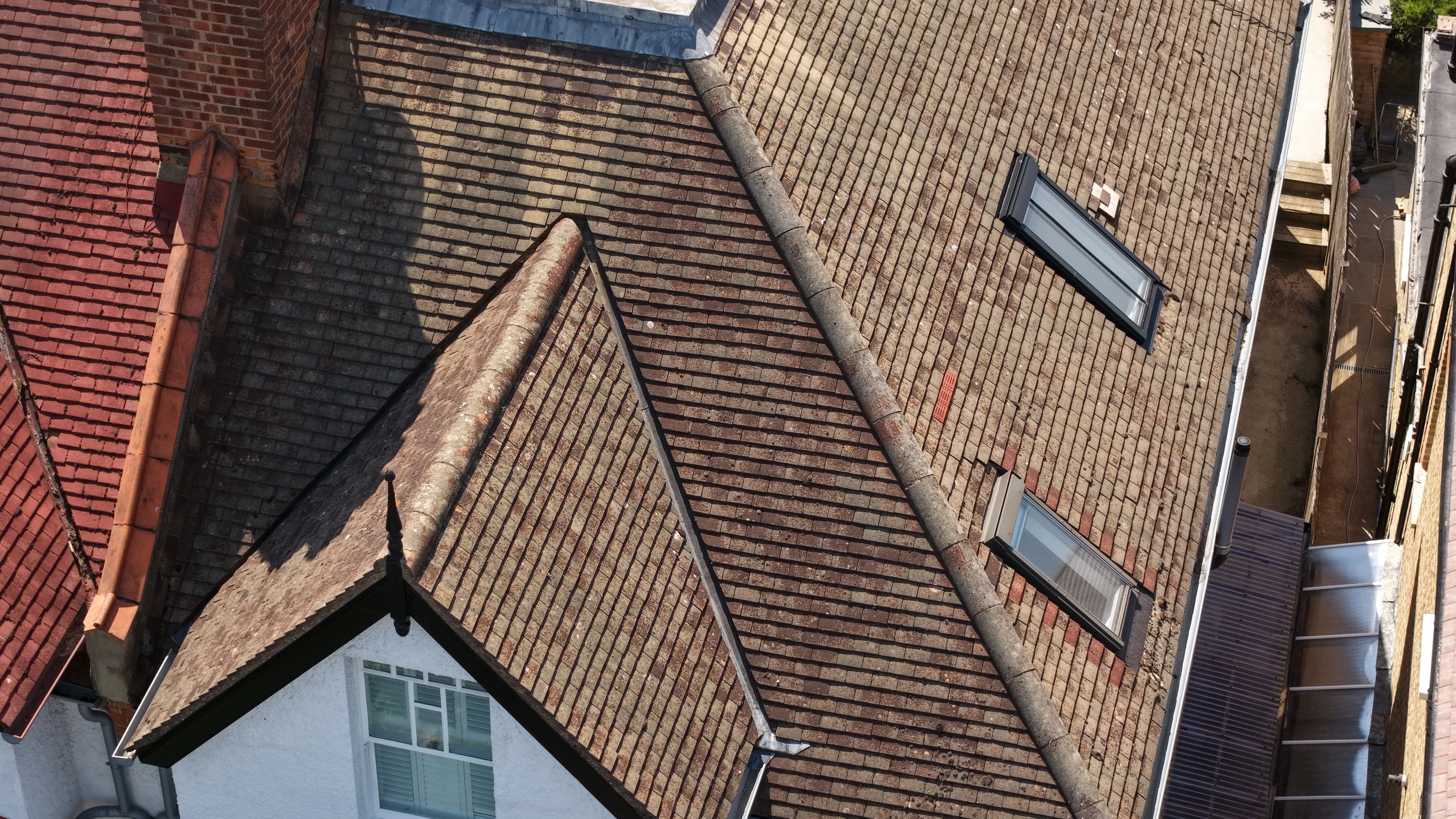
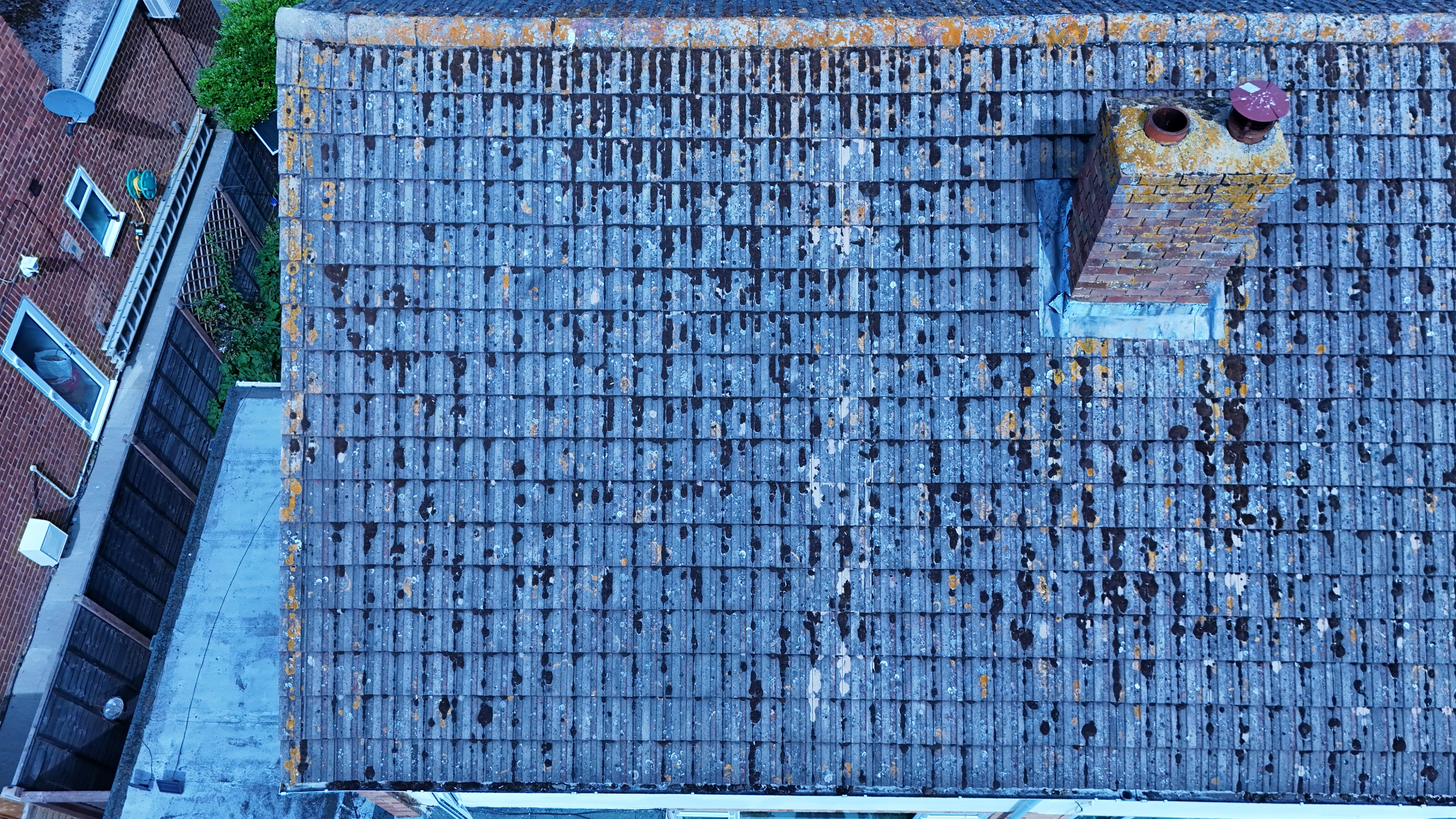
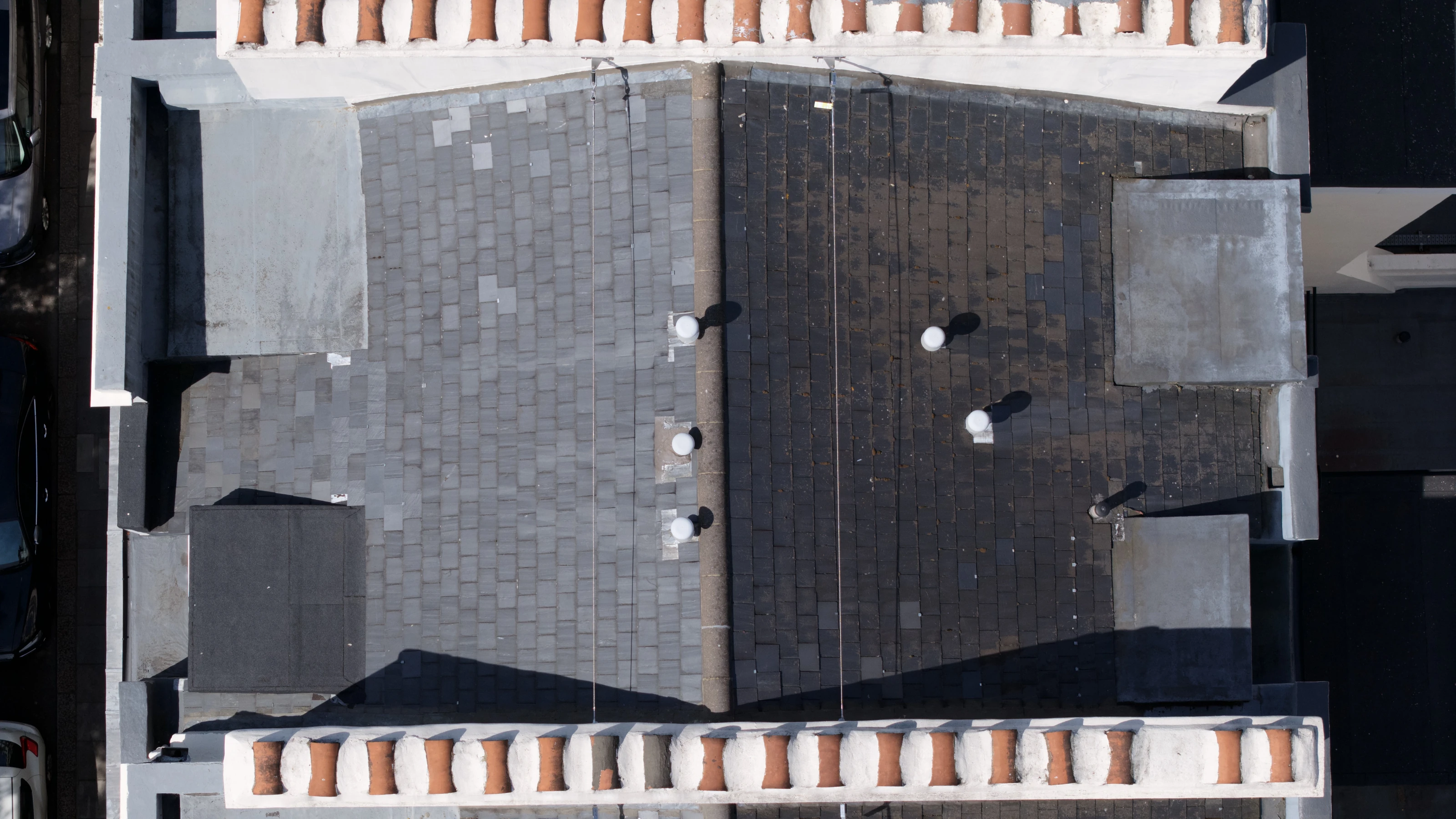
Most homeowners are told their roof needs work by somebody standing in the road looking up, or by somebody who has already put a ladder against the gutter. Neither gives you anything you can look at afterwards, or send to an insurer.
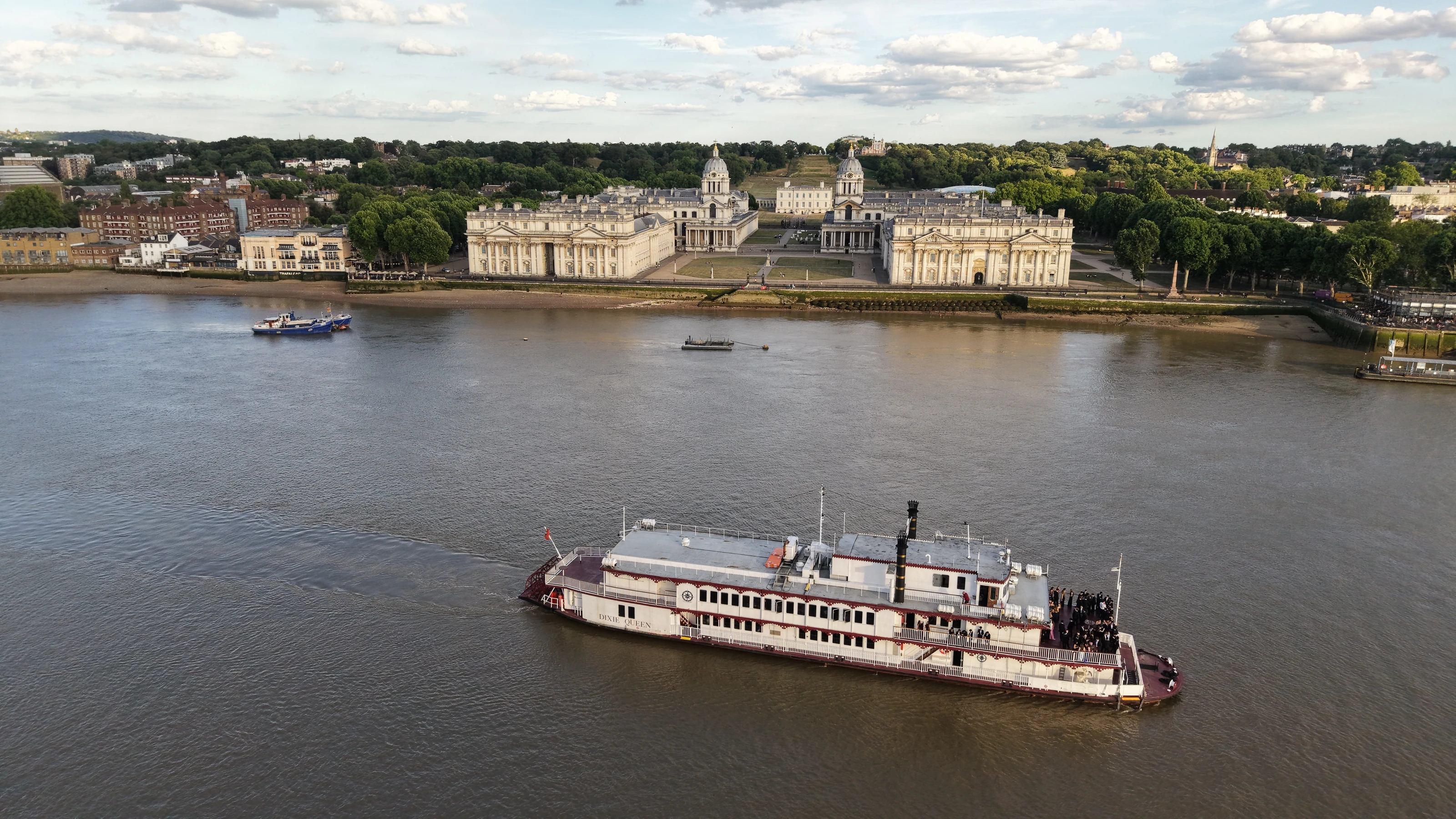
Greenwich is the strongest backdrop on the tideway and the least forgiving: the Old Royal Naval College only resolves from a narrow band of positions on the river. Add a moving vessel and the window for the photograph is measured in seconds.
A crew transfer is the most routine thing a workboat does and one of the least photographed. It happens early, it happens fast, and it happens in the few metres between a moving vessel and a fixed wall. From above, the seamanship is visible in the water.
Lead flats behind a parapet, the flaunching on a chimney stack, the back gutter where a pitch meets a party wall, the hopper head at the top of a downpipe. All above the cornice line, all invisible from the street, all the first things to go.
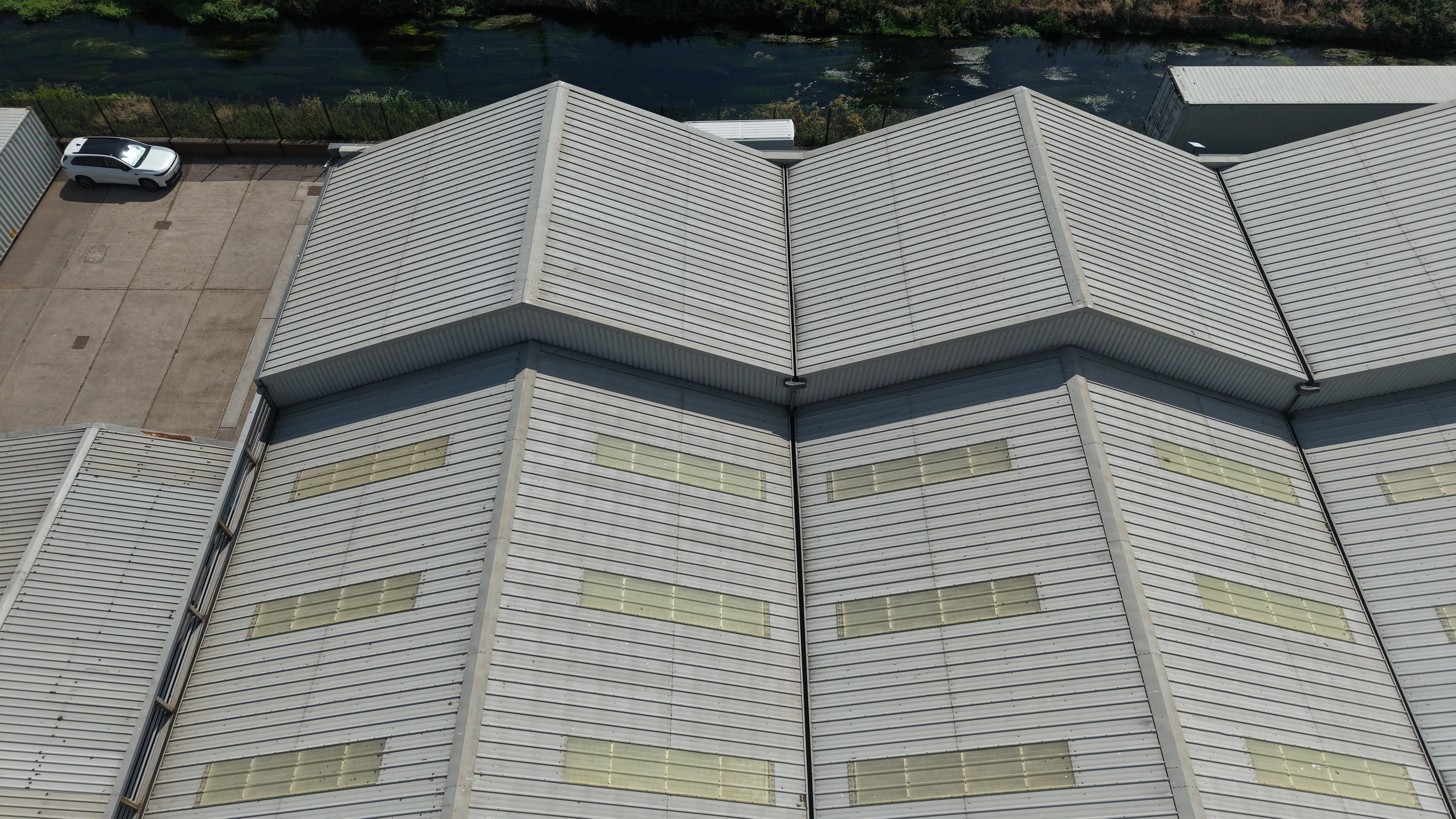
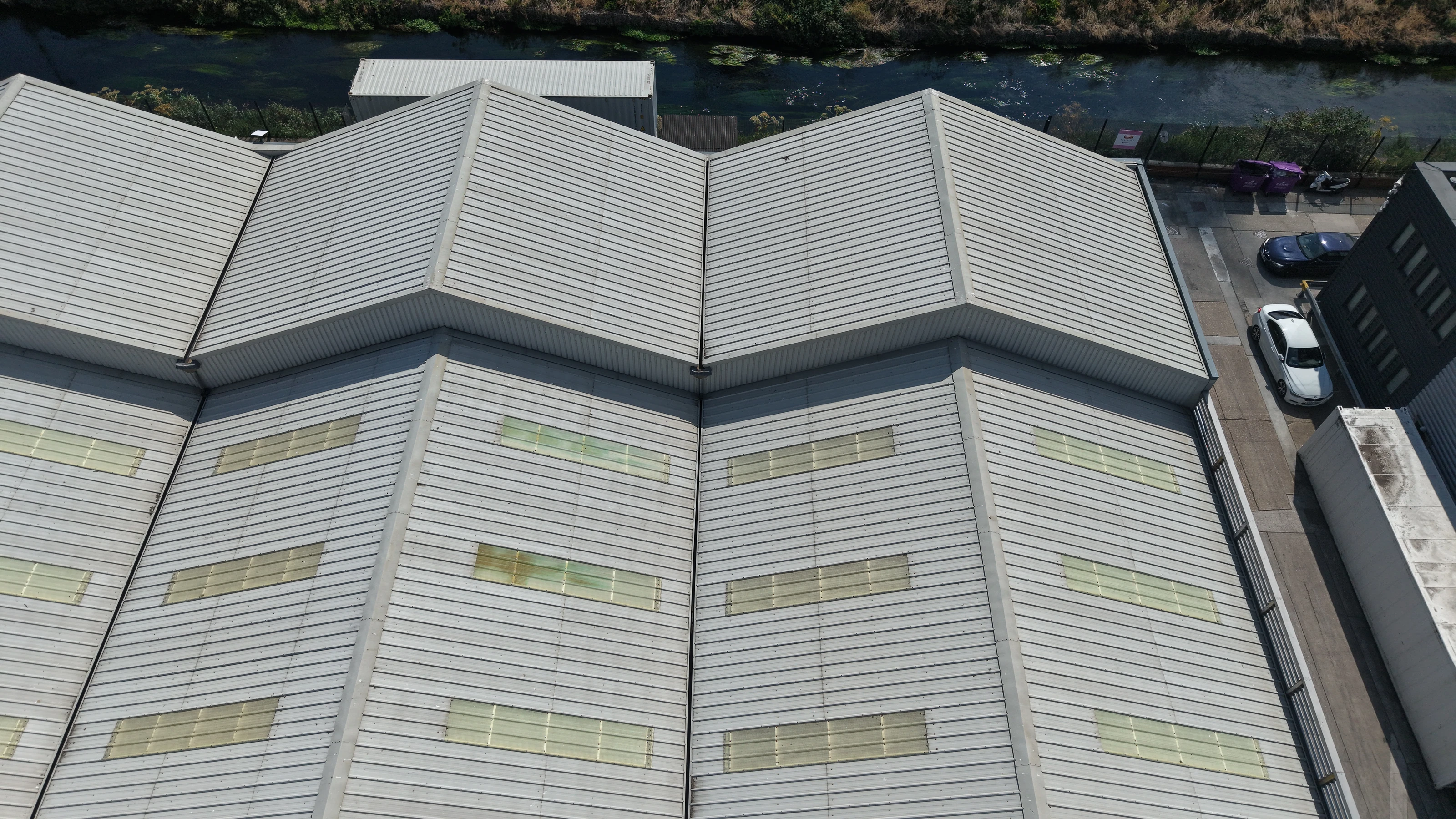
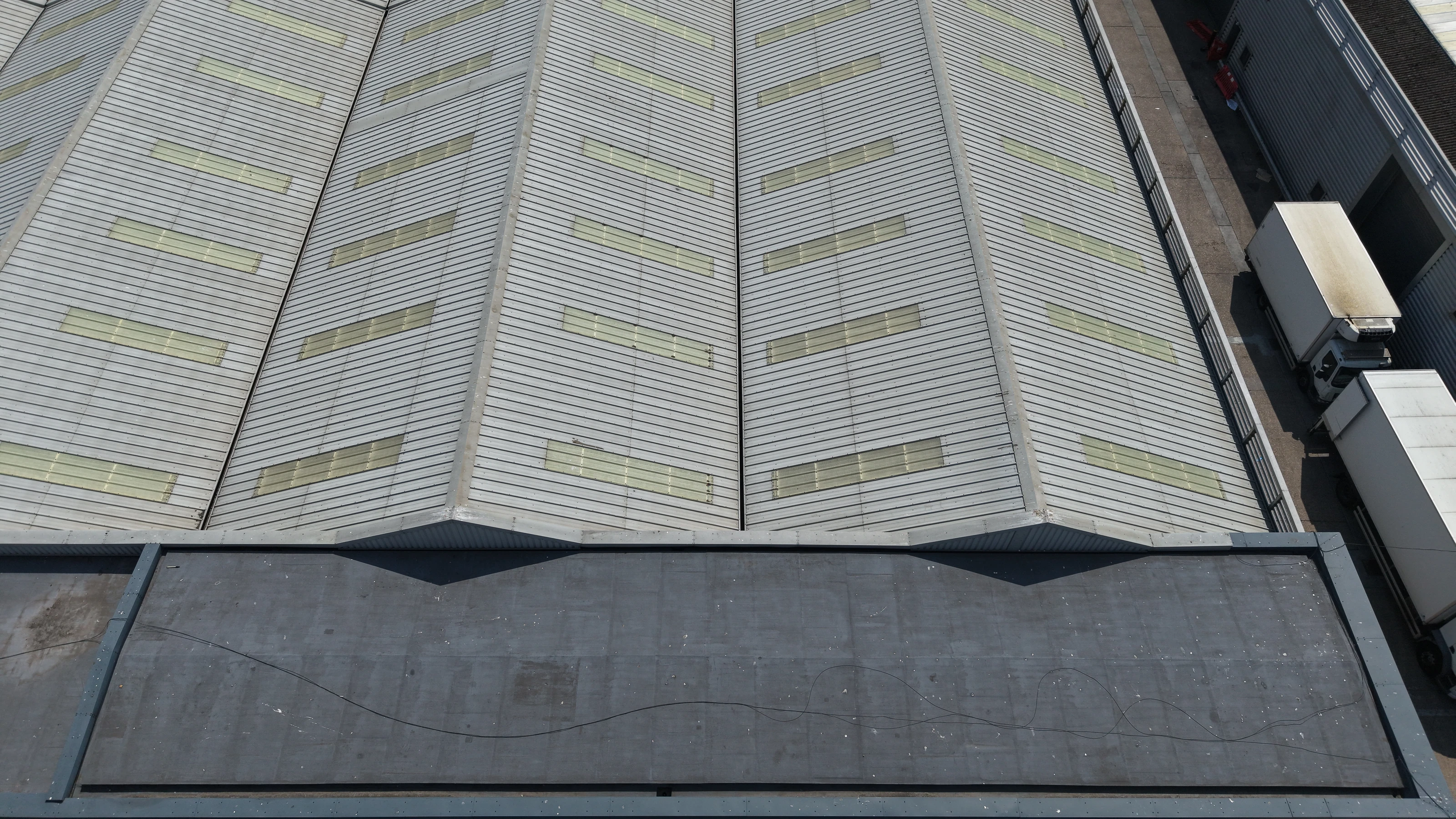
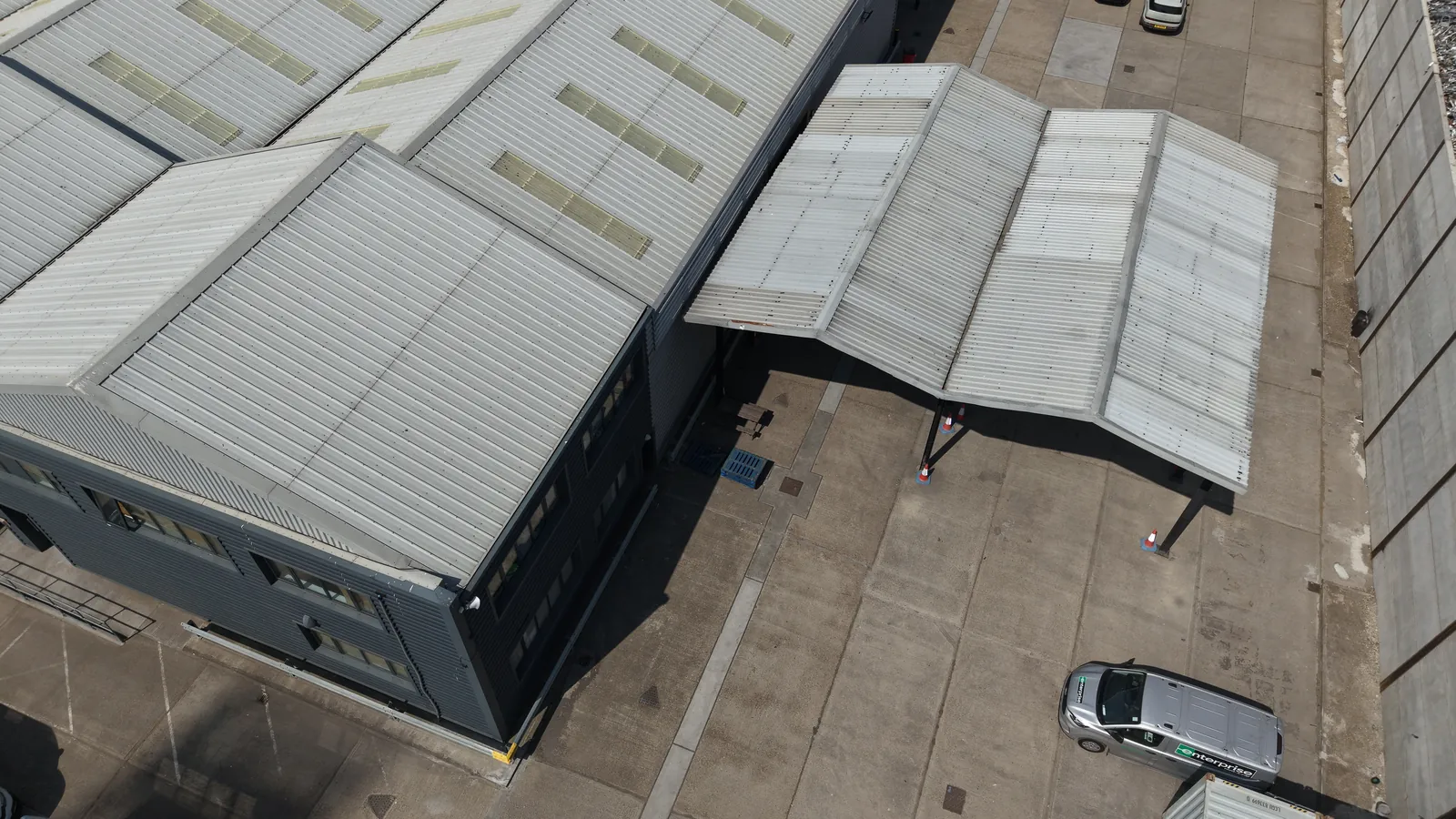
A commercial roof is one of the hardest parts of a building to inspect and one of the most expensive to get wrong. We surveyed an industrial estate in a morning, with no scaffold, no cherry picker and nobody at height.
A thermal camera does not see damp, missing insulation or a fault. It sees surface temperature, and everything else is inference. Used properly that is enormously powerful. Used carelessly it produces confident, colourful nonsense.
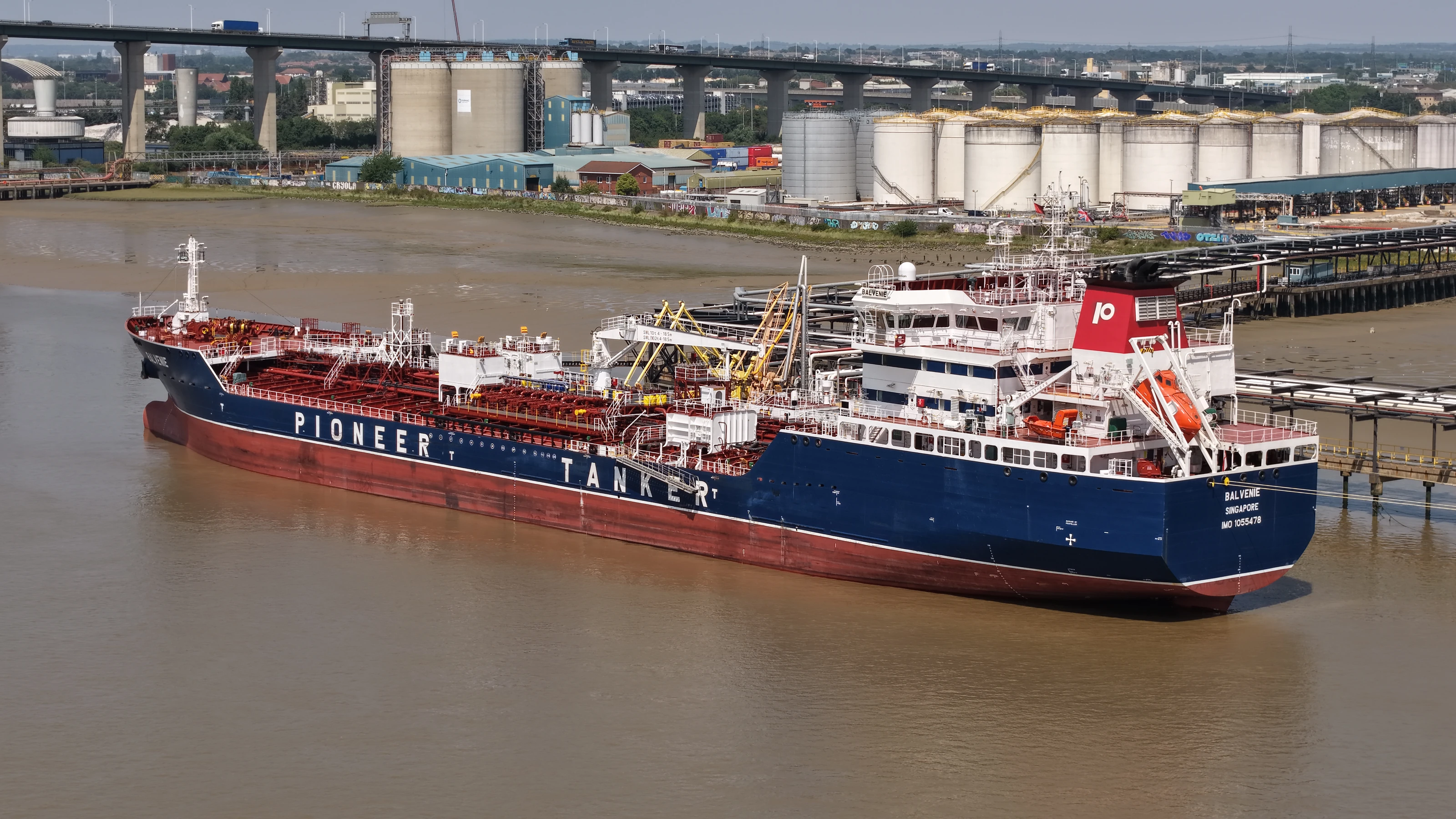
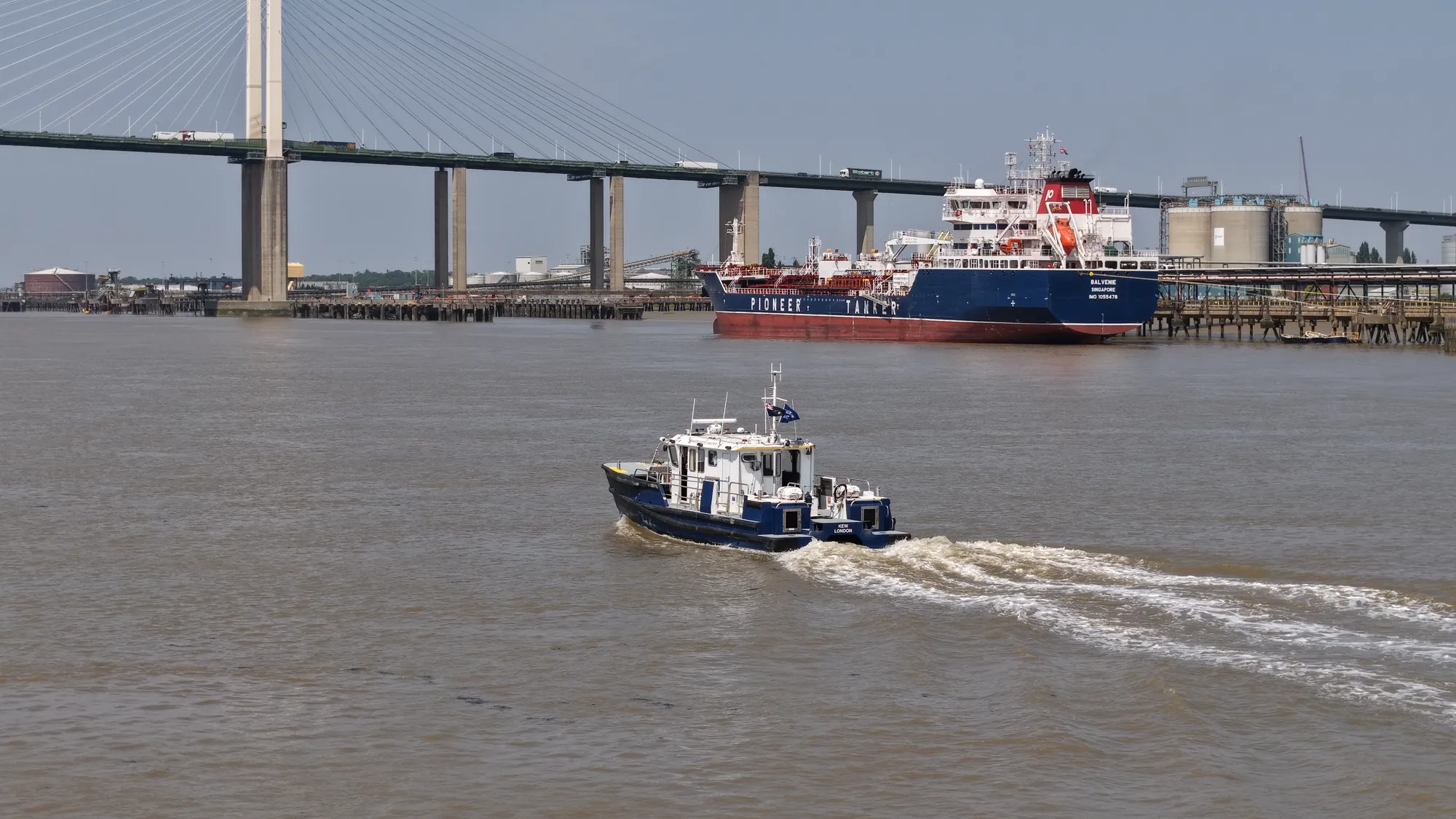
Below Dartford the tourist river ends and the industrial one begins: tank farms, jetties, loading arms and ships working around the clock. A look at the product tanker Balvenie alongside a Thames terminal, and why this stretch is a hard subject from the ground and a simple one from the air.
Anybody can buy a drone. Rather fewer can lawfully fly one for you over central London, and fewer still carry the insurance your procurement team is going to ask for. Six questions that separate a professional operator from a person with a camera.
The tidal Thames is not a free-for-all and it is not run by the council. It has a navigational authority, a harbour master, byelaws, patrol launches and a vessel traffic service directing movements. Understanding it is the difference between a river shoot that happens and one that does not.
FPV gets specified because a client saw a viral one-take video, and it is sometimes exactly right and often exactly wrong. A plain explanation of what FPV can do that nothing else can, what it costs you, and how to tell which one your project needs.
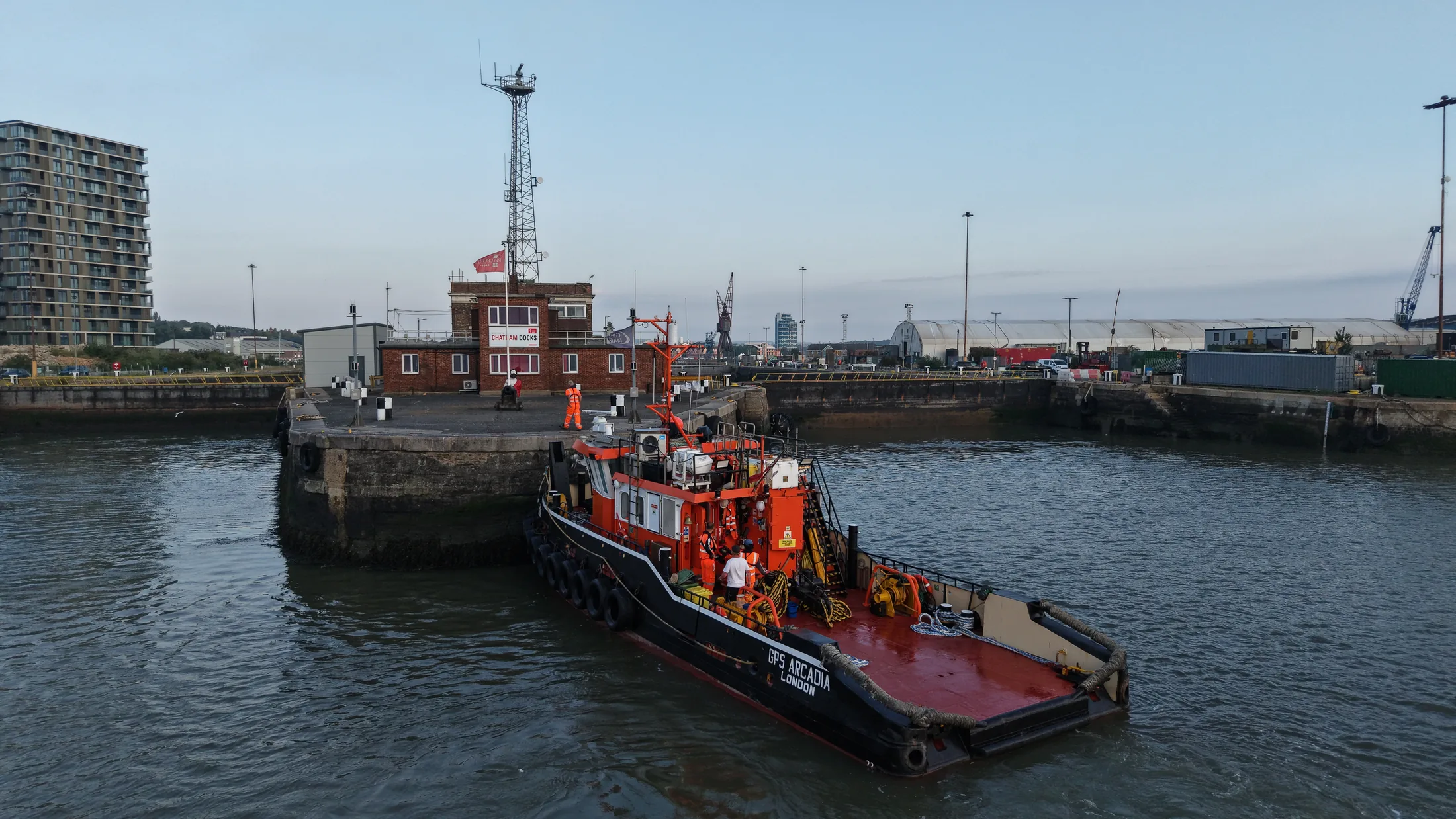
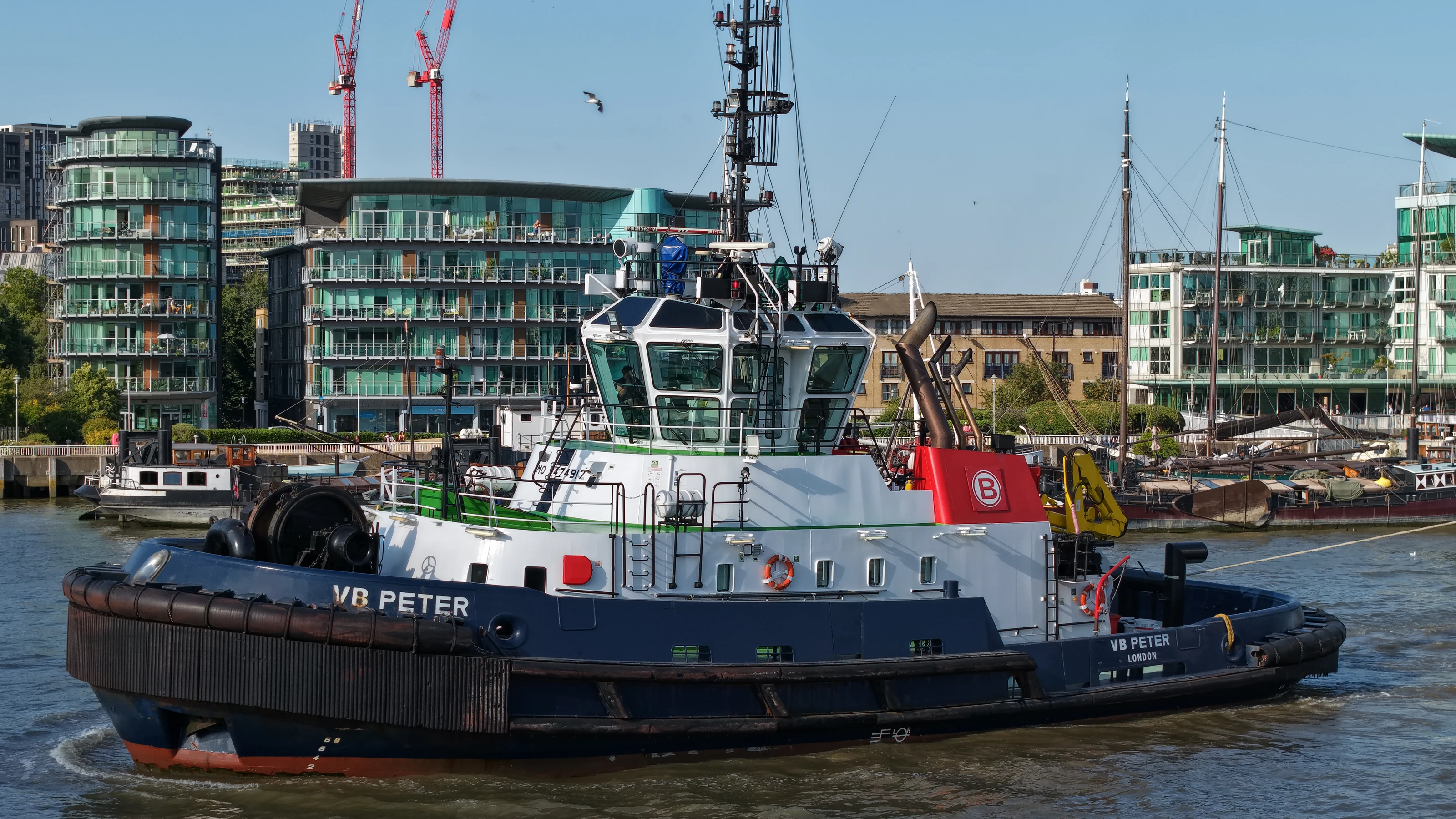
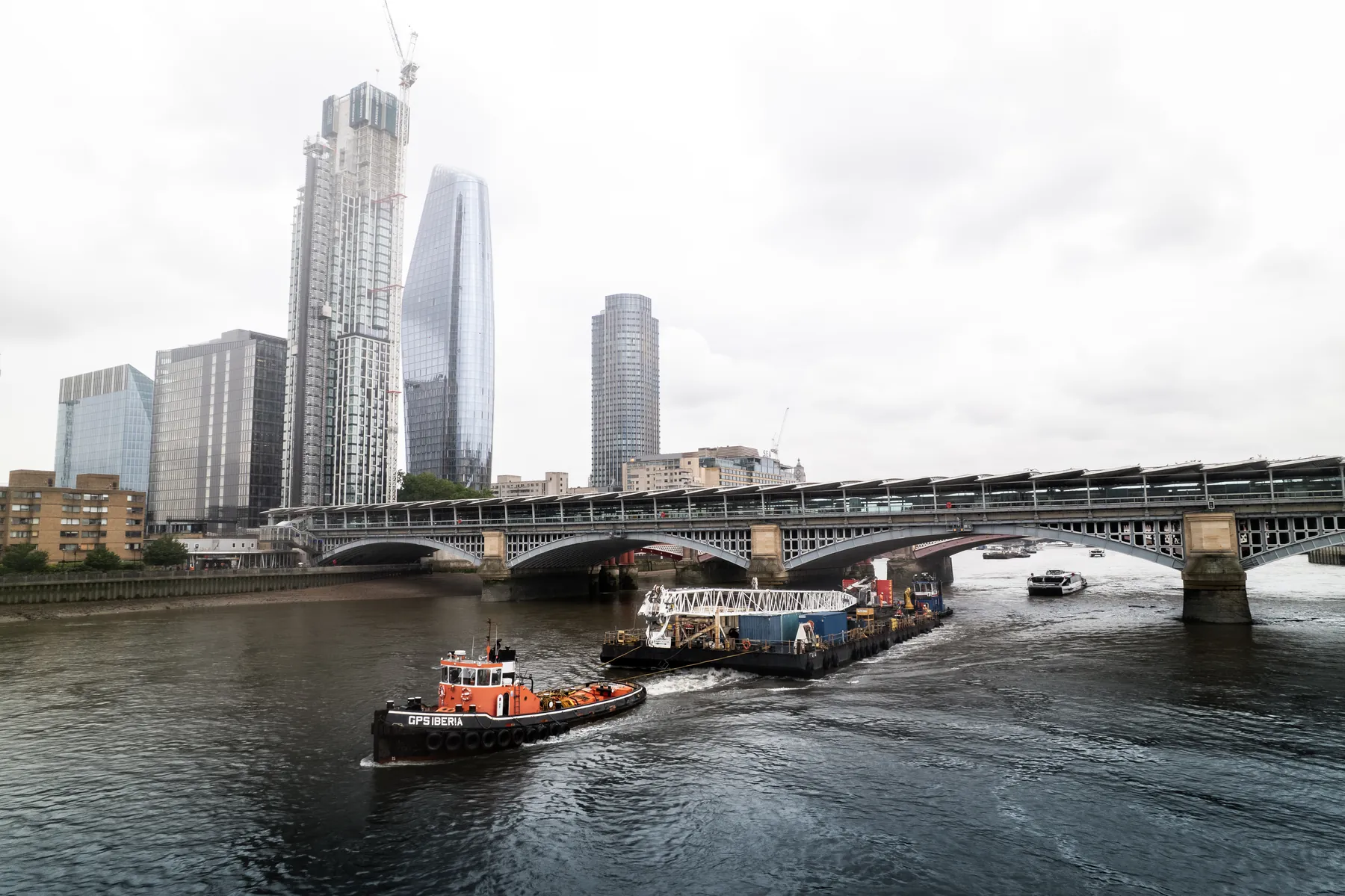
Most tug photographs are taken from a pontoon at deck level, where the hull foreshortens and every piece of working gear disappears behind the sheer. Here is what a useful vessel photograph contains, and why the angle matters more than the camera.
A single aerial photograph of a site is a marketing image. The same photograph taken from the same position every month for two years is a defensible record of what happened, when, and it is worth considerably more than the flights cost.
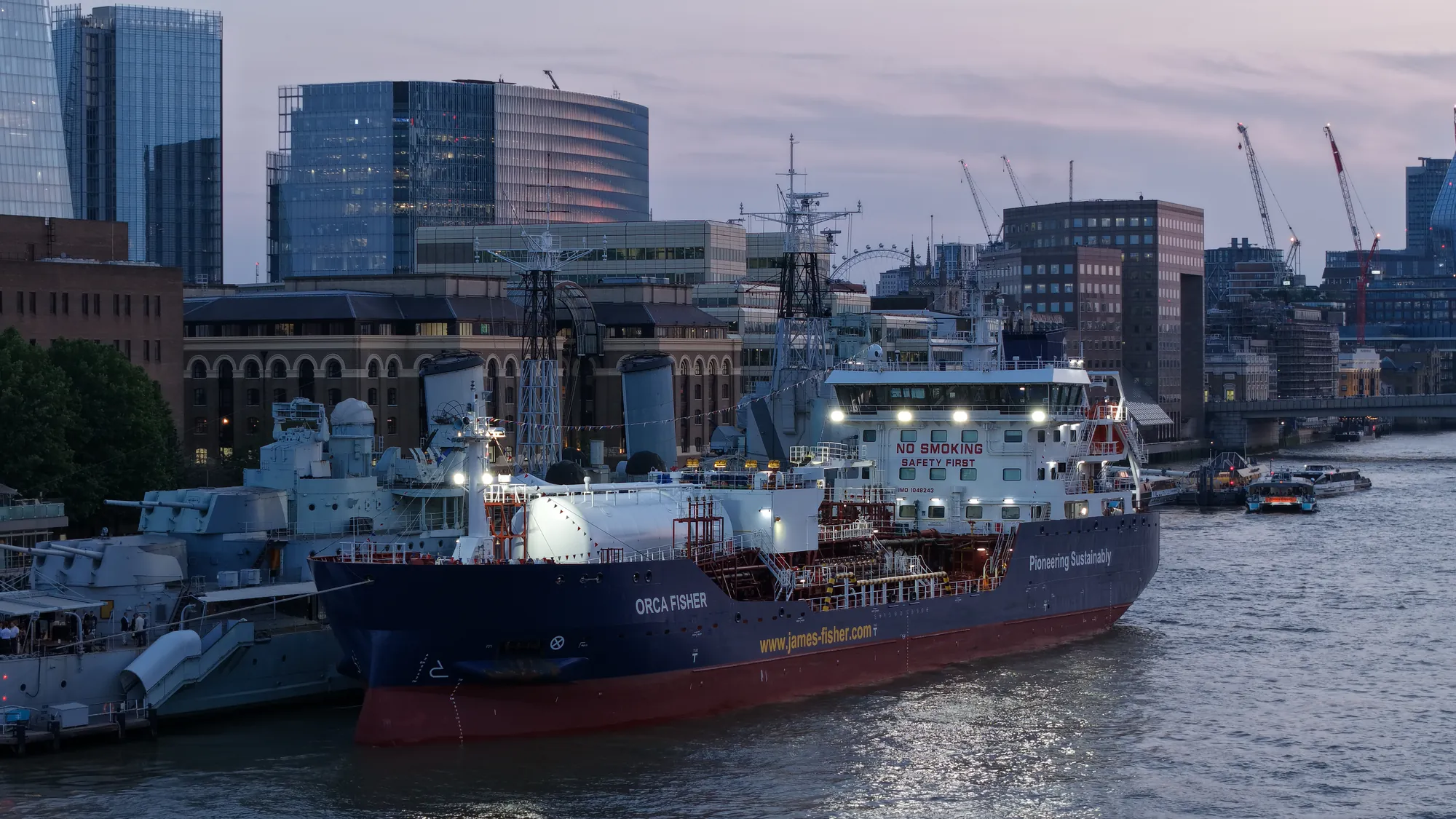
Tower Bridge opened for her, two tugs walked her through, and she spent the night moored alongside a Second World War cruiser in the middle of the City. A vessel profile of the James Fisher tanker Orca Fisher, and what it takes to photograph a commercial transit of central London.
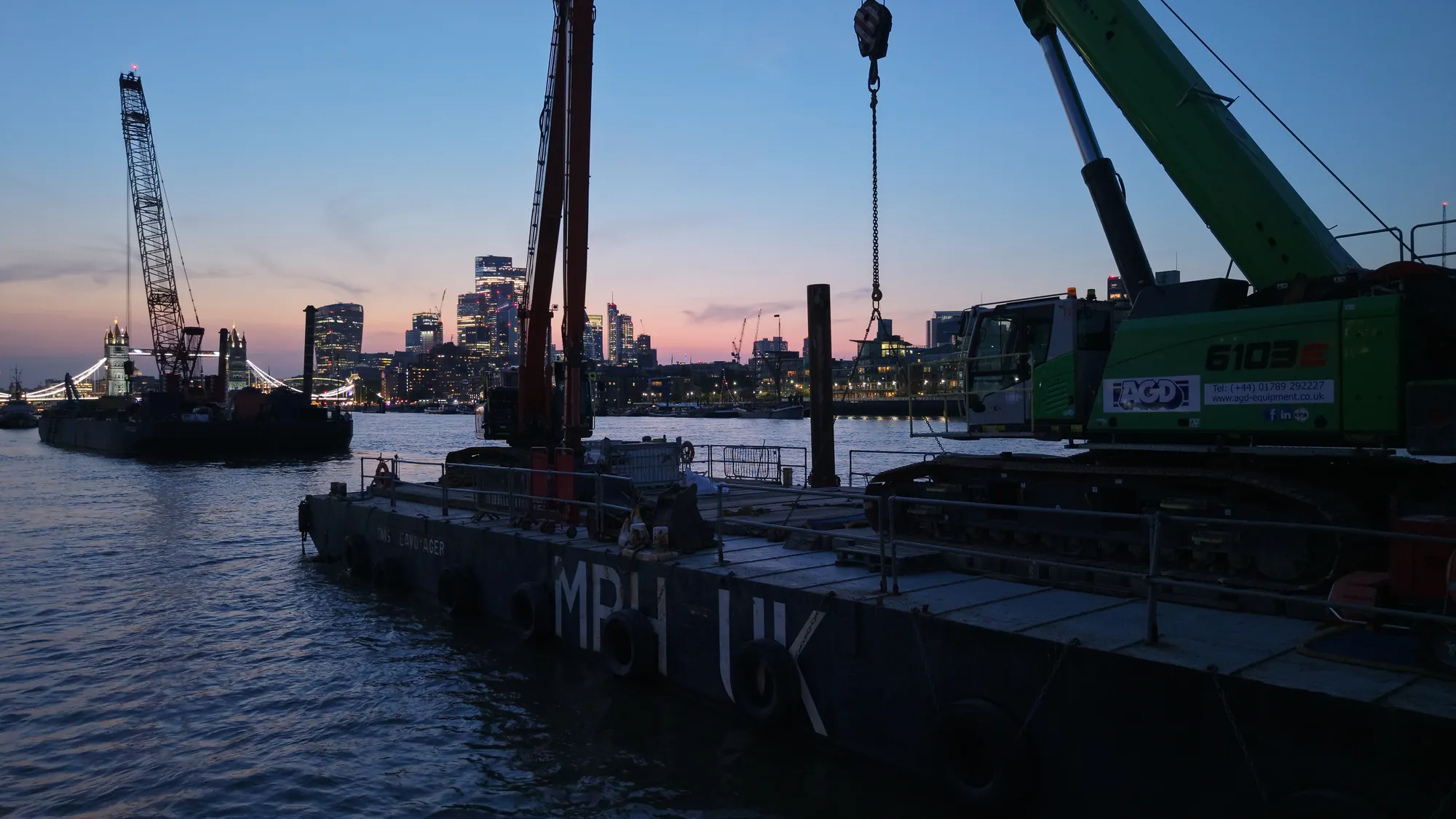
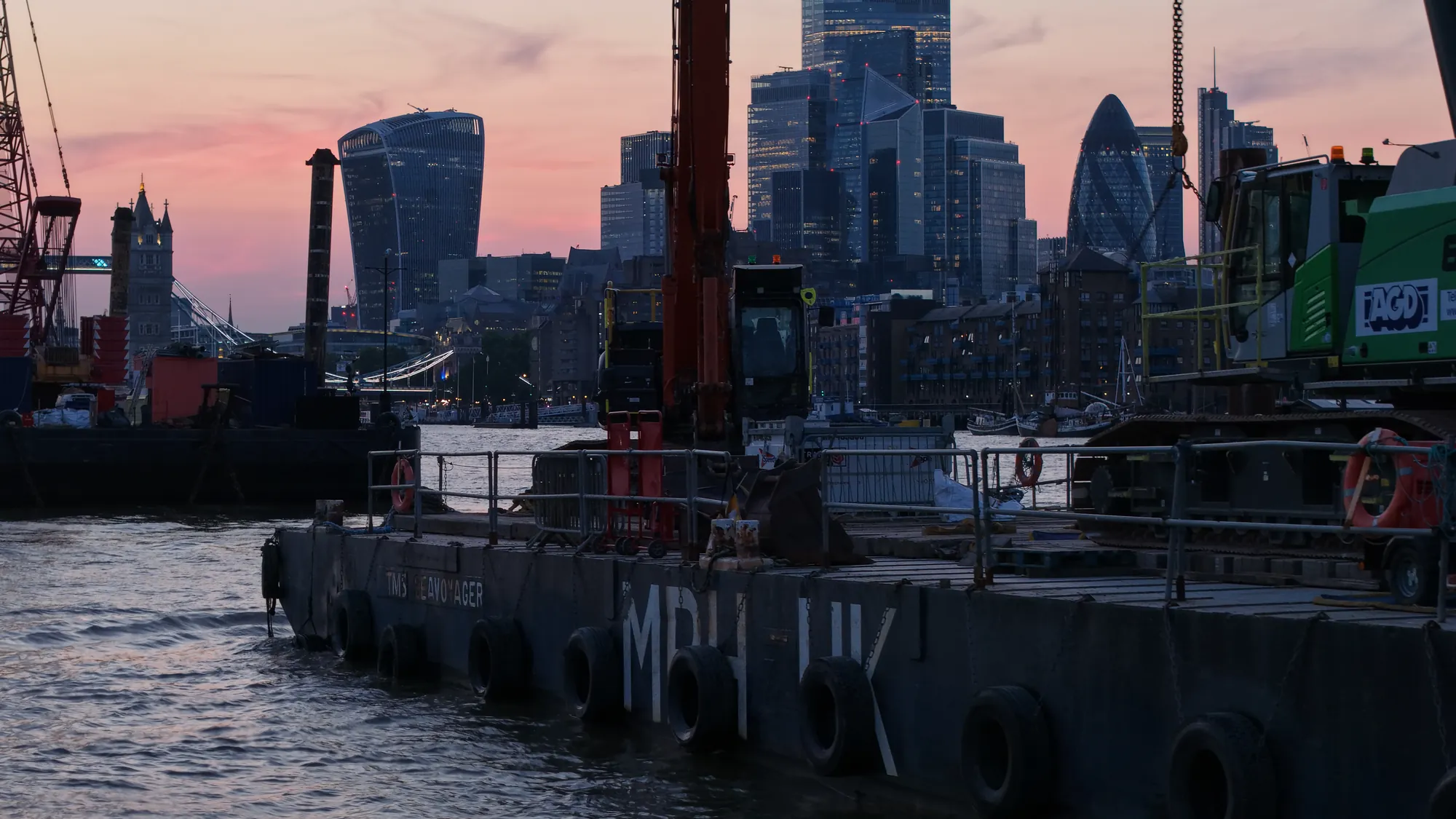
A jacked-up pontoon with a crane and an excavator on it is one of the most useful things on the river and one of the hardest to photograph from anywhere except above. What aerial coverage gives a marine civils contractor, beyond a nice picture at sunset.
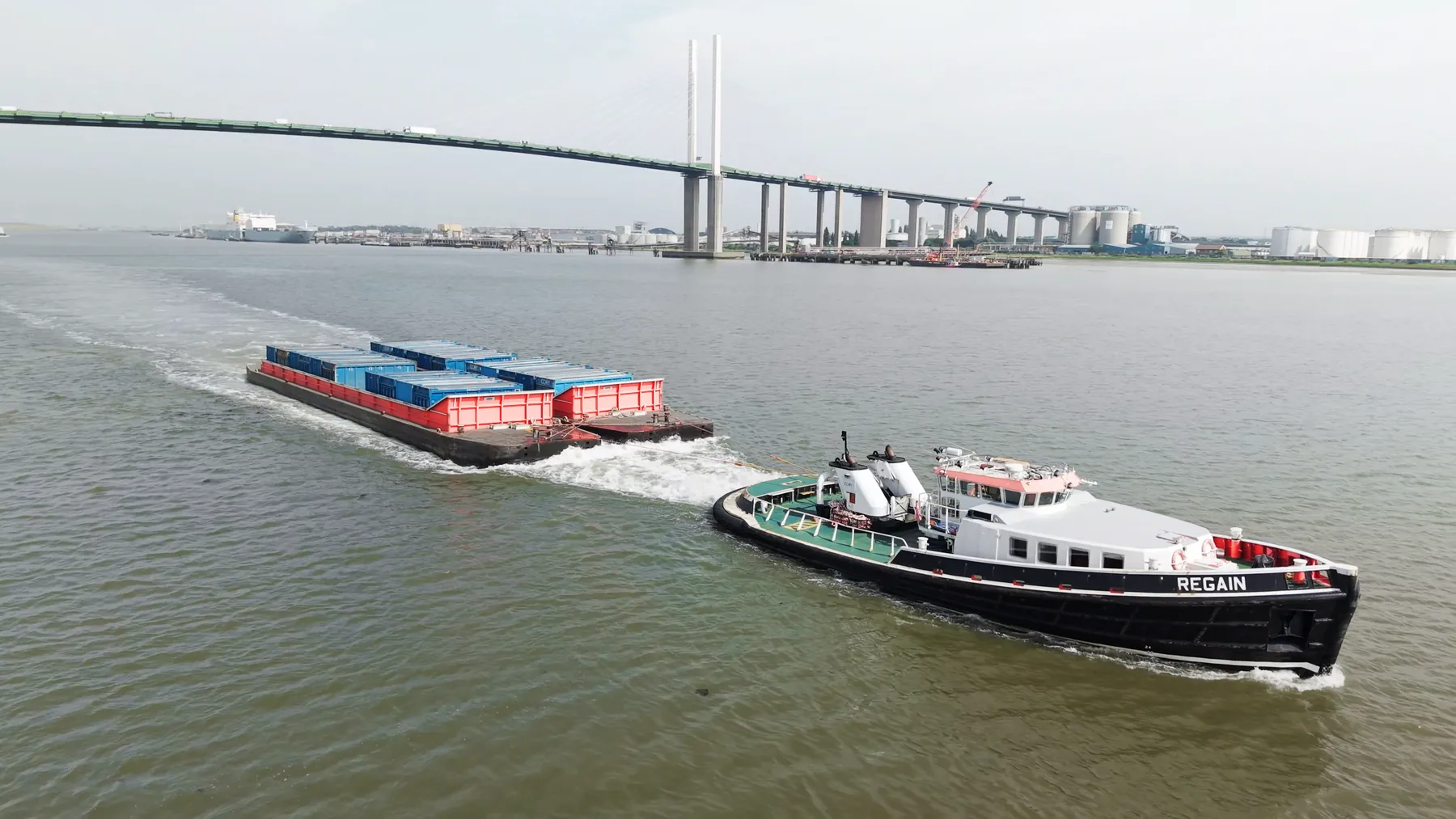
Regain has been towing waste barges up and down the Thames since 1997. Filming an industrial river operation means fitting around it completely, and here is what that involves in practice, from standoff distances to long lenses to VHF.
Logistics is an industry that moves enormous objects across long distances and then markets itself with a photograph of a lorry in a car park. Aerial coverage is the one medium that shows scale and reach, and there are three shots that do most of the work.
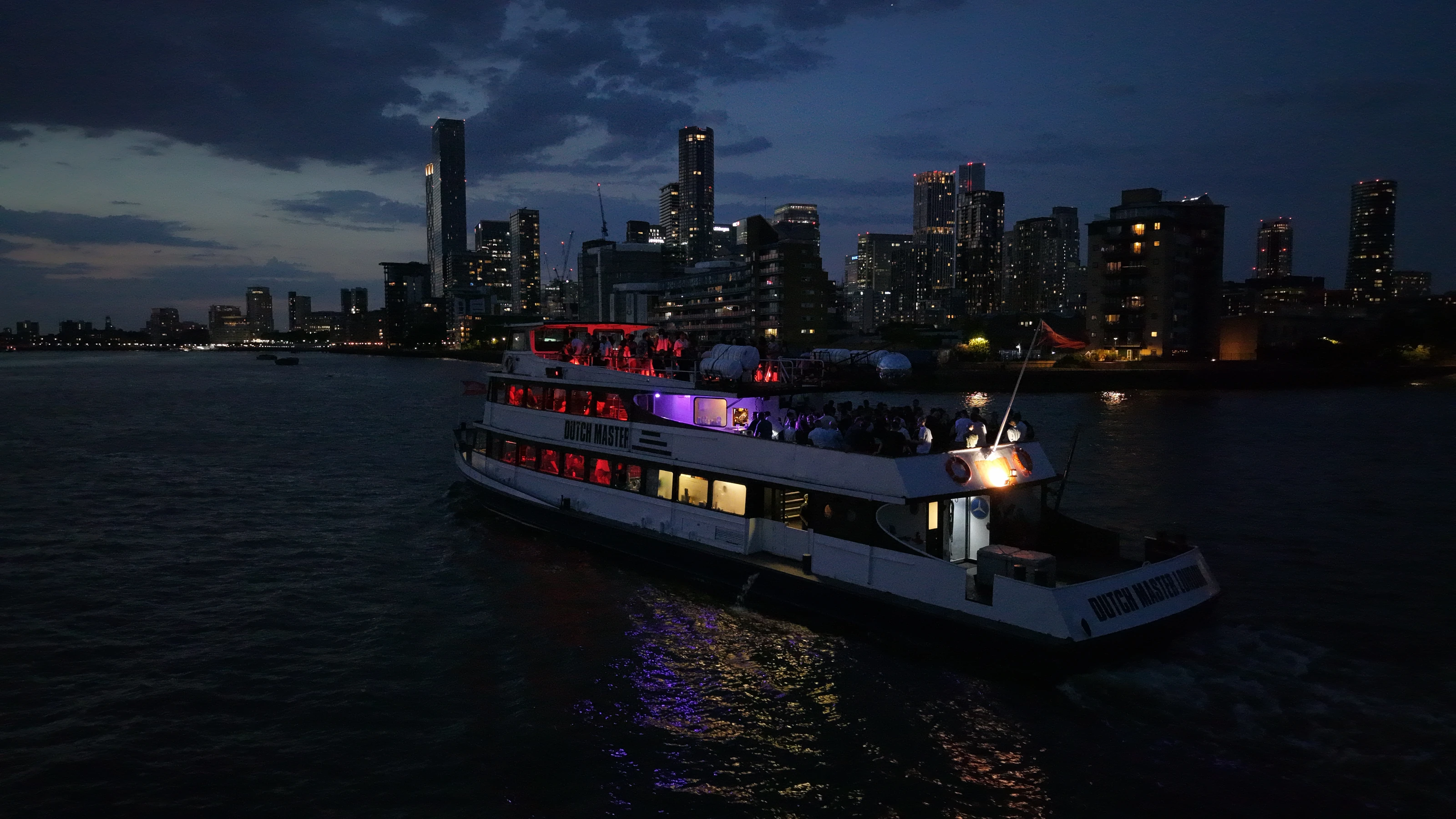
Night is the hardest condition to fly a camera in and the only one that shows what a floating nightclub actually is. What low-light aerial work on the Thames really requires, from sensor size to the physical problem of a black river with no visual reference.
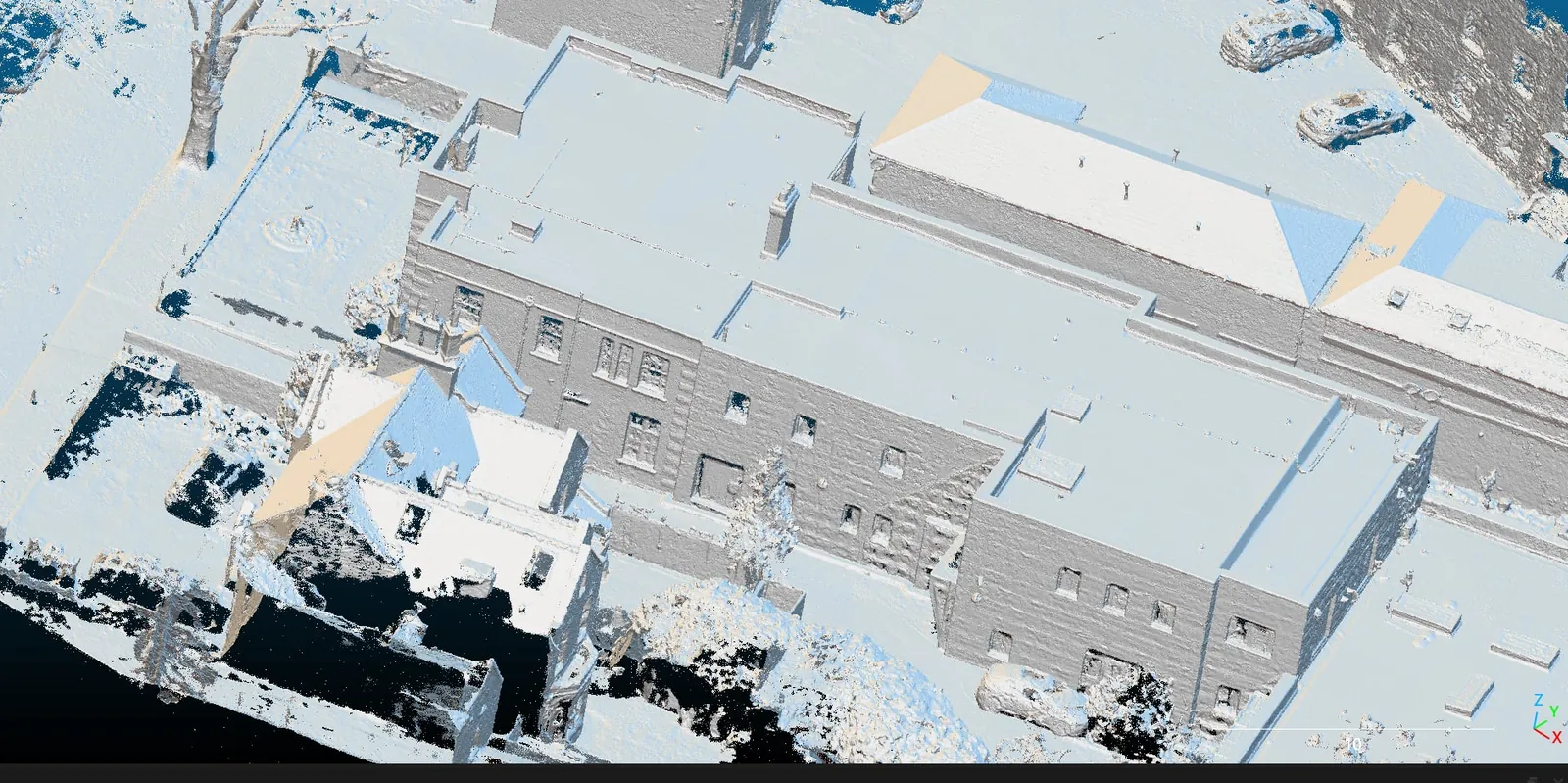
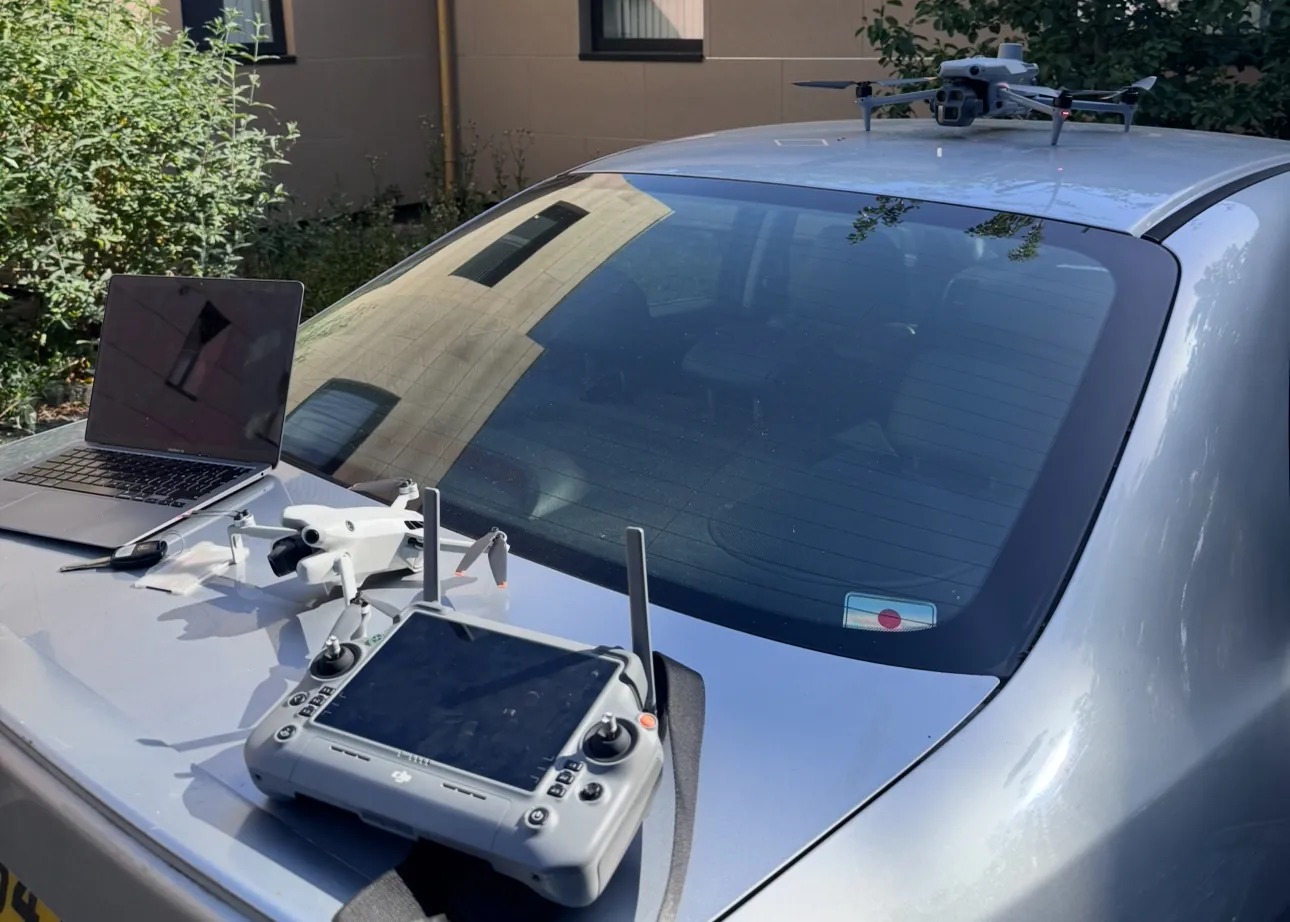
UAS London partnered with Bidston Draughting Ltd to produce a high-density 3D point cloud of an NHS facility in East London using our RTK-equipped DJI Matrice 4E.
A ground-level photograph of a building tells a buyer what it looks like. An aerial tells them where it is, what surrounds it, how much land comes with it and what the view from the top floor will be. Those are the questions that actually decide a purchase.
The light that flatters a building at street level is not the light that works from the air, because from above most of the frame is roof, road and water rather than facade. A practical guide to when to fly in London and why.
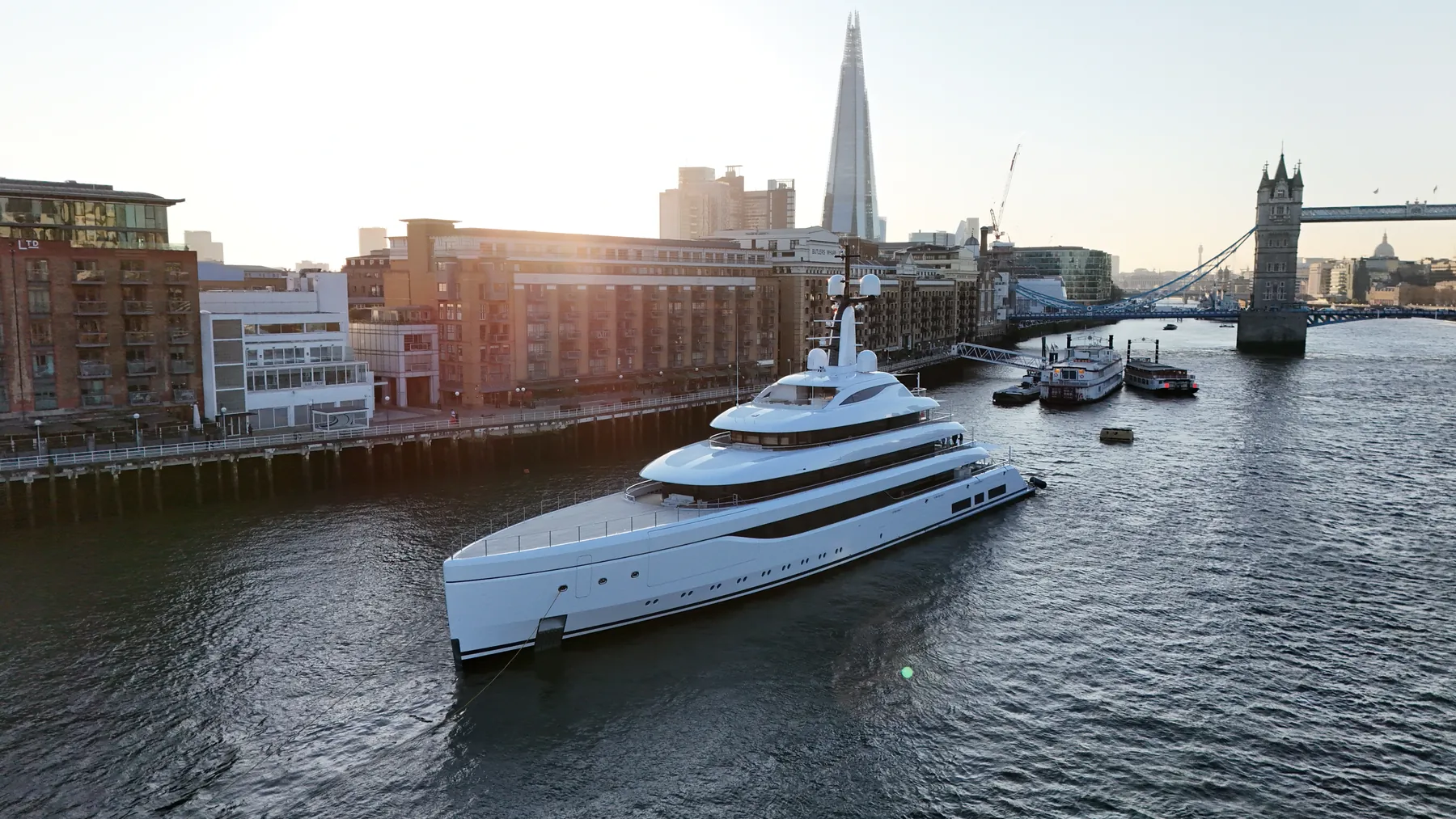
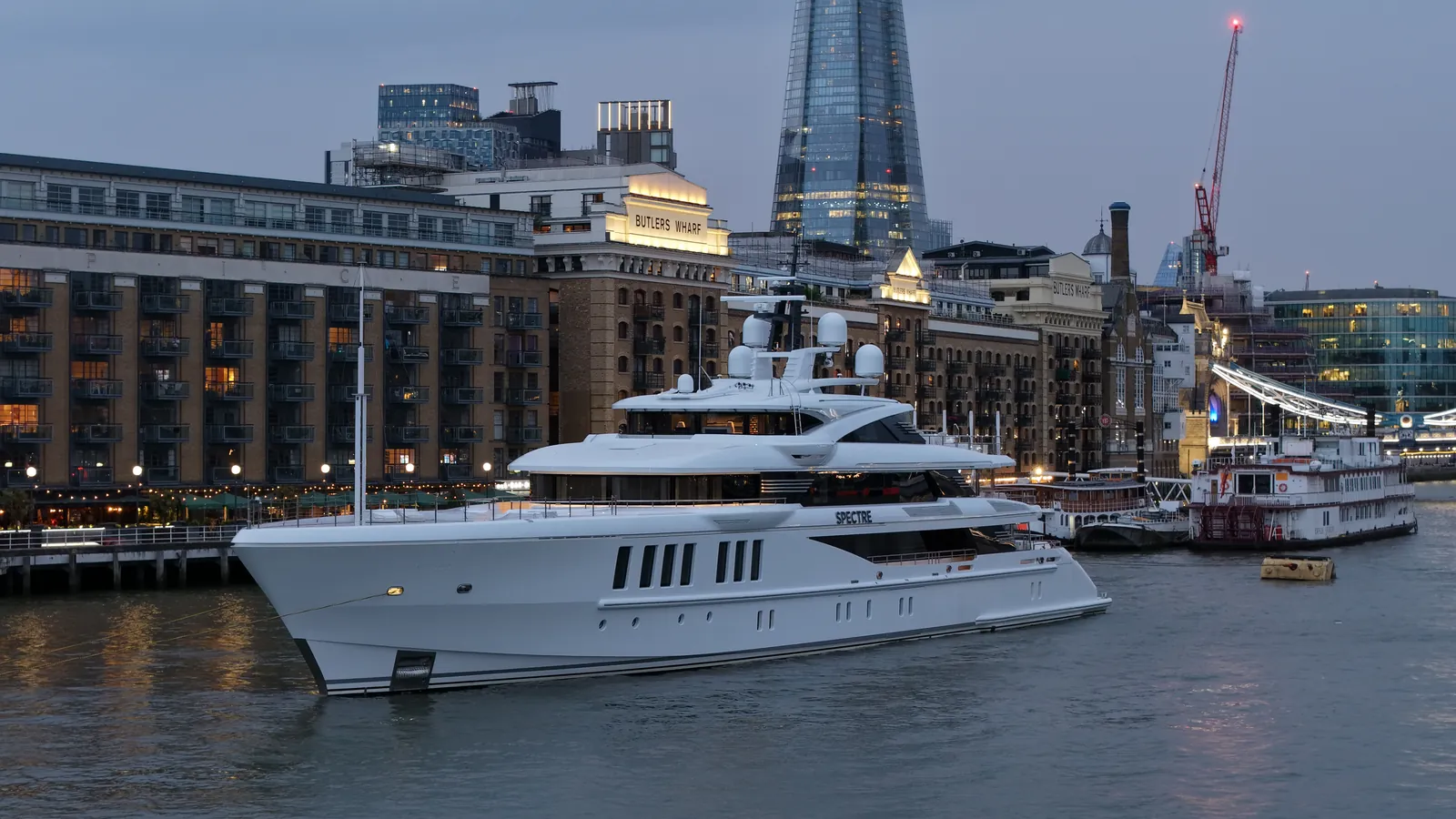
A superyacht in the Pool of London is a rare and short-lived subject, and the hardest part is not the yacht. It is everything around her: the most restricted airspace in the country, a working river, and a berth surrounded by several thousand tourists.
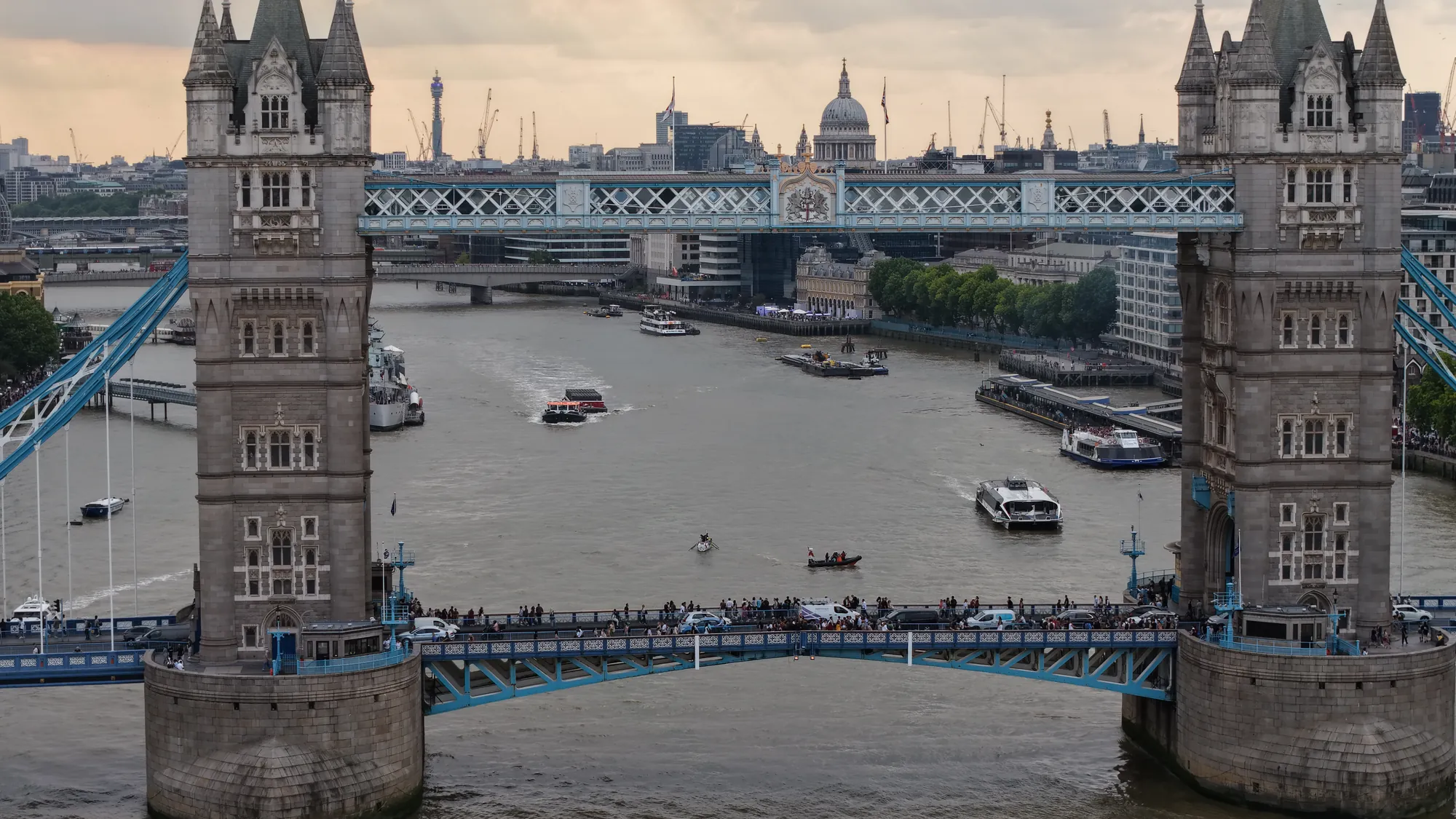
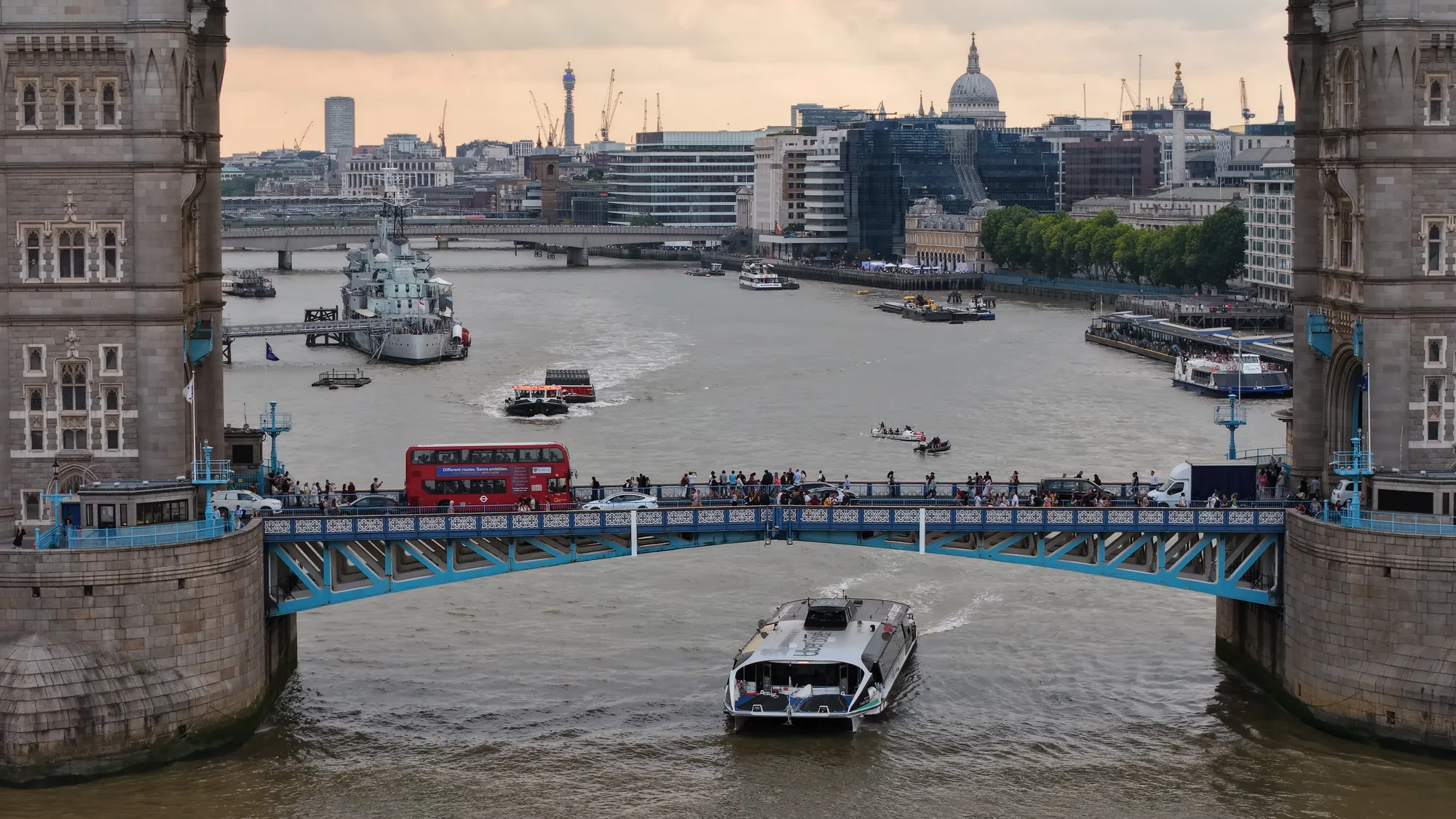
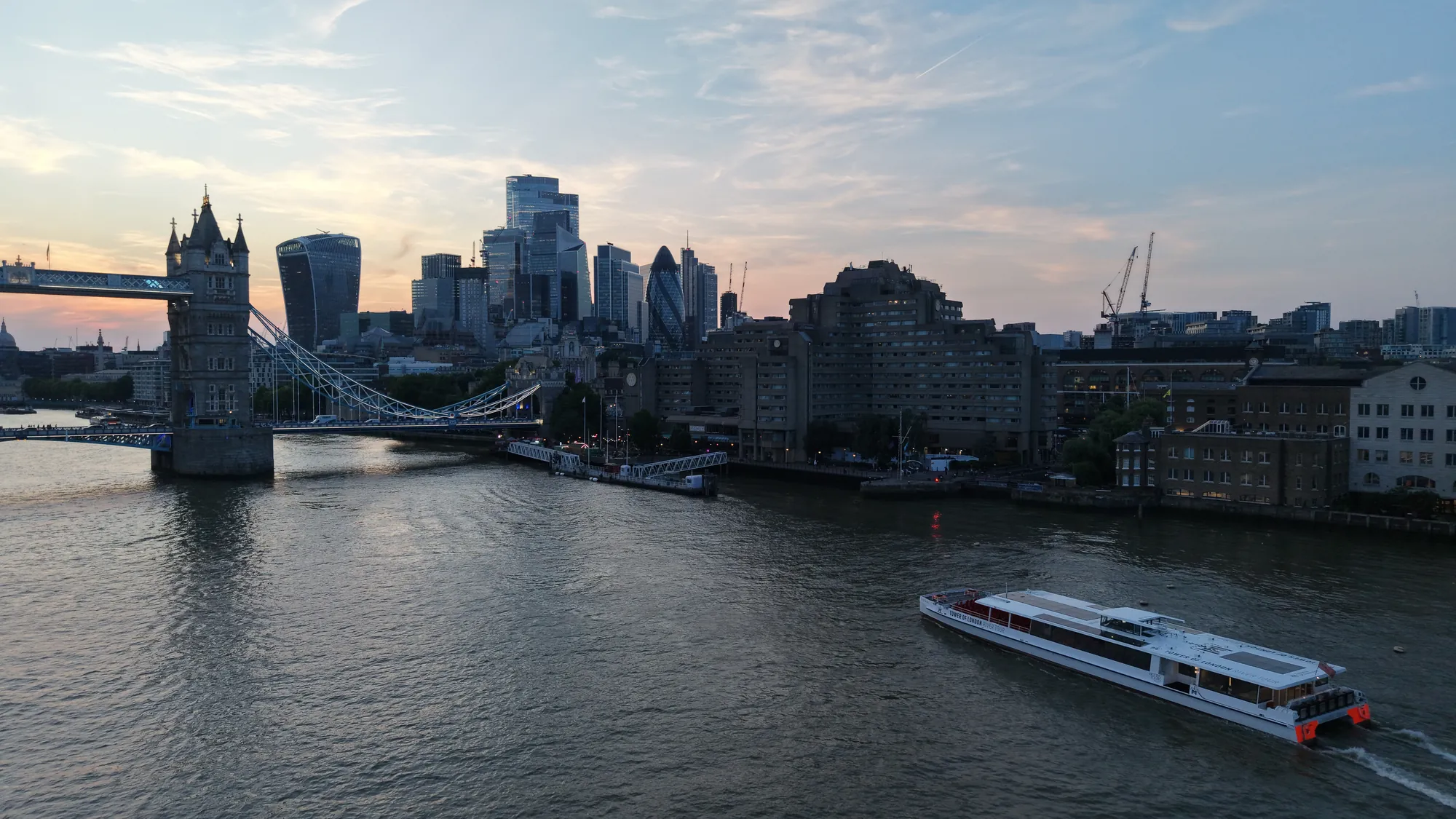
Everyone has photographed Tower Bridge. Almost nobody has photographed it from above, legally, in good light, with the City lined up behind it. A look at what makes the aerial view different, and why the airspace makes it rare.
A conventional camera drone and an FPV drone are not variations on the same thing. They solve opposite problems, and using both on the same operation is what turns a record of a tow into something people watch to the end.
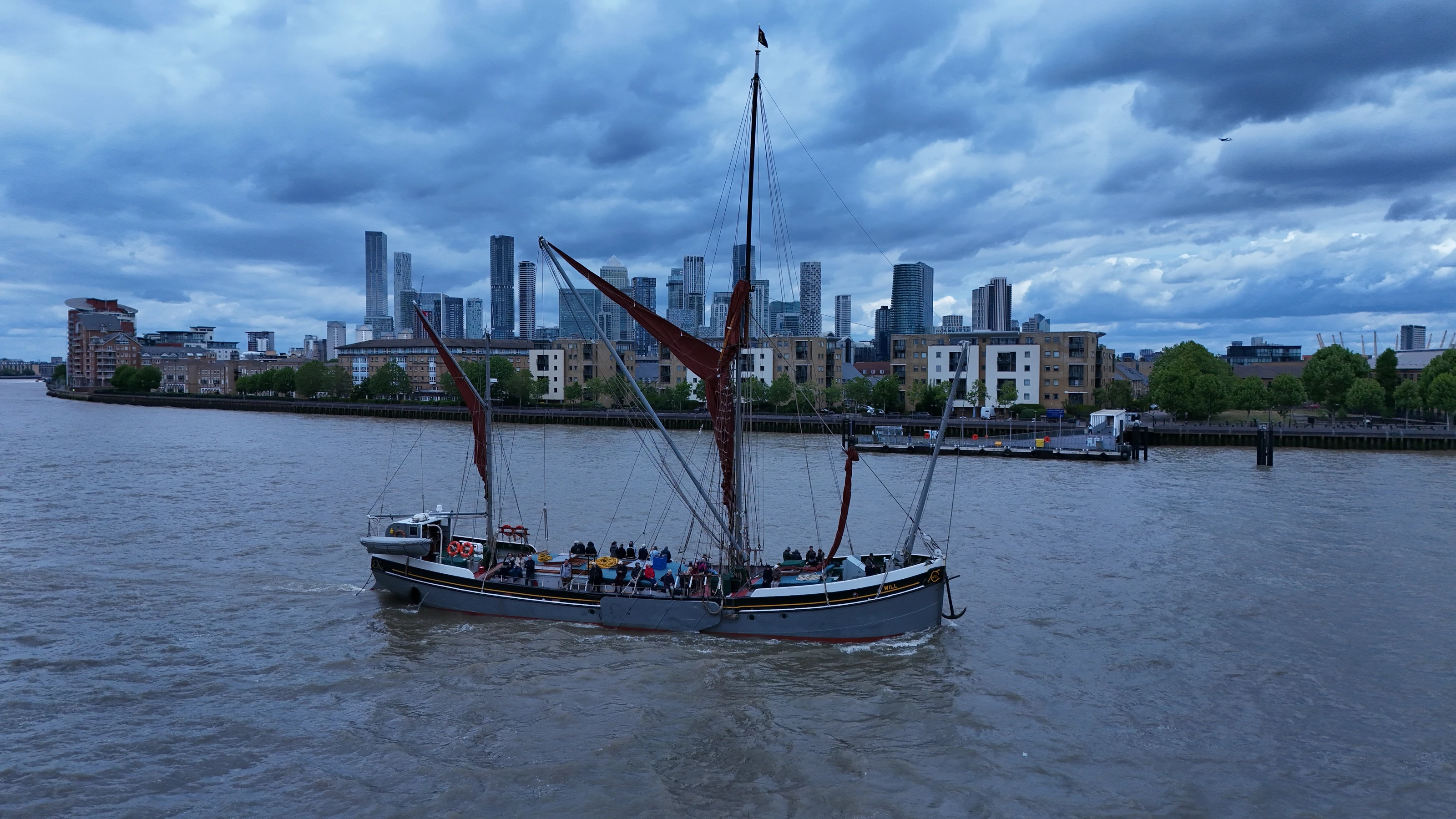
Flat bottomed so she could sit on the mud at low water, rigged so two people could work her, and shaped entirely by a river that empties twice a day. A short profile of the Thames spritsail barge, and one frame you cannot get from the bank.
A detailed look at our aerial operations capturing the historic tow of the ex‑PLA yacht ST Katherine down the tidal Thames, in coordination with MMS Marine.
How RTK-enabled drone surveys are revolutionising infrastructure inspections and construction monitoring across London.
A look at how we capture cinematic perspectives across London's restricted airspace while maintaining full compliance and safety.
Navigating the complex regulatory landscape of the River Thames. A guide to PLA permits, NATS authorisation, and police notification for drone operations.