
Most tug photographs are taken from a pontoon at deck level, where the hull foreshortens and every piece of working gear disappears behind the sheer. Here is what a useful vessel photograph contains, and why the angle matters more than the camera.
Look at the vessel page of almost any towage or workboat operator and you will find the same photograph. It was taken from a pontoon or a quay, roughly at deck level, from about thirty degrees off the bow. In it, the hull is foreshortened into an unreadable wedge, the sheer line hides the working deck completely, and the towing gear, the winch, the staple and the fendering are all invisible.
It is a photograph of a boat. It is not a photograph of a tug.
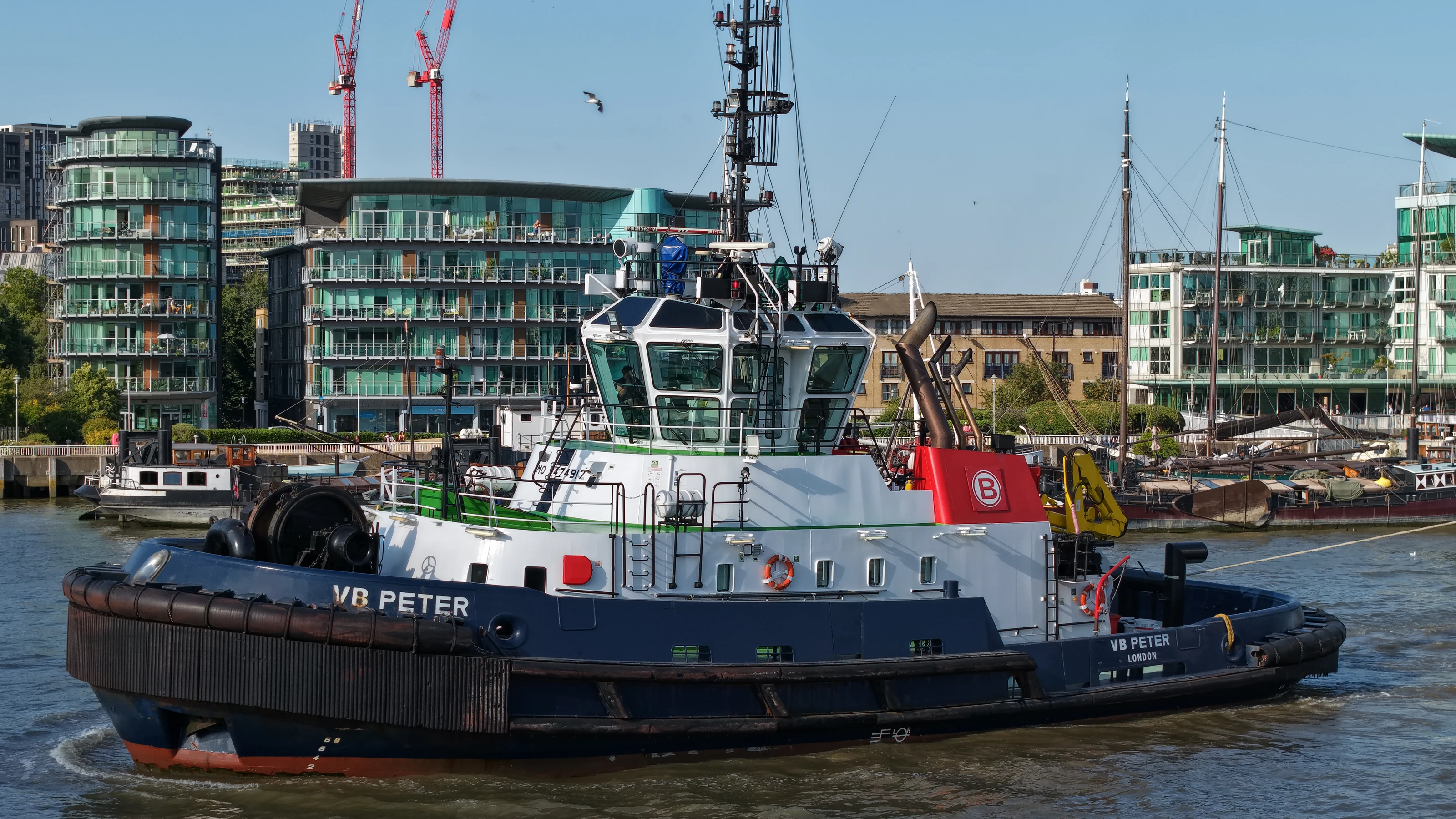
The frame that works: square on, slightly above
The image above is VB Peter, one of the Boluda Towage tugs working London, photographed while she lay off Bermondsey between jobs.
It is a straight broadside taken from slightly above the beam, and that combination does four things at once:
- •The full length of the hull is at its true proportion, so the vessel looks like her actual size rather than a stubby wedge.
- •The working deck is visible, so the winch, the towing staple, the deck fittings and the gear stowage all read.
- •The fendering is visible along the whole length, which is the part a charterer looks at when judging how a boat is kept.
- •The wheelhouse glass and the profile of the superstructure are unobstructed, so the vessel is identifiable at a glance.
None of that is available from deck level. The sheer line hides the deck, and the closer you get from a low angle, the more of the boat hides behind itself.
The set every vessel should have
One photograph is never enough. A vessel that is going to be marketed, chartered or tendered needs a small standard set, and it is the same set for a tug, a multicat, a pontoon or a crew transfer boat:
- •The broadside, as above, both sides if the vessel carries different markings or fendering.
- •A three quarter bow view from above, which is the one that shows shape and power and usually becomes the hero image.
- •A true overhead, which shows deck layout, clear deck area and where gear is stowed. This is the one operations people and charterers actually want, and almost nobody has it.
- •A working shot, with the vessel doing the job: on a tow line, alongside, pushing on, with the wash showing how much power is going in.
- •A context shot, the vessel against a recognisable backdrop, because that is what gets used in press, on social and on a tender cover.
Five images. Most operators have one, and it is the wrong one.
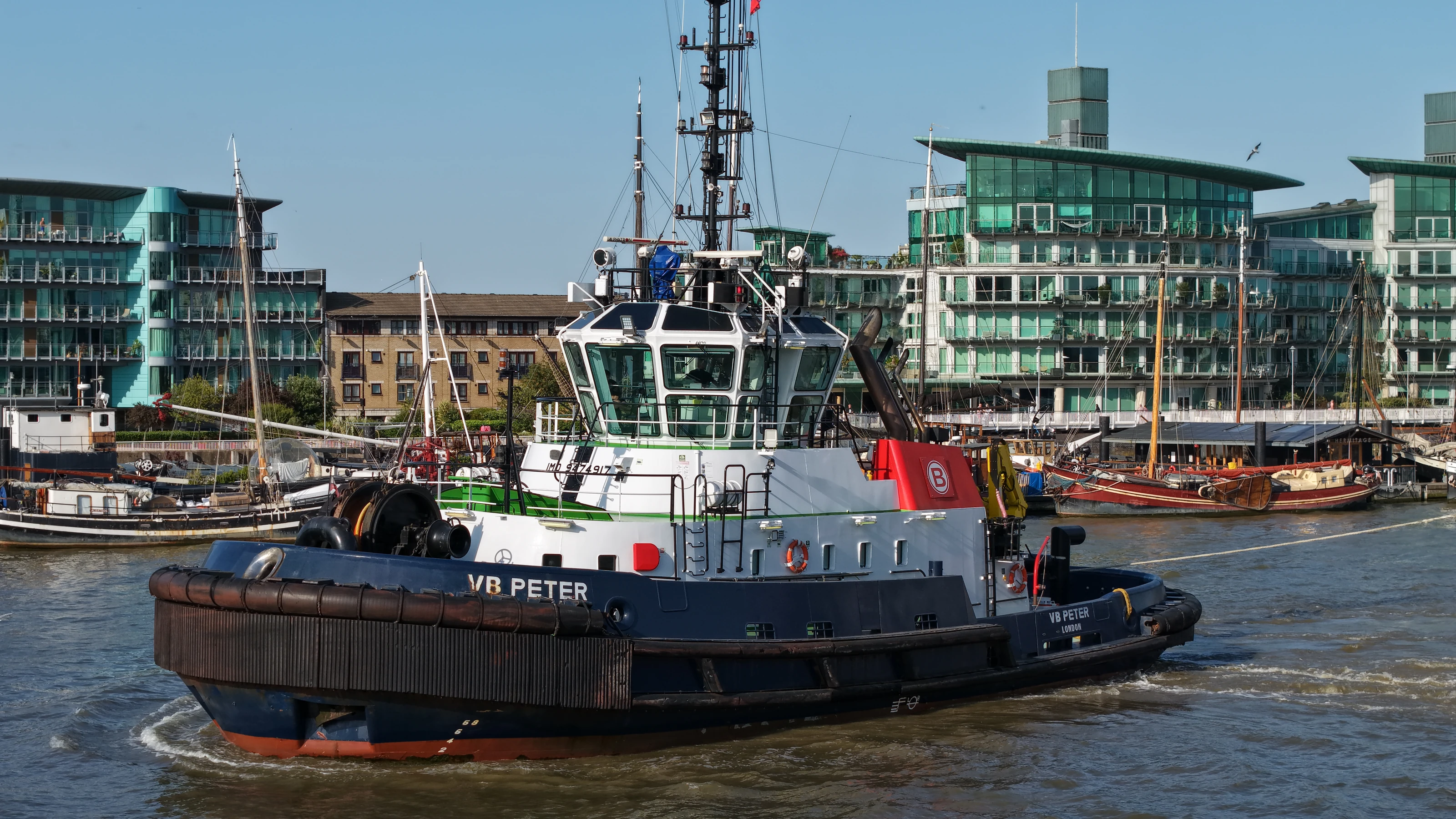
Light, and why a clean grey day is not a disaster
The best light for a vessel is low and slightly to the side. It picks out the sheer, models the hull form and puts texture into the fendering and the deck, and on the water it gives you a wash pattern with detail in it rather than a flat white smear.
Flat overcast is not the catastrophe people assume. It is honest, even light that shows colour and condition accurately, which is exactly what you want for a condition record, a sale listing or a technical specification sheet. What overcast will not give you is drama, so it is the wrong choice for a hero image and the right choice for a documentation set.
Hard midday sun is the difficult one: the deck goes into black shadow under the wheelhouse while the topsides blow out, and no amount of processing recovers both.
Doing it without disrupting the vessel
None of this needs the vessel to stop working. Every frame here was taken from a standoff, using focal length rather than proximity, with the aircraft well clear of the working area and of any gear that might move.
That is the practical selling point for an operator: a full set can be made during a movement that was happening anyway. No day off charter, nobody standing around, no interruption to the crew.
More of our vessel work is on the VB Peter project page, the Cory Rebelle tow and the crew transfer set at Chatham.
If you operate vessels and want a proper set made of them, see our maritime drone services or get in touch.