
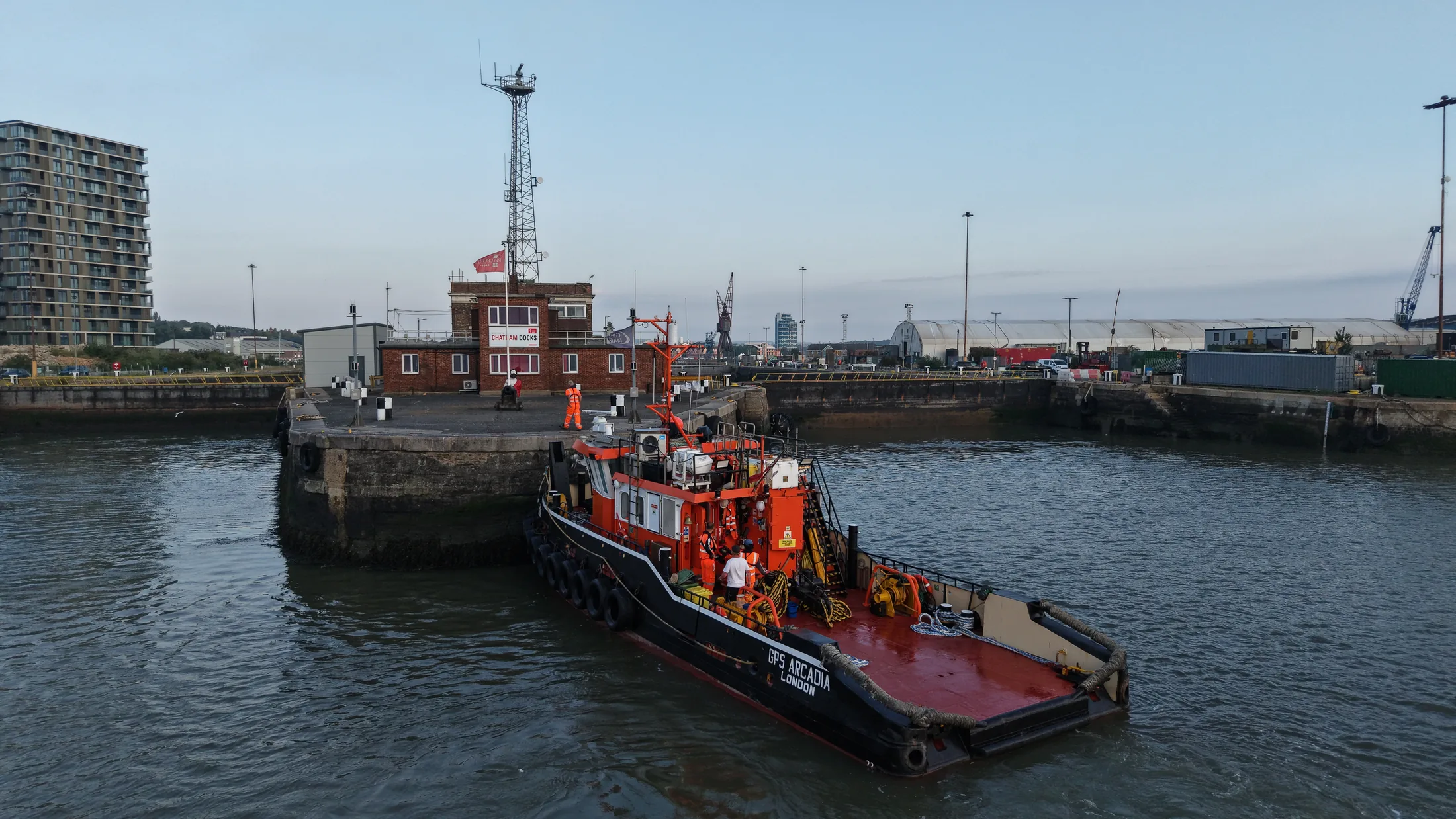
A crew transfer is the most routine thing a workboat does and one of the least photographed. It happens early, it happens fast, and it happens in the few metres between a moving vessel and a fixed wall. From above, the seamanship is visible in the water.
Shortly before six on the morning of 17 July 2026, a Damen Stan tug came onto the dockyard wall at Chatham to put crew ashore. The vessel was the GPS Arcadia, operated by GPS Marine Contractors. The whole thing took a few minutes and nobody watching from the quay would have thought it was worth a photograph.
It is one of the best sequences we have made.
The wash is the photograph
Holding a tug against a wall in a tideway is not parking. There is no line ashore doing the work in this situation; the vessel is being driven continuously onto the wall, and the skipper is trimming power and helm the entire time to keep her still while people cross a gap that opens and closes.
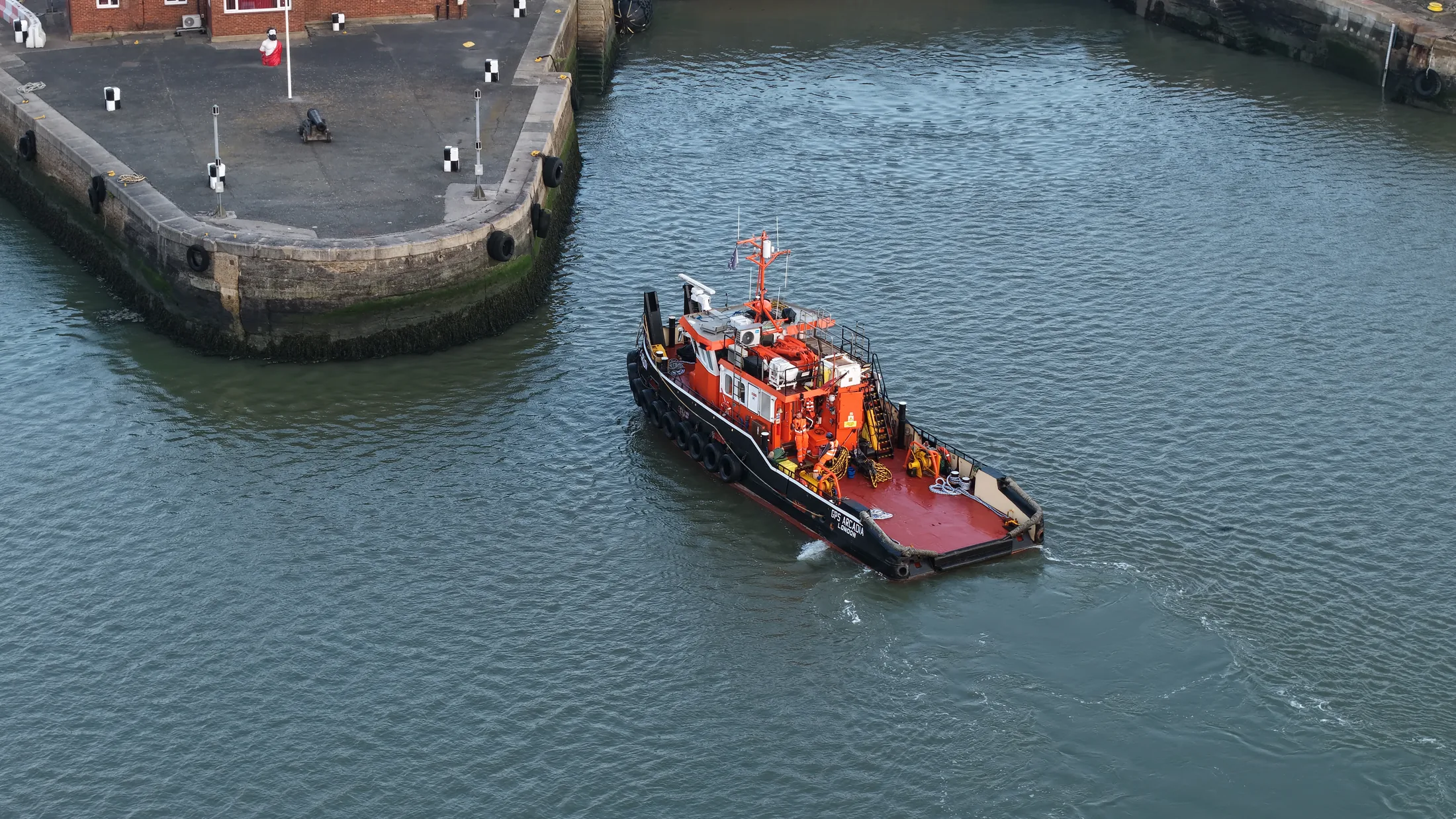
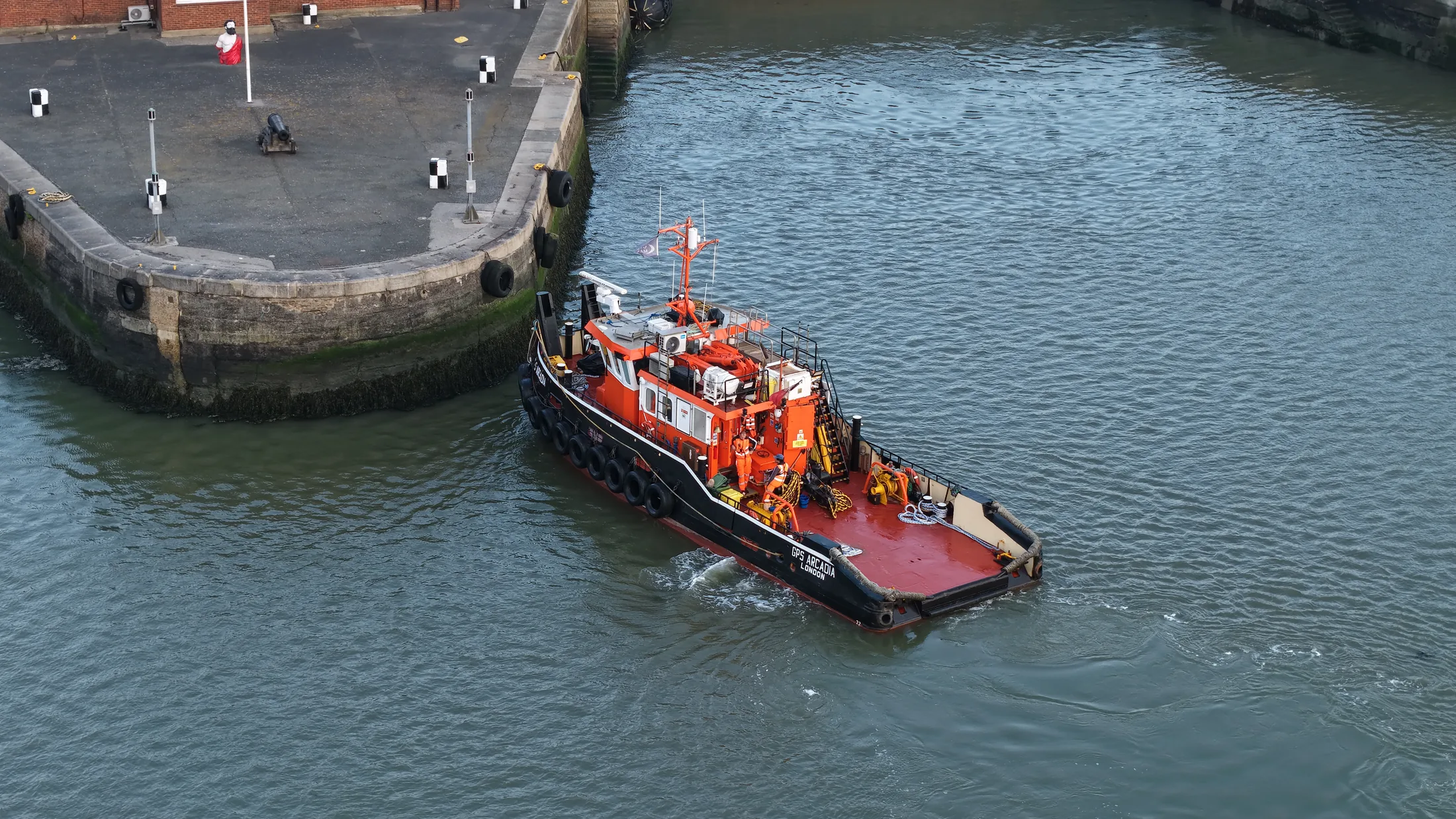
From the bank you cannot see any of that. You see a boat next to a wall. From directly above, the wash pattern astern makes the effort visible: you can read how much power is going in, which way it is being directed, and how the vessel is being held against the set of the tide. That relationship between vessel, wall and water is the whole content of the picture, and it exists at exactly one viewpoint.
This is the argument for aerial coverage of routine marine operations in a sentence. The skill is invisible from the ground and obvious from above.
Why first light is worth getting up for
Low morning sun on the Medway does something specific to this kind of work. It comes in almost horizontally across the deck, so fendering, towing gear, bitts, hatches and the texture of the dockyard wall are all raked and picked out in relief. Detail that vanishes into flat grey at midday is legible.
At the same time the water stays dark, because a low sun on a river only lights the parts of the surface angled towards it. That gives you a dark background with a bright, structured wash pattern on it, which is why the transfer sequence reads so clearly.
The cost of this is that it happens at half past five in the morning and lasts about forty minutes. Marine work starts early anyway, so the two things line up better than they do in most industries.
Documenting the routine, not the exceptional
Marine operators tend to commission photography for the exceptional job: the big lift, the unusual tow, the newbuild's first movement. The routine work goes unrecorded for decades.
That is backwards for most commercial purposes. A tender panel, a prospective charterer or a recruit wants to see the ordinary competence, because that is what they are buying. A sequence showing an approach, a turn and a transfer executed cleanly says more about an operator than a single dramatic frame.
It is also cheap to do. This was one flight, at first light, over an operation that was happening anyway.
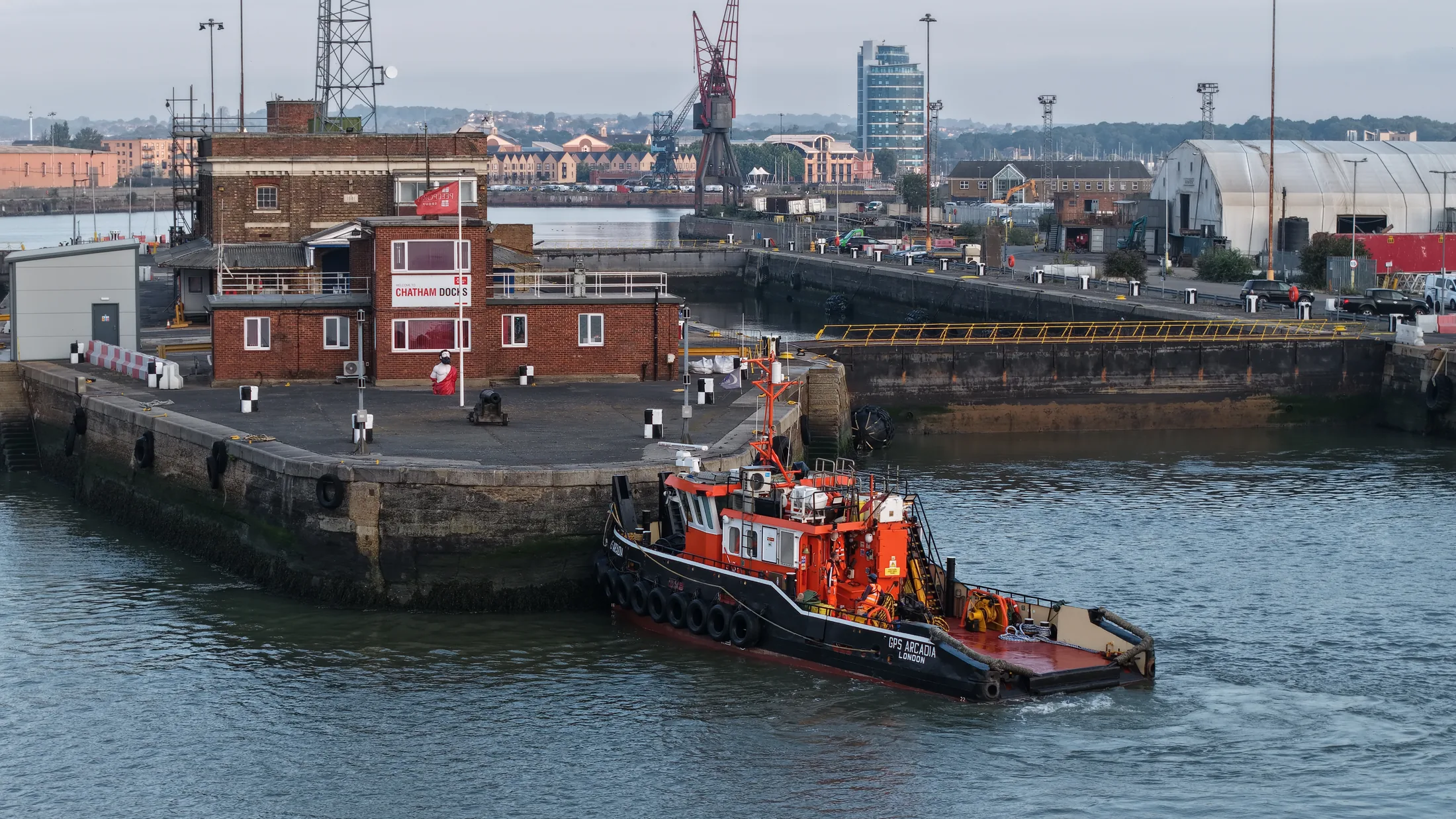
The full sequence is on the crew transfer project page. The same tug, working with the GPS Iberia, appears later that day in our record of the final tow of HMS President 1918.
These photographs were made independently as part of our ongoing record of vessels working the Thames and the Medway. UAS London was not commissioned in connection with this operation and has no contractual relationship with the vessel's operator. Vessel identification is taken from markings visible in the images.
For operator-side work, see our maritime drone services or get in touch.