
Tower Bridge opened for her, two tugs walked her through, and she spent the night moored alongside a Second World War cruiser in the middle of the City. A vessel profile of the James Fisher tanker Orca Fisher, and what it takes to photograph a commercial transit of central London.
There are two rivers in London. One of them has the Shard on it and is photographed several million times a day. The other one moves fuel, aggregate, waste and cargo on a timetable set by the moon, and almost nobody looks at it.
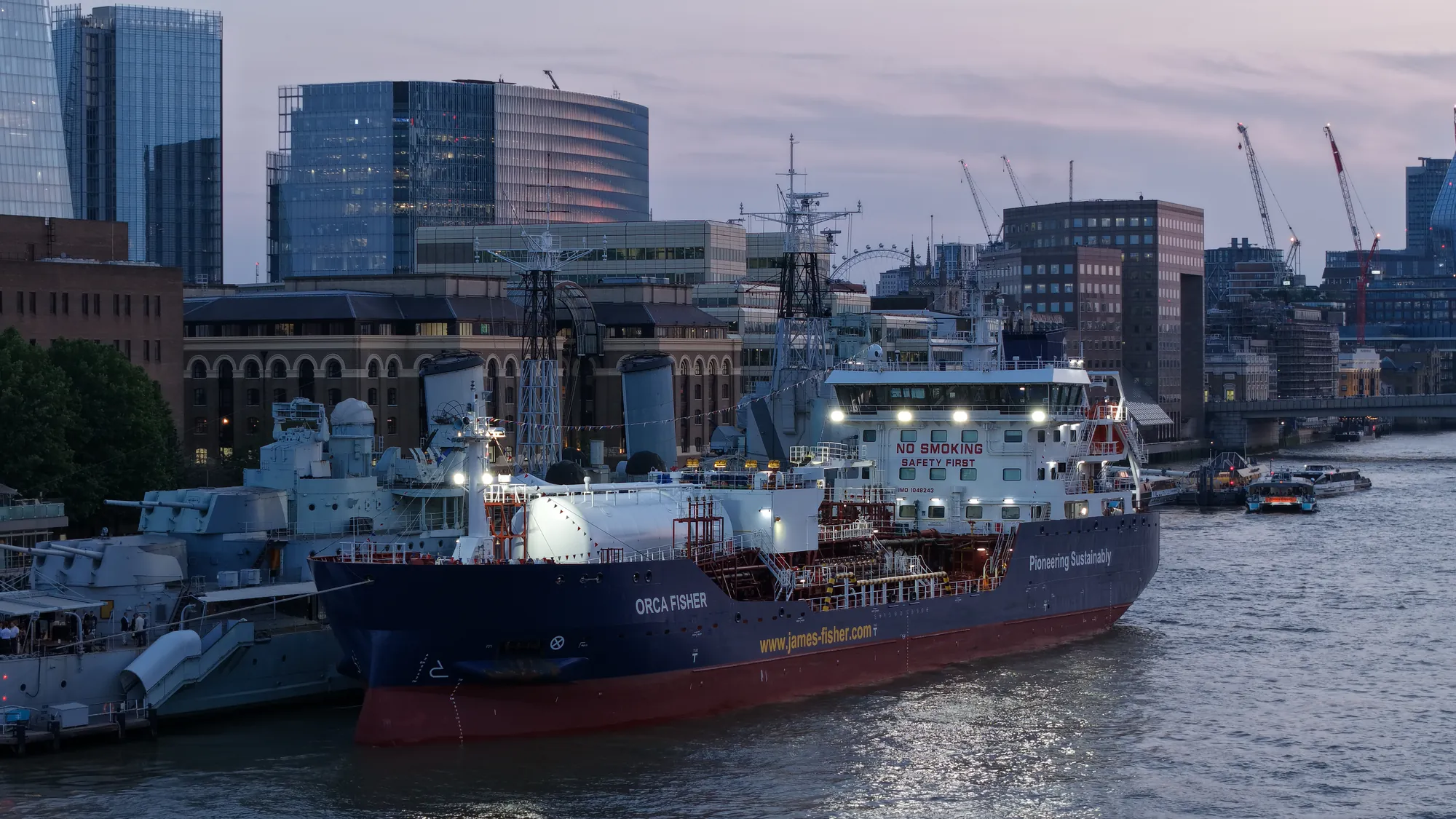
Occasionally the two overlap in a way that is impossible to ignore. Orca Fisher, a tanker of the James Fisher fleet registered at Barrow, came up the tideway under tug escort, had Tower Bridge opened for her, and spent the evening lying alongside HMS Belfast with the City stacked up behind her.
Why a tanker goes through Tower Bridge at all
A vessel of this size cannot pass beneath the closed bascules, so the bridge is lifted for her. Tower Bridge lifts are booked in advance and are a matter of public record, and the great majority of them are for exactly this kind of movement rather than for anything ceremonial.
Above the bridge, the Pool of London gives you the one thing the lower river cannot: berths in the middle of the city. Alongside HMS Belfast is a real, working mooring, and a ship that ties up there is a ship whose business is in central London rather than at a terminal in Essex.
The tugs matter too. Boluda Towage handle a large share of ship handling on this part of the river, and their tugs walk a vessel through a bridge hole that is not much wider than the ship, on a tide that is doing several knots underneath her. Nobody in the photograph is relaxed.
The fleet renewal behind the ship
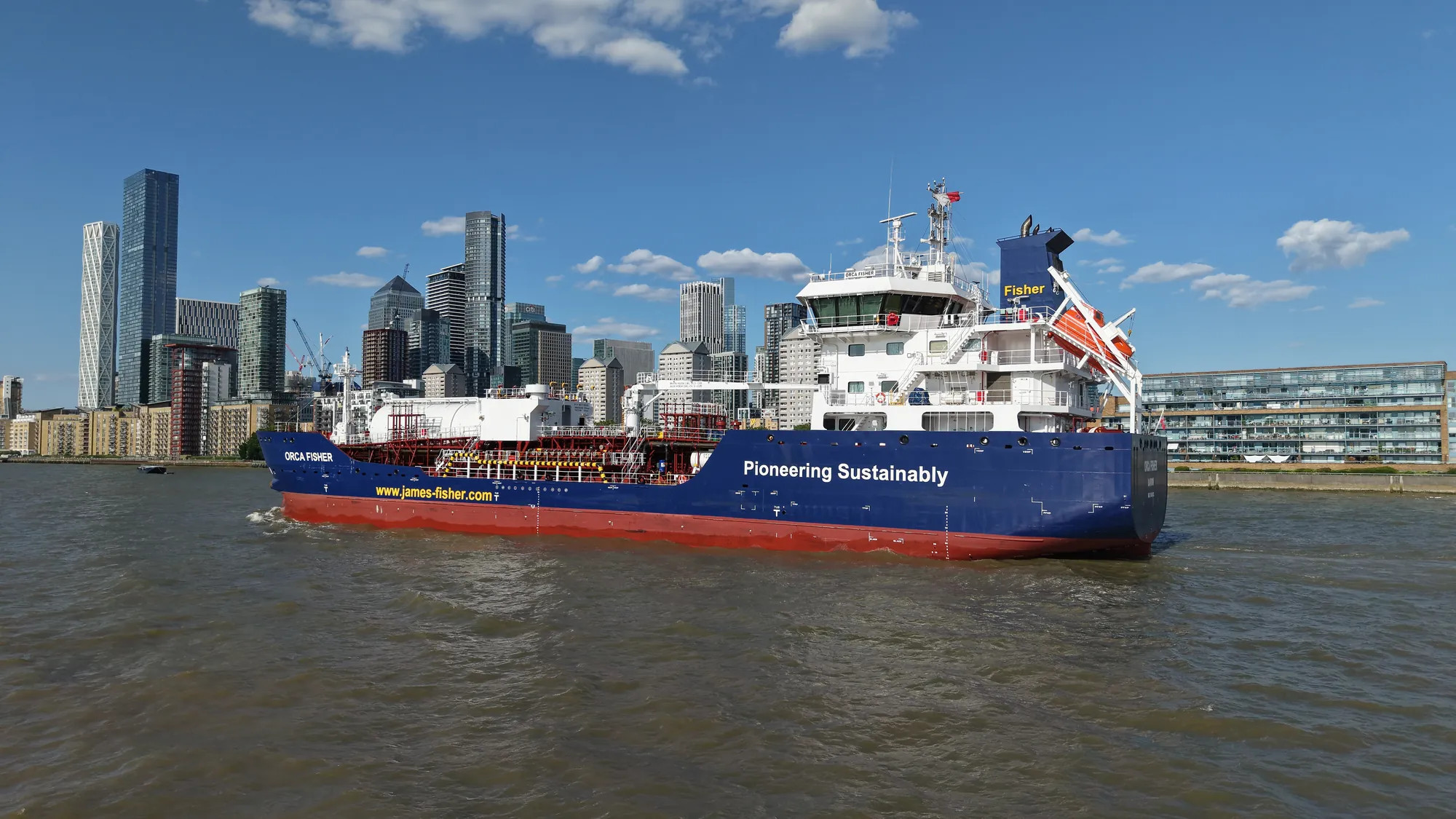
Orca Fisher belongs to a generation of vessels built as James Fisher renew their tanker fleet. That renewal is the whole commercial story: operators replacing older tonnage want images of the new ships doing the work, because a fleet photograph taken in 2011 sells nothing in 2026.
This is the gap in most marine operators' marketing. A company will spend heavily on a newbuild and then illustrate it with a builder's handout shot taken on a sea trial in flat grey light, or with a snapshot taken from a quay at deck level where the hull foreshortens and nothing reads. The vessel does the most impressive thing it will ever do, in the most recognisable city in the country, and no one photographs it.
Photographing a transit you cannot repeat
A transit like this has no second take. The vessel is committed, the bridge lift is booked, and the tide decides everything. Practically, that means the work is done before the ship arrives.
We plan against three things. The passage plan, so we know which reach she will be in at which time. The state of the tide, because it determines the direction she is moving and how fast the gap between vessel and landmark closes. And the light, because a transit that starts in daylight and ends at dusk is two completely different shoots with a single hour in between where the sky and the city lights balance.
The dusk frames here are the ones that took planning rather than luck. Once the sun is down there is a short window where the sky still holds colour, the deck lighting has come on and the City is lit but not yet blown out. Fifteen minutes later the sky is black, the highlights clip, and all you have is a bright ship in a void.
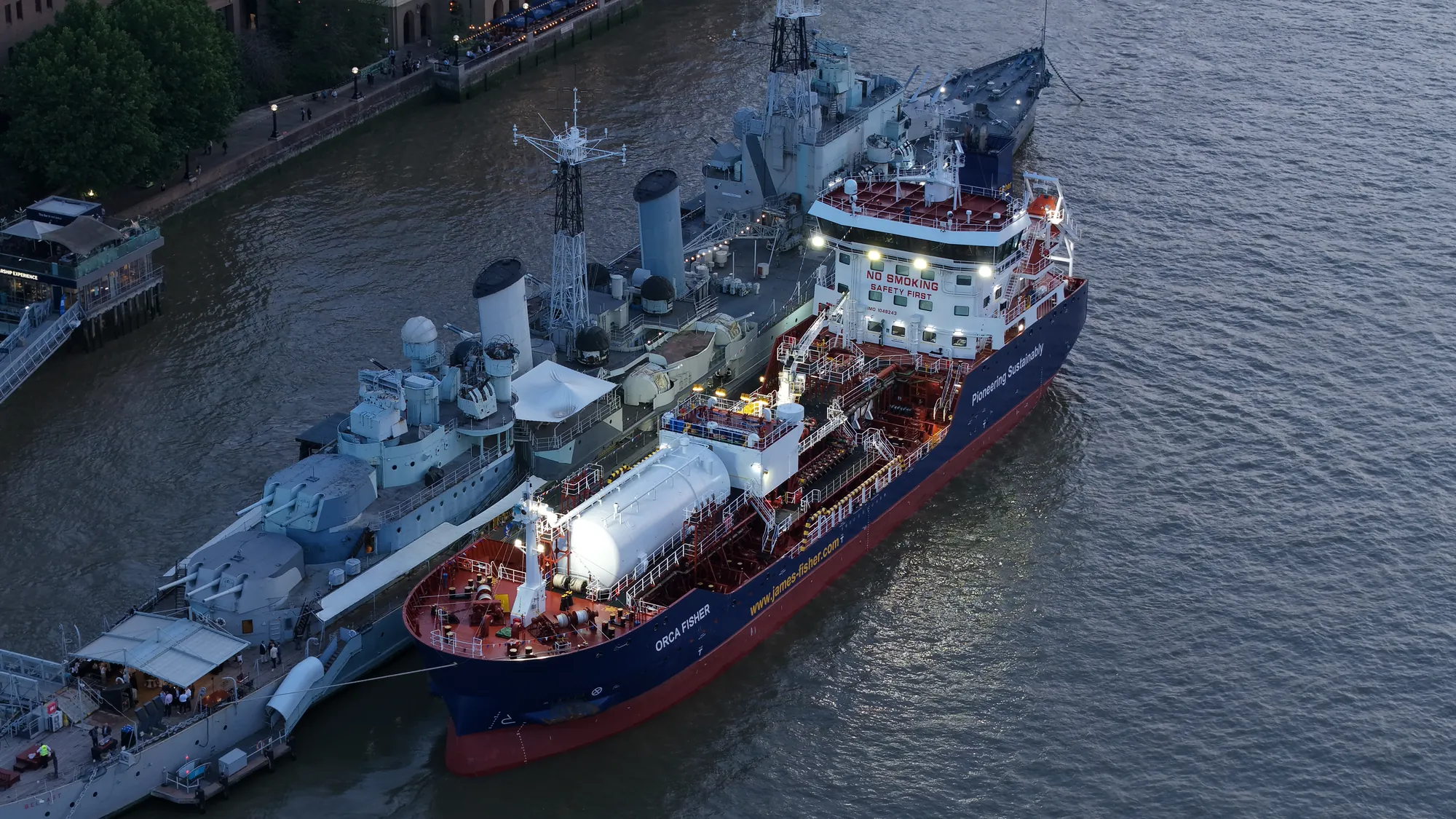
Standoff, and why it is not a compromise
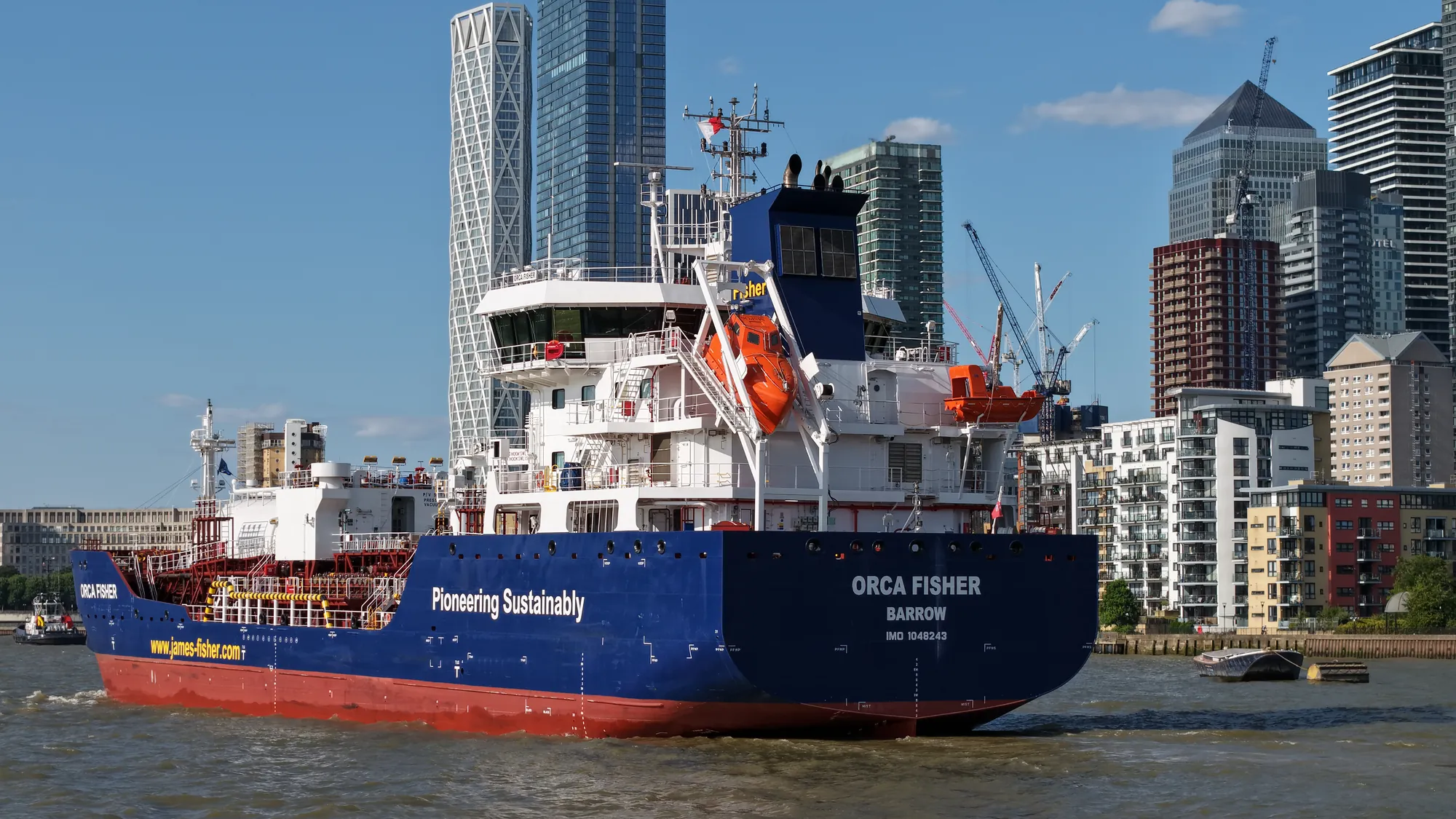
Everything here was shot from a standoff, using focal length rather than proximity. That is partly a safety rule and partly a better photograph.
A drone close to a working vessel is a distraction to the crew and a hazard to the operation, and on the tideway it puts you inside the space where the tugs are working. Backing off and reaching in with a longer lens compresses the ship against the skyline behind it, which is exactly the effect you want when the point of the picture is a ship in a city. Wide and close makes the buildings small. Far and long makes them loom.
The full set is on the Orca Fisher project page.
We were not commissioned in connection with this transit and had no involvement in it. These photographs were made independently from the air over the Thames, as part of our continuing record of vessels working the tideway. Vessel and operator identification is taken from markings visible in the images.
If you operate commercial tonnage on the Thames and want your vessels photographed properly, our maritime drone services and Thames drone services pages cover how we work, or you can get in touch.