

One of the last three surviving Royal Navy warships of the First World War left Chatham under tow on 17 July 2026, bound for a facility at Erith to be dismantled. We photographed her passing the Dartford Crossing, and this is her story, with a carefully sourced account of what has and has not been confirmed.
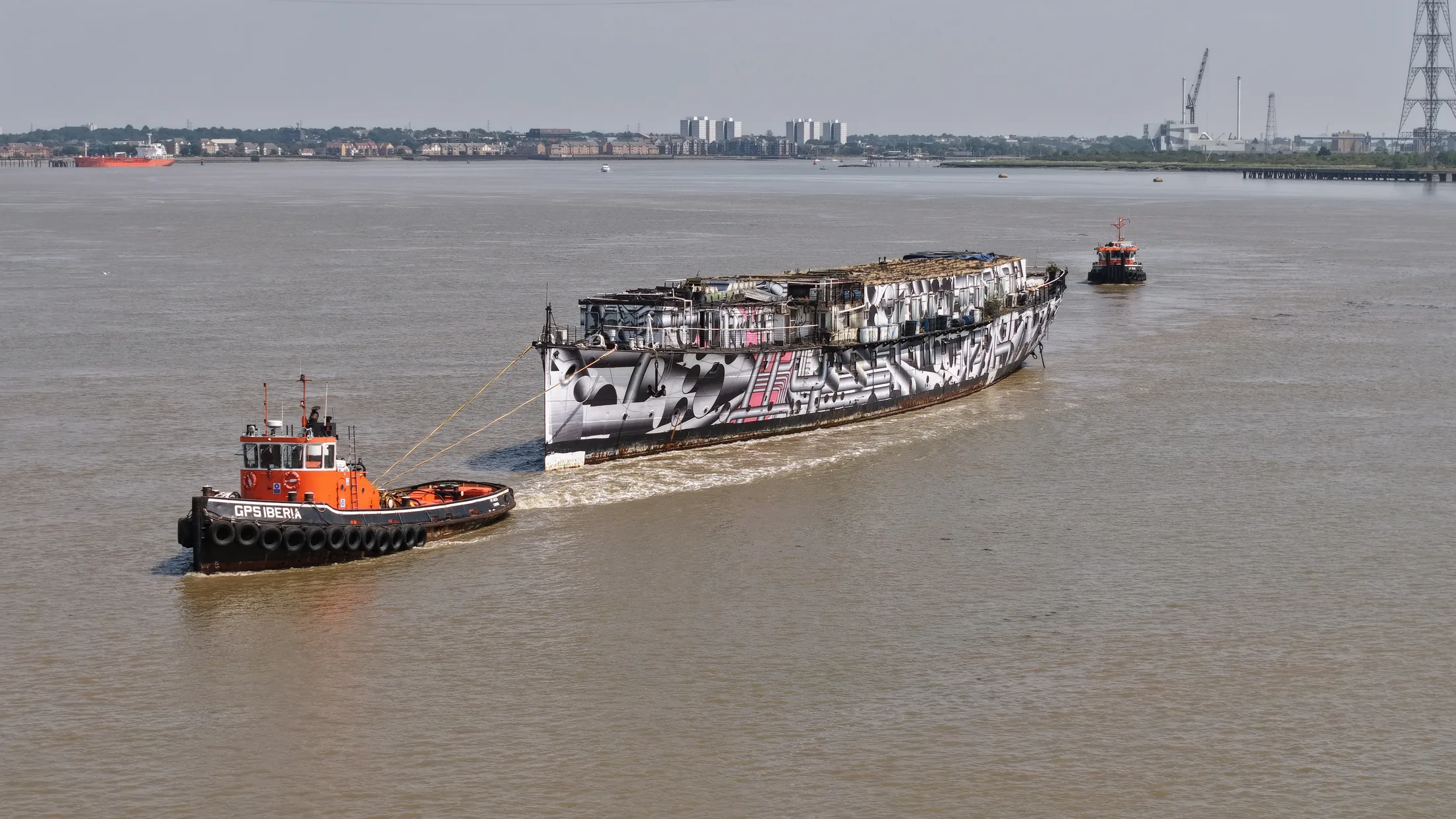
On the morning of Friday 17 July 2026, a rust-streaked hull in black, white and pink dazzle camouflage was towed out of Chatham and down the Medway. She was HMS President, launched in 1918 as HMS Saxifrage, and one of only three surviving Royal Navy warships from the First World War.
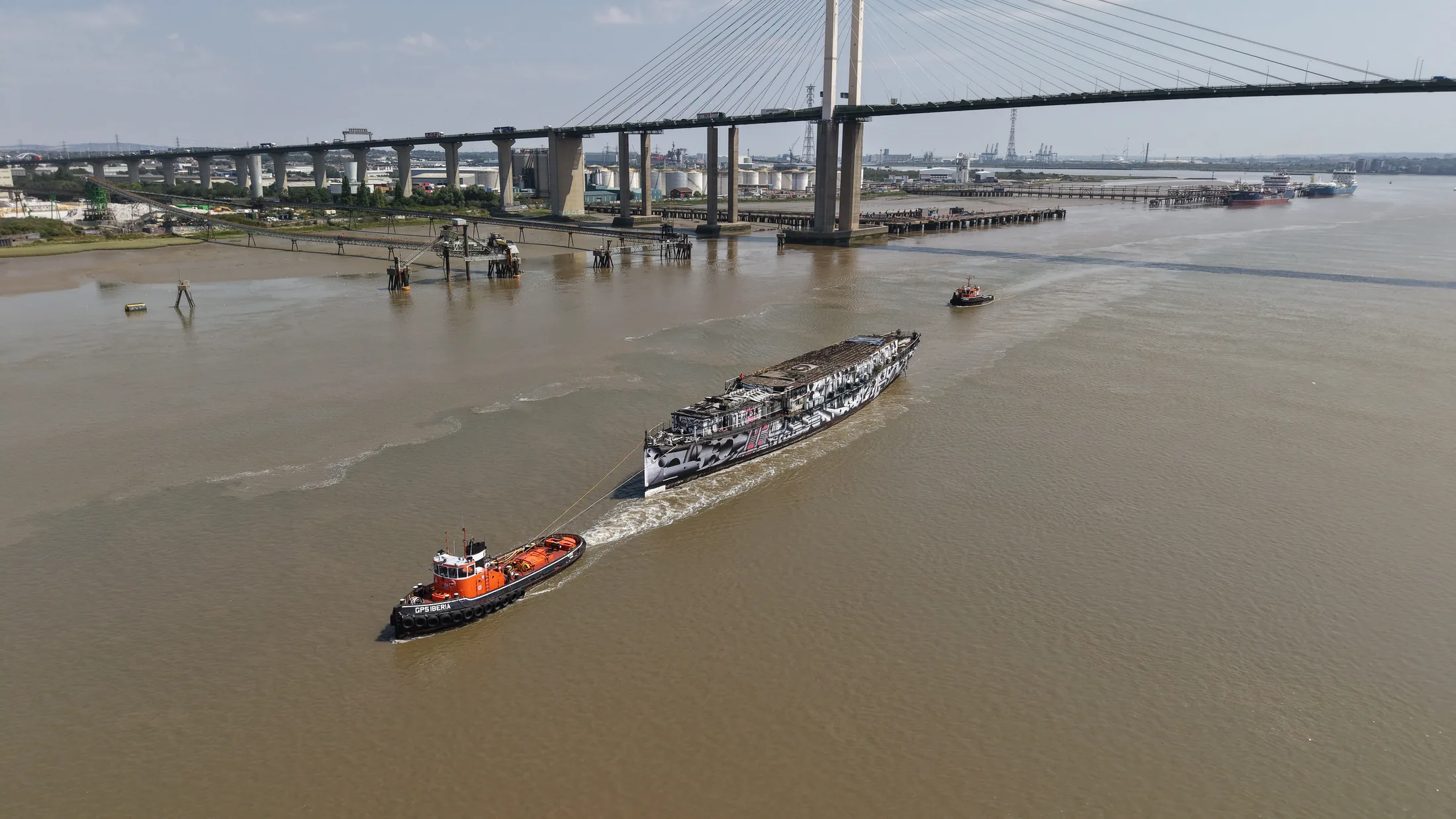
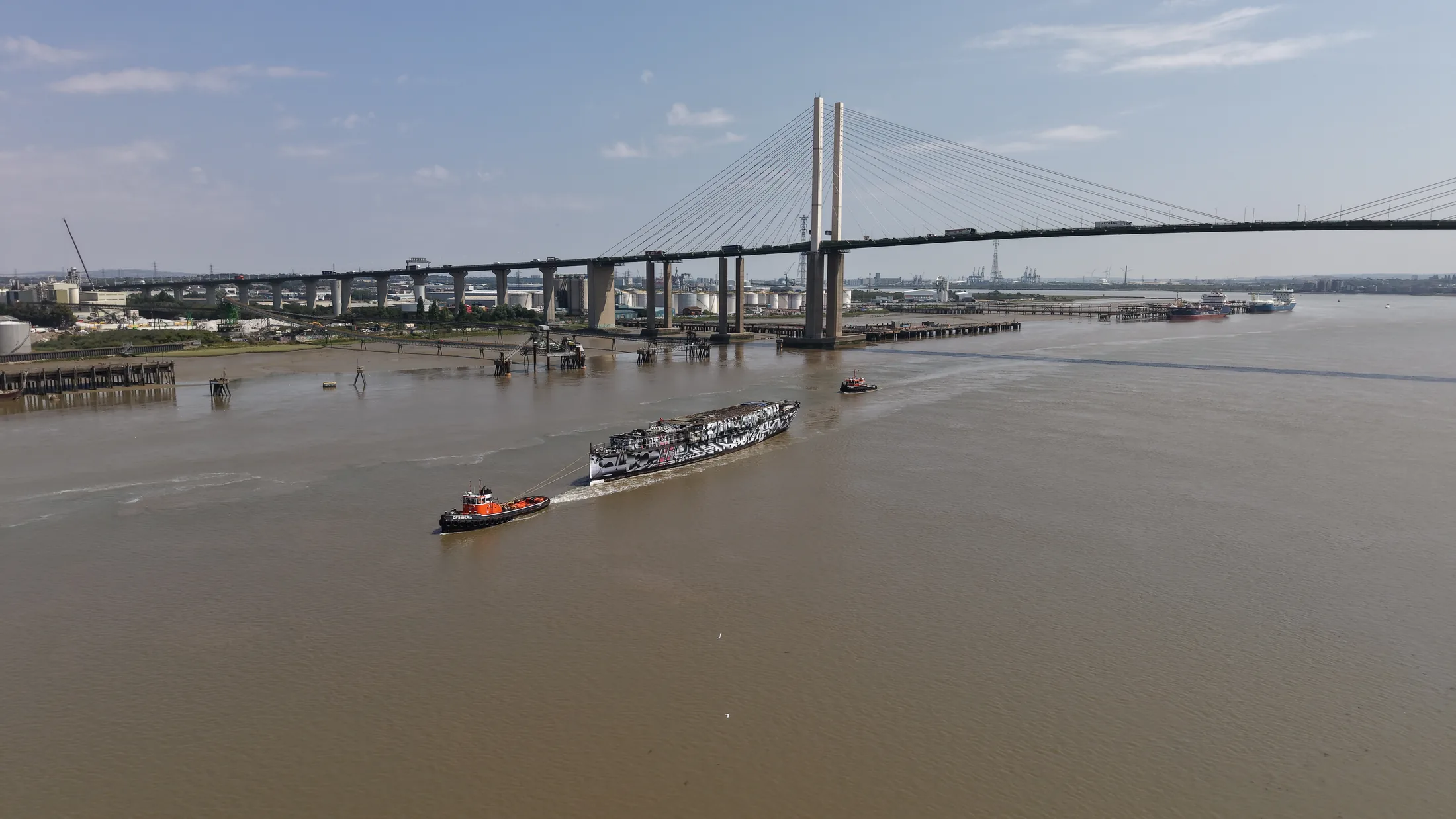
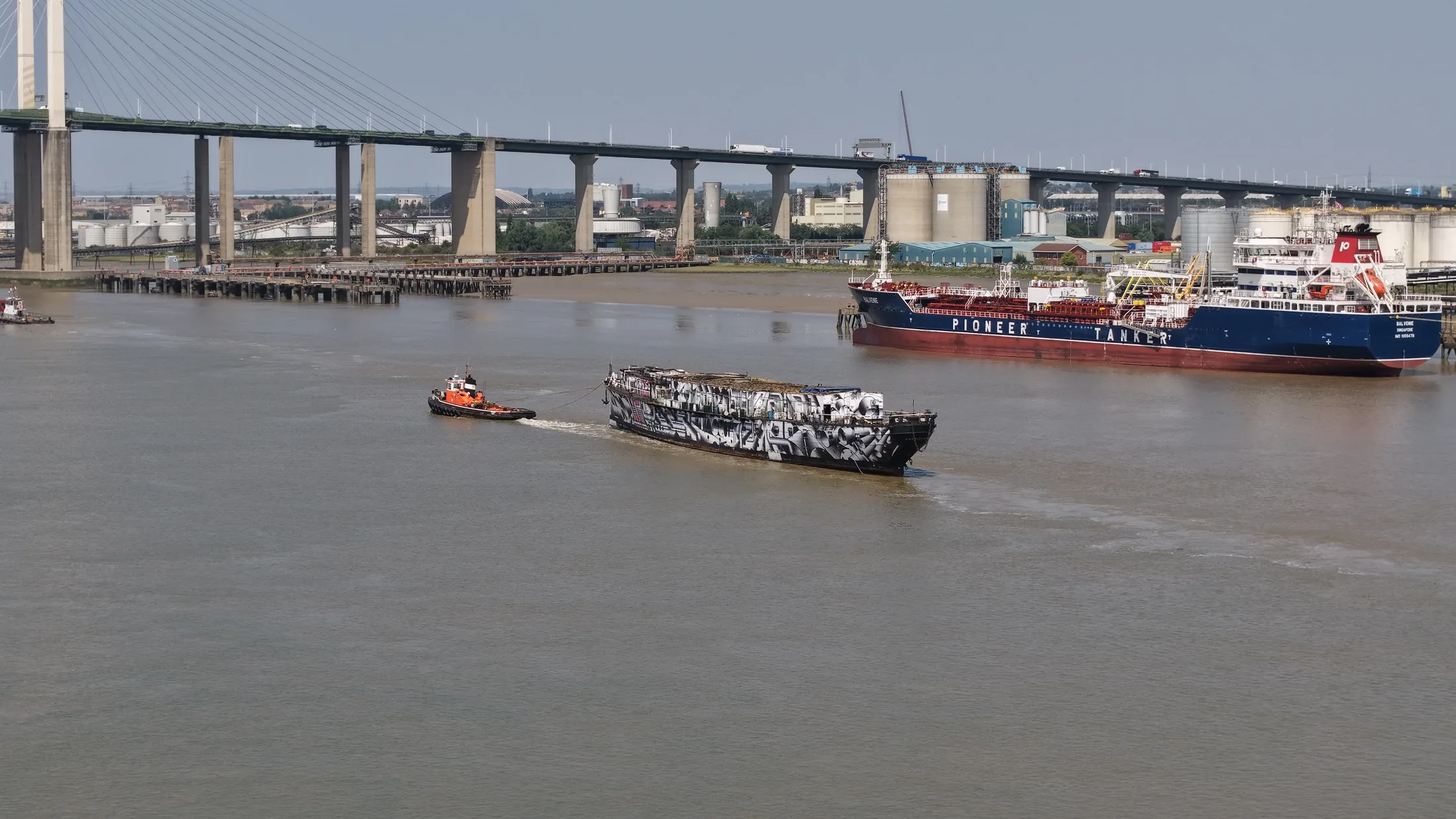
We photographed her later that day on the Thames, under tow past the Queen Elizabeth II Bridge at Dartford, with the tugs GPS Arcadia and GPS Iberia on the job.
A ship built to be shot at
Saxifrage was launched on 29 January 1918 by Lobnitz & Company of Renfrew, an Anchusa-class sloop built deliberately to the lines of a merchant ship, because the entire point was to be mistaken for one.
These were Q-ships: decoys. A U-boat commander in 1918 had every incentive to surface and sink a lone merchantman with gunfire rather than spend a torpedo on it. The Q-ship's job was to look exactly like that target, absorb the approach, and then drop the disguise to reveal concealed 4-inch and 12-pounder guns at close range. It was a tactic that required the crew to be shot at first, on purpose. Saxifrage escorted convoys in UK waters through 1918, and her logbooks record engagements with nine U-boats.
After the war she was renamed President and, from 1922, took up a permanent mooring on the Thames Embankment near Blackfriars, where her engines were removed and she became a Royal Naval Reserve drill ship. For more than sixty years she was, administratively, where the Navy in London lived, naval personnel working at the Admiralty and elsewhere in the capital were nominally appointed to service in President. In the Second World War she was converted for gunnery training, fitted with anti-aircraft guns that helped defend London and used to train gunners for defensively equipped merchant ships.
Ownership passed to HMS President (London) Limited in 1987. She is listed on the National Historic Fleet under register number 494: 262.5 feet long, 35 feet in the beam, 1,290 gross tons, with hull and forecastle as built and the rest of her reflecting the 1950s training-ship arrangement.
The camouflage she wore to the end was not a wartime scheme. In 2014 the artist Tobias Rehberger repainted her as Dazzle Ship London, commissioned through 14-18 NOW, the First World War centenary arts programme associated with the Imperial War Museums. It was a modern response to the disruptive dazzle patterns of 1917–18 rather than a restoration, and it made her one of the most photographed hulls on the river.
Nine years at Chatham
In 2016 President was moved from her central London mooring to Chatham on the Medway, to make way for construction of the Thames Tideway Tunnel. Her funnel was damaged beyond repair during that period, though documentation survives that would allow it to be replicated. The move was meant to be temporary. It lasted nine years, and the return berth never materialised.
What has actually been confirmed
This part matters, because a good deal of imprecise information circulated in July 2026, and some of it was wrong.
On 9 July 2026 the Chatham site operator, ArcelorMittal Kent Wire, confirmed the vessel had to leave. Reporting attributed the wider site closure to what director Matt Brooks described as "the severity and scale of challenges facing the business", and referred to an independent survey that had found the ship in very poor condition, with long-term restoration complex and costly. She was towed from Chatham on the morning of Friday 17 July 2026, at around 05:30, and reported as due to be dismantled by the end of that month with the consent of an owner described in reporting as absentee.
The destination reported at the time was a specialist facility at Erith, on the south bank of the Thames, not Woolwich, which appeared in some accounts and is wrong. The news reporting of the day did not name the operator; the yard is EMR's Erith facility on Manor Road, a metal recycling site with its own Thames wharf, and the recycling of marine structures and vessels is among EMR's specialist areas.
The tow itself we can confirm independently, because we photographed it: on the Thames on 17 July 2026, with GPS Arcadia and GPS Iberia visible in our images. Independent maritime and naval-history sources published the same tug identifications.
What we cannot confirm, as at 29 July 2026, is whether dismantling has begun or been completed. We have seen no verified account of the work itself, and a reported schedule is not the same thing as a finished job.
Whether she could have been saved
The case for keeping her was never sentimental. Three Royal Navy warships survive from the First World War, and President is the only one of them to have spent the following century embedded in the working life of London. The Q-Ship Society campaigned for a permanent Medway berth and a future as a museum; its chairman, Daniel Broom, was quoted in July 2026 saying "She survived two world wars – she just can't go out like this."
Against that sits the survey. A steel hull launched in 1918, without engines since the 1920s, moored for nine years with no long-term home, is an expensive object to keep, and the money to keep it was never found. Both of those things can be true at once, which is usually how these endings work.
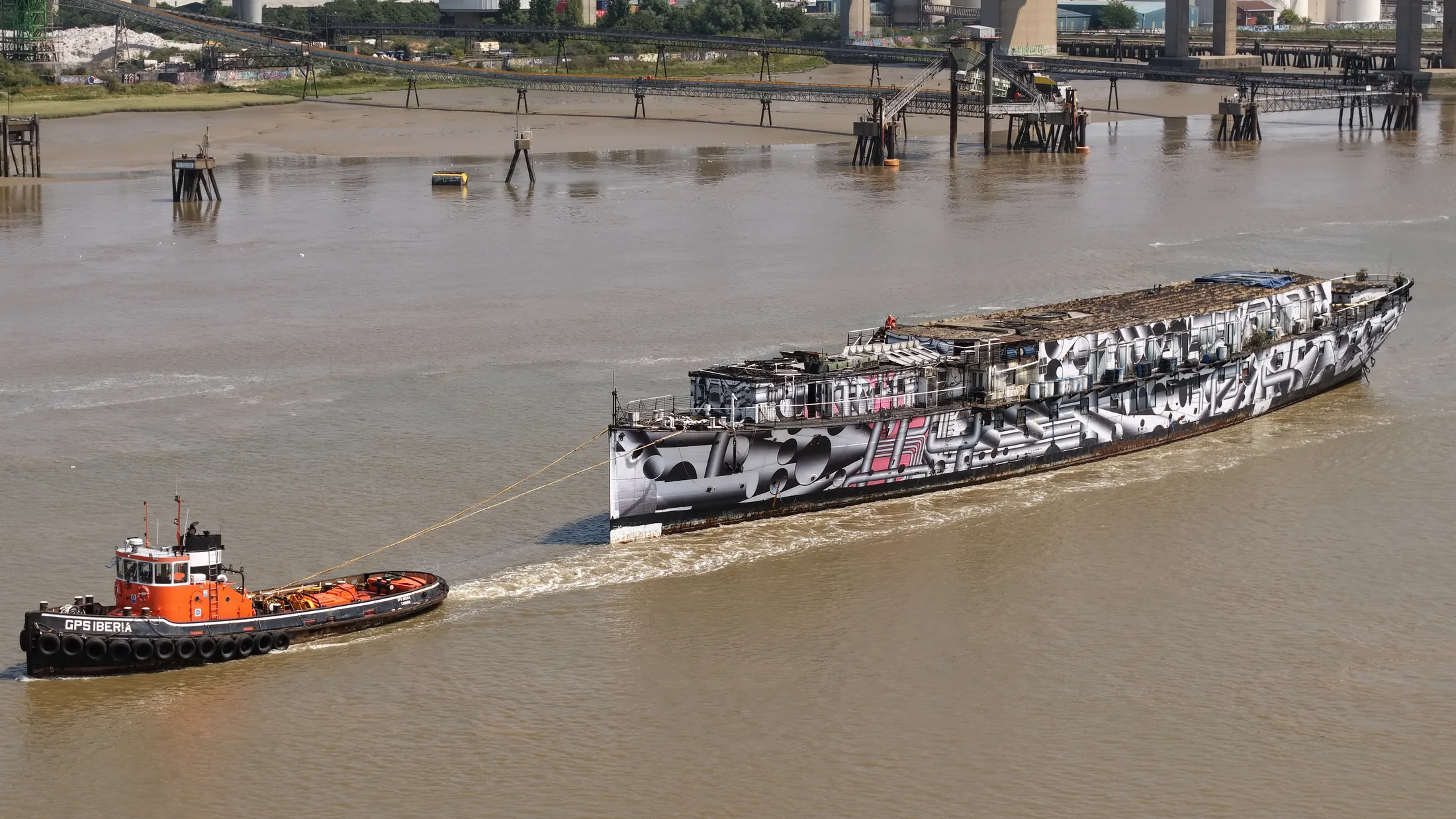
We were not commissioned in connection with this tow and had no involvement in the operation. These images were made independently from the air over the Thames on 17 July 2026, as a record of a vessel of national significance making what was reported to be her final passage. We photographed the same tugs earlier that morning at Chatham, and that set is published separately as crew transfer photography at Chatham.
Sources
- •National Historic Ships UK: HMS President register entry
- •Kent Online: reporting on the tow from Chatham, 20 July 2026
- •The Western Front Association: one of the Great War's last three warships to be scrapped
- •Wikipedia: HMS President (1918))
For more of our work on the tideway, see our Thames drone services and maritime drone services hubs, or our coverage of the 2026 Thames Historic Barge Driving Race, photographed the following day.