
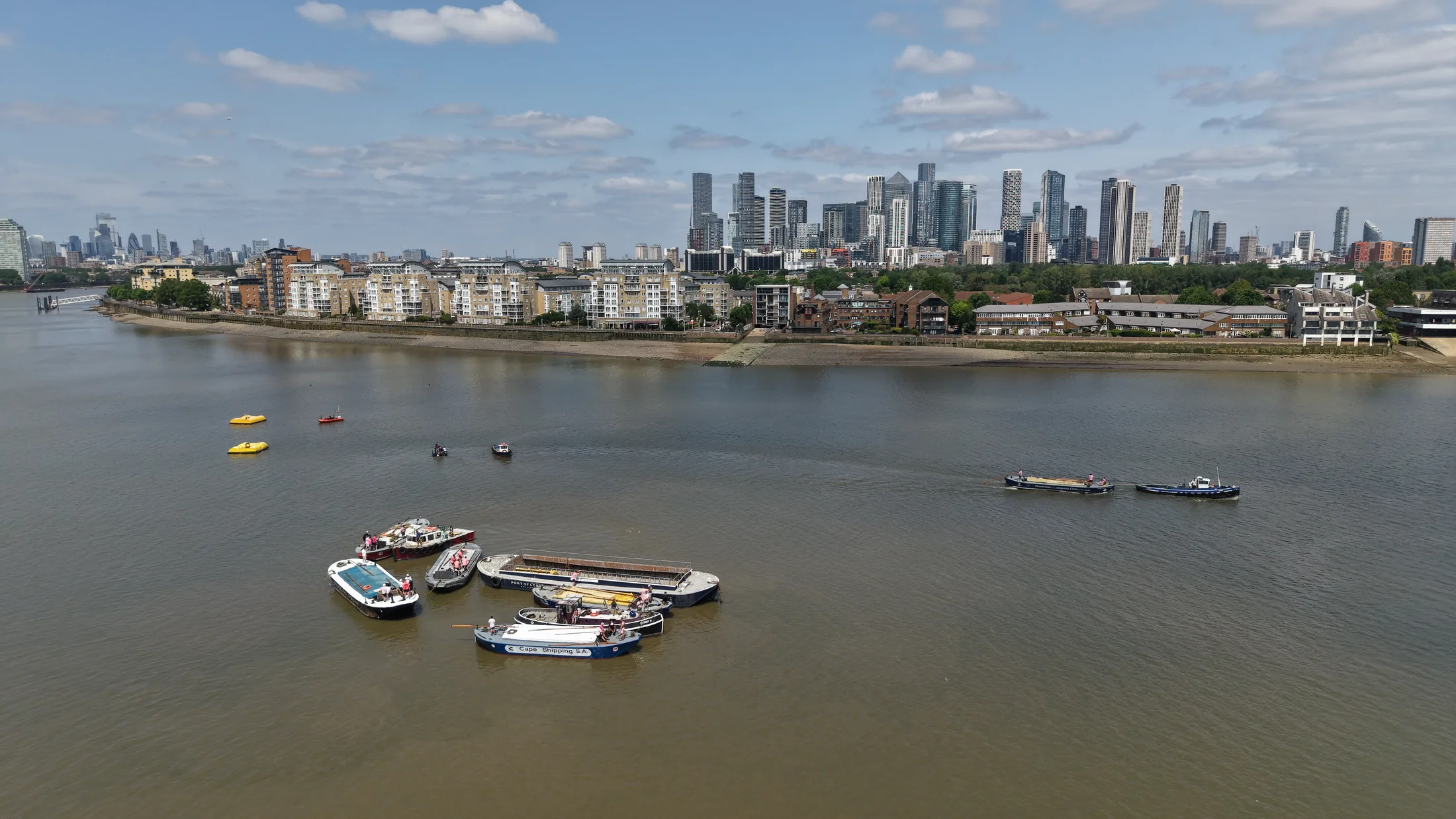
On Saturday 18 July 2026, crews rowed and steered 30-tonne Thames barges seven miles from Greenwich to Westminster. We photographed the day from the air, here is what barge driving actually involves, and why it still matters on the working river.
Once a year a fleet of unpowered Thames barges is rowed the length of central London by crews standing on open decks, hauling on oars longer than most narrowboats. The 52nd Thames Historic Barge Race, run by the Thames Barge Driving Trust and also known as the Alex Hickman Memorial Race, took place on Saturday 18 July 2026, over a seven-mile course between Greenwich and Westminster Bridge.
We photographed the day from the air over Greenwich. What follows is a record of what we saw, and some background on a river tradition that is routinely confused with a completely different event.
Driving has nothing to do with engines
"Driving" a barge is the old Thames term for working an unpowered lighter using the tide, a pair of enormous sweeps and a great deal of judgement. A Thames lighter has no rudder in the conventional sense, no keel worth the name, and no means of going anywhere the river is not already going. The crew's job is to read the flood tide, keep the barge in the fastest water, and use the oars to steer and nudge rather than to propel. On a 30-tonne hull, an oar is a lever for changing heading, not an engine.
According to the Trust, the race exists to commemorate the skills of the lightermen who moved freight this way along the Thames up until the 1930s. Before containerisation and lorries, the tideway was a working conveyor belt, and knowing exactly where the stream ran hardest at each state of the tide was a professional qualification rather than a hobby. The race itself dates from 1975, founded by the Transport On Water association at a point when the lighterage trade was in steep decline and the skills were in real danger of going with it.
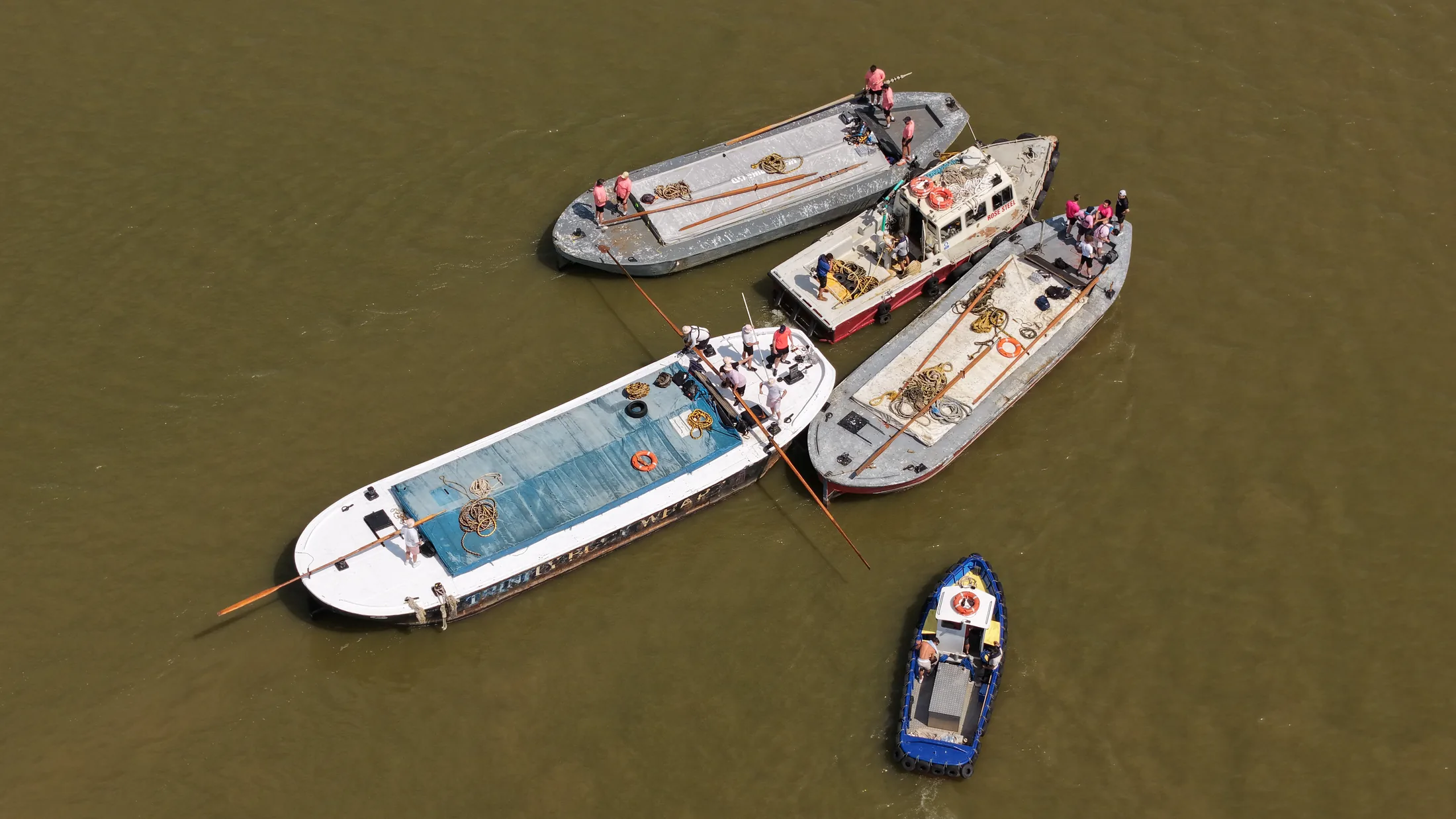
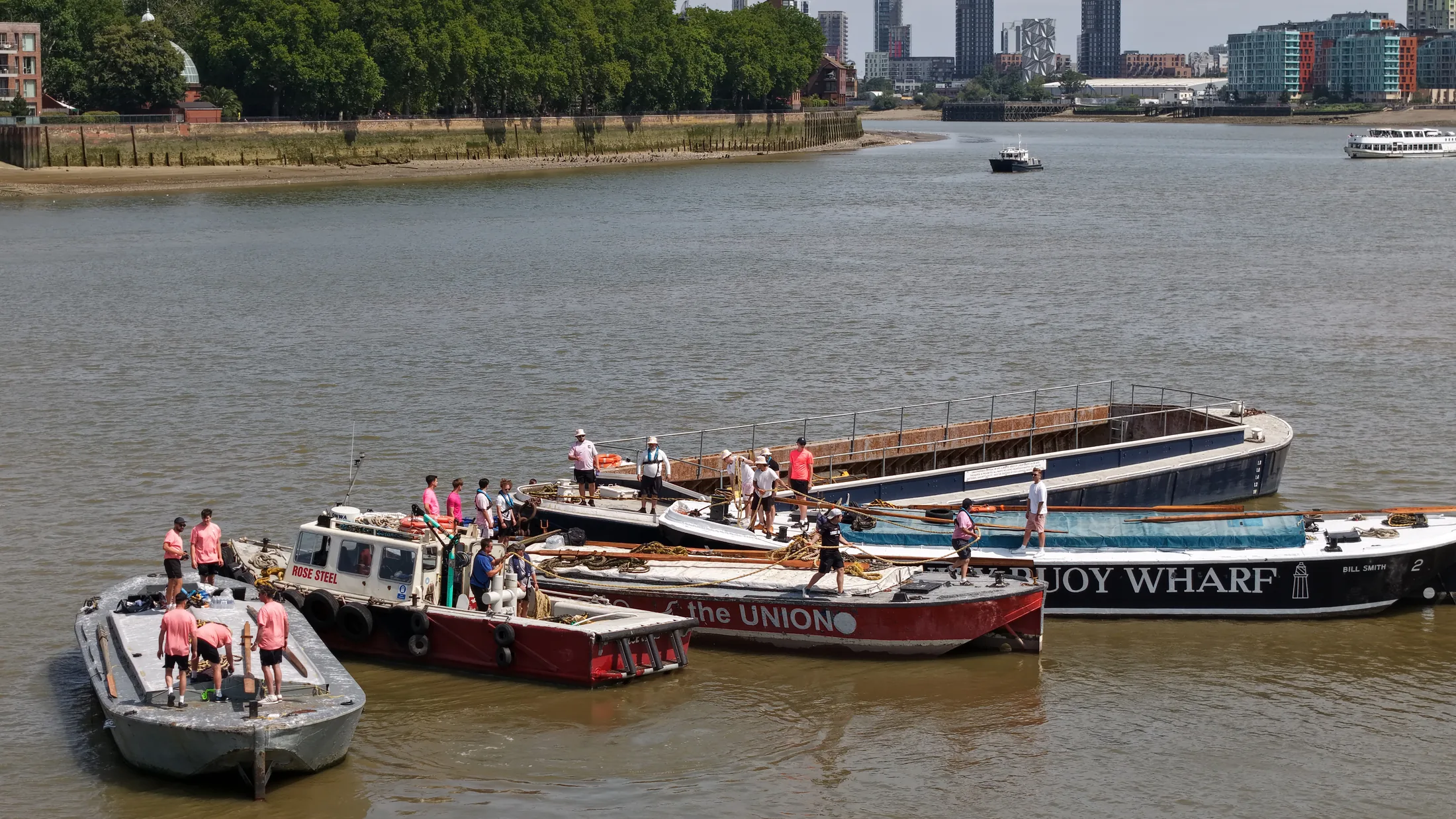
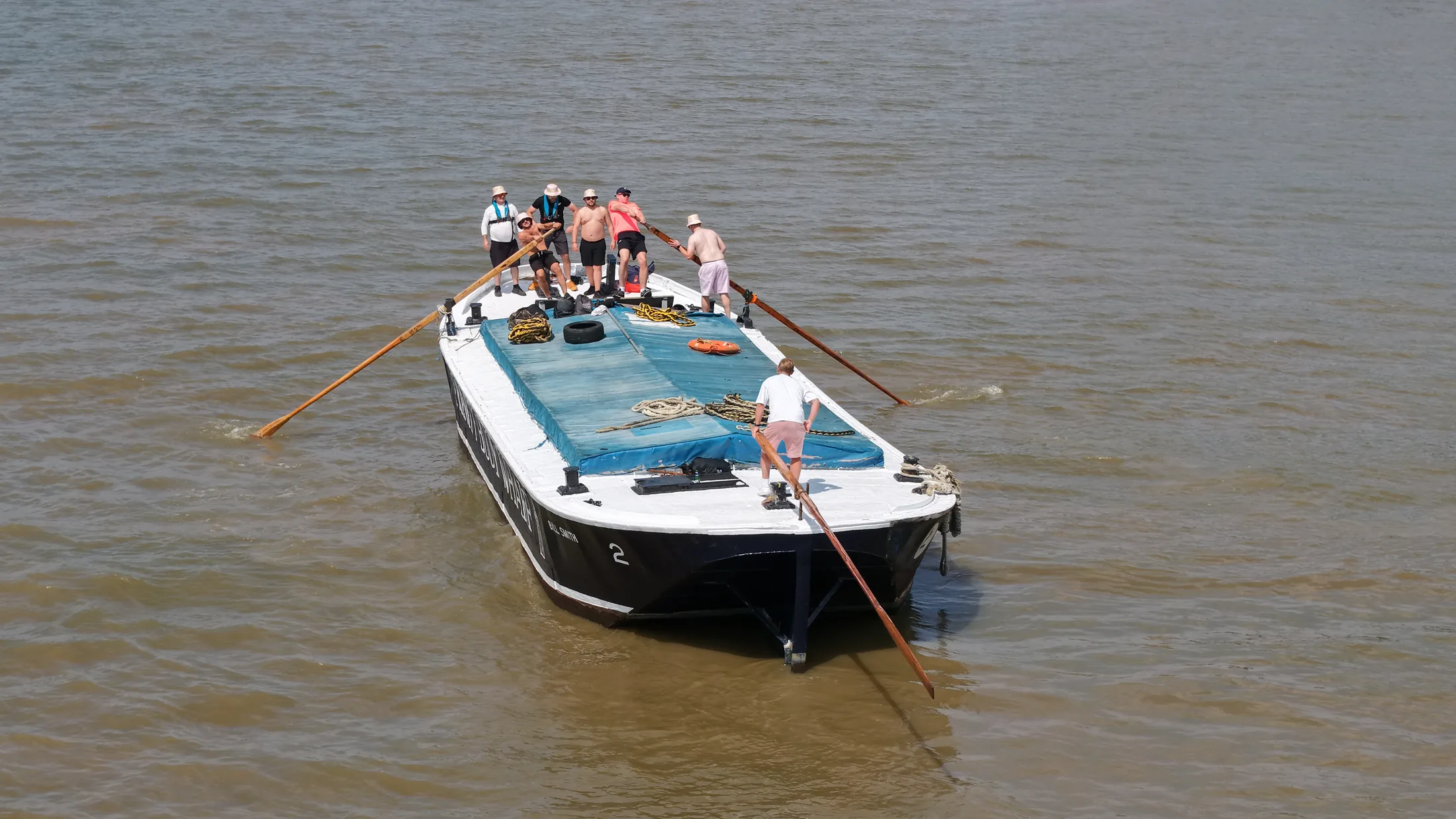
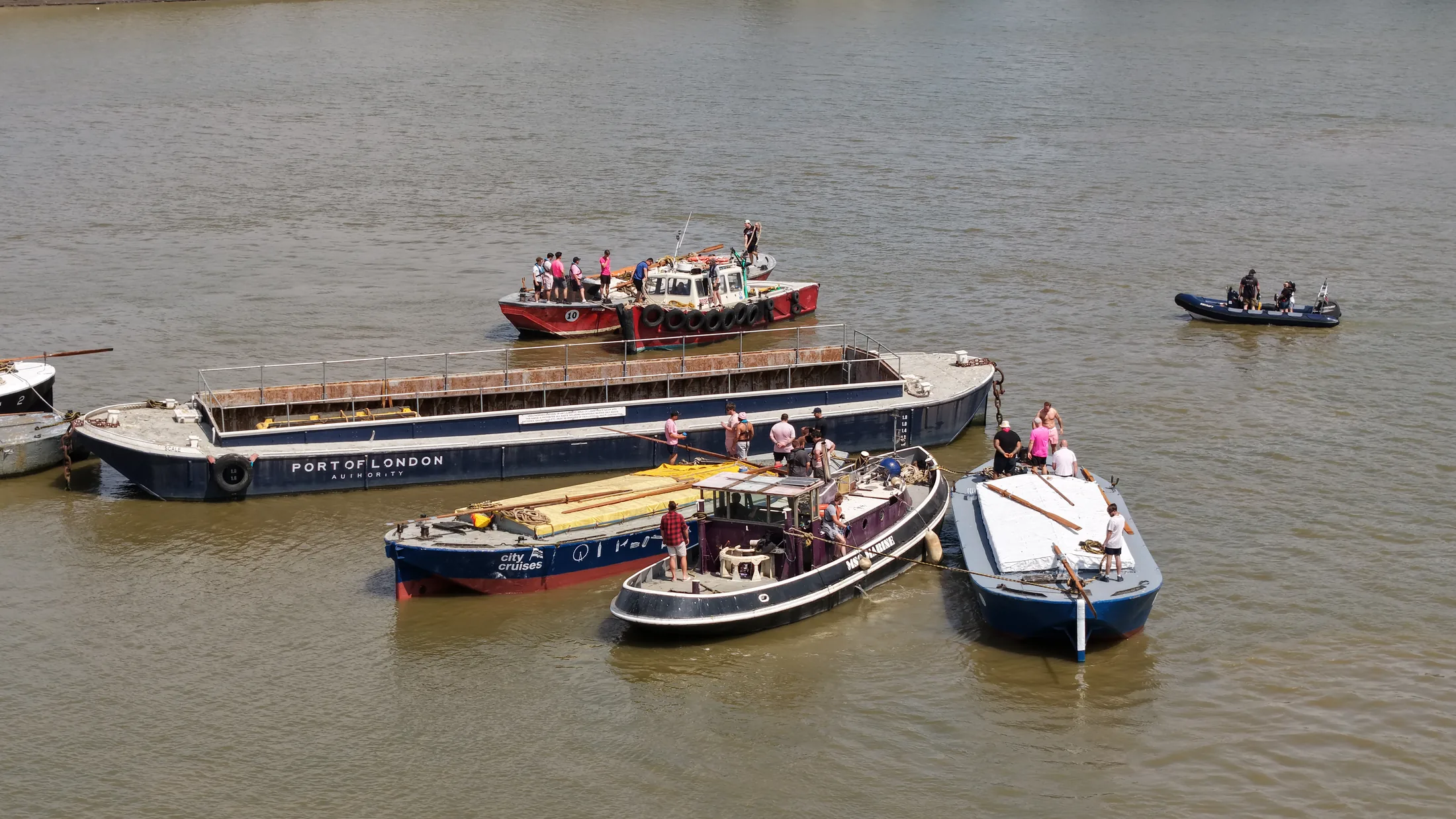
The barges themselves are traditional Thames lighters: flat-bottomed, swim-headed at bow and stern, built to sit upright on the mud and to carry cargo rather than to go anywhere quickly. Crews of roughly four to six work each one, and reporting of the 2026 event describes around a dozen teams taking part. Several of the barges we photographed carried the names and liveries of river organisations painted along their sides, craft lettered for Trinity Buoy Wharf, the Port of London Authority and Cape Shipping S.A., and one named the Union. One of the Trinity Buoy Wharf barges carried the name Bill Smith on her quarter.
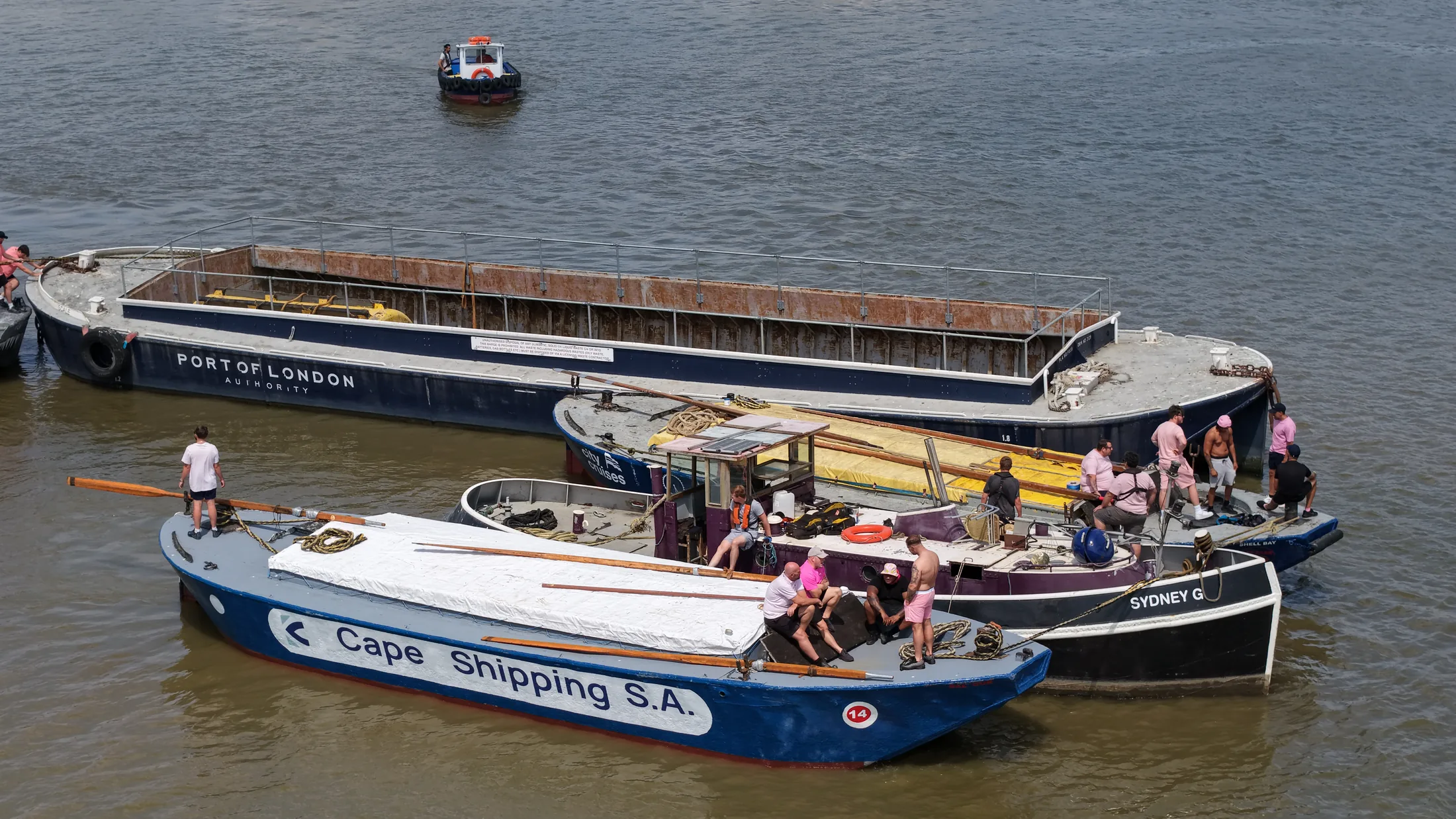
The morning before the start
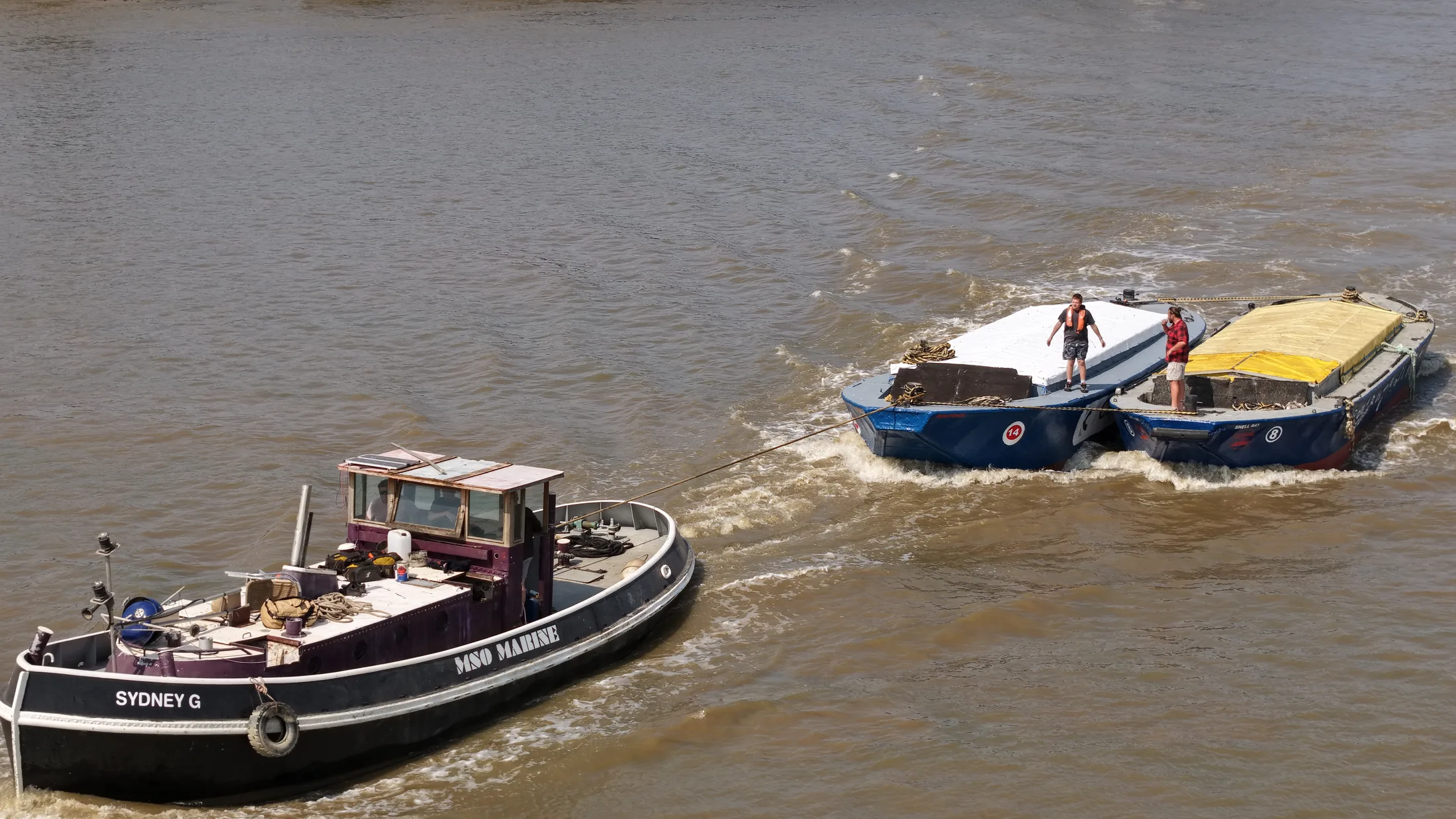
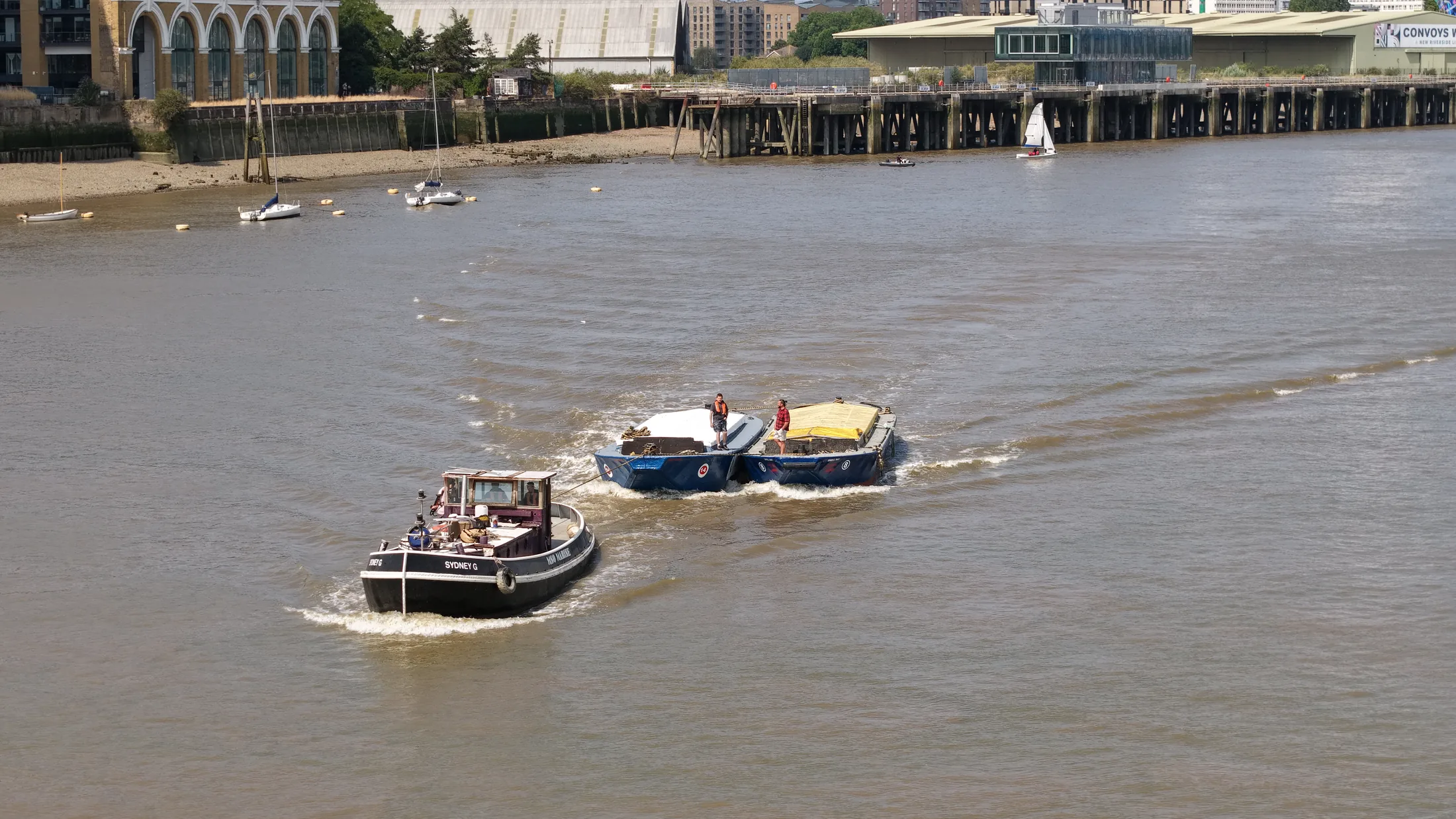
The barges cannot get themselves to Greenwich, so the day begins with conventional towage. We photographed the tug Sydney G bringing barges down through Greenwich Reach, at one point with two made up abreast, a routine piece of river work, and worth watching in its own right.
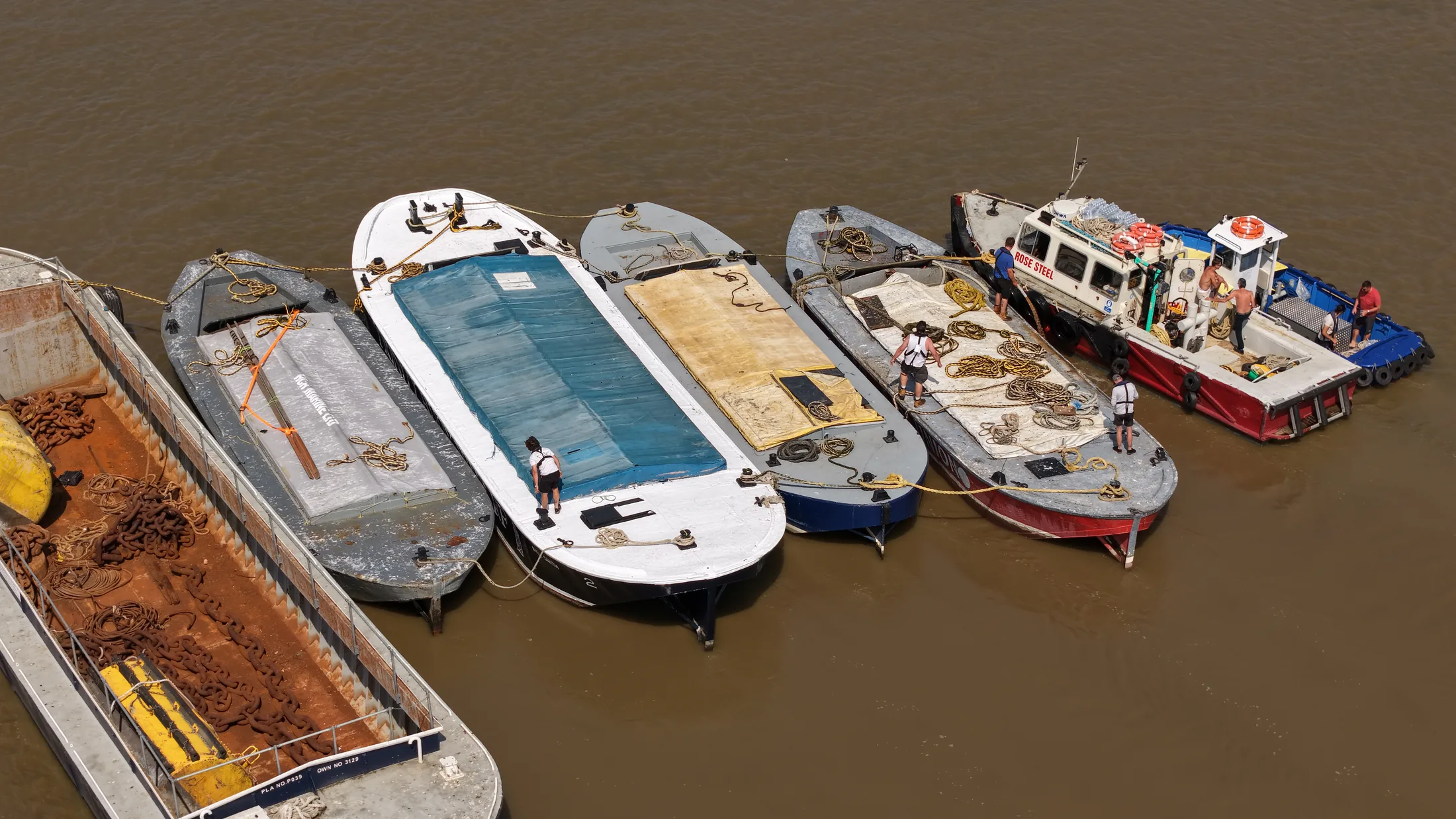
Once at the start, attending tugs hold the fleet together while crews make their final preparations. The tug Rose Steel was among the craft working alongside the raft of barges.
Then the tow lines come off. What follows looks deceptively slow from the air: a barge under oars moves at the speed of the tide plus whatever the crew can add, and the real work is in holding a line rather than in speed. The course runs under ten of London's bridges, eight of which the Trust notes are open to pedestrians, which makes this one of the few river events that can be watched properly, for nothing, on foot.
Nothing stops for the race
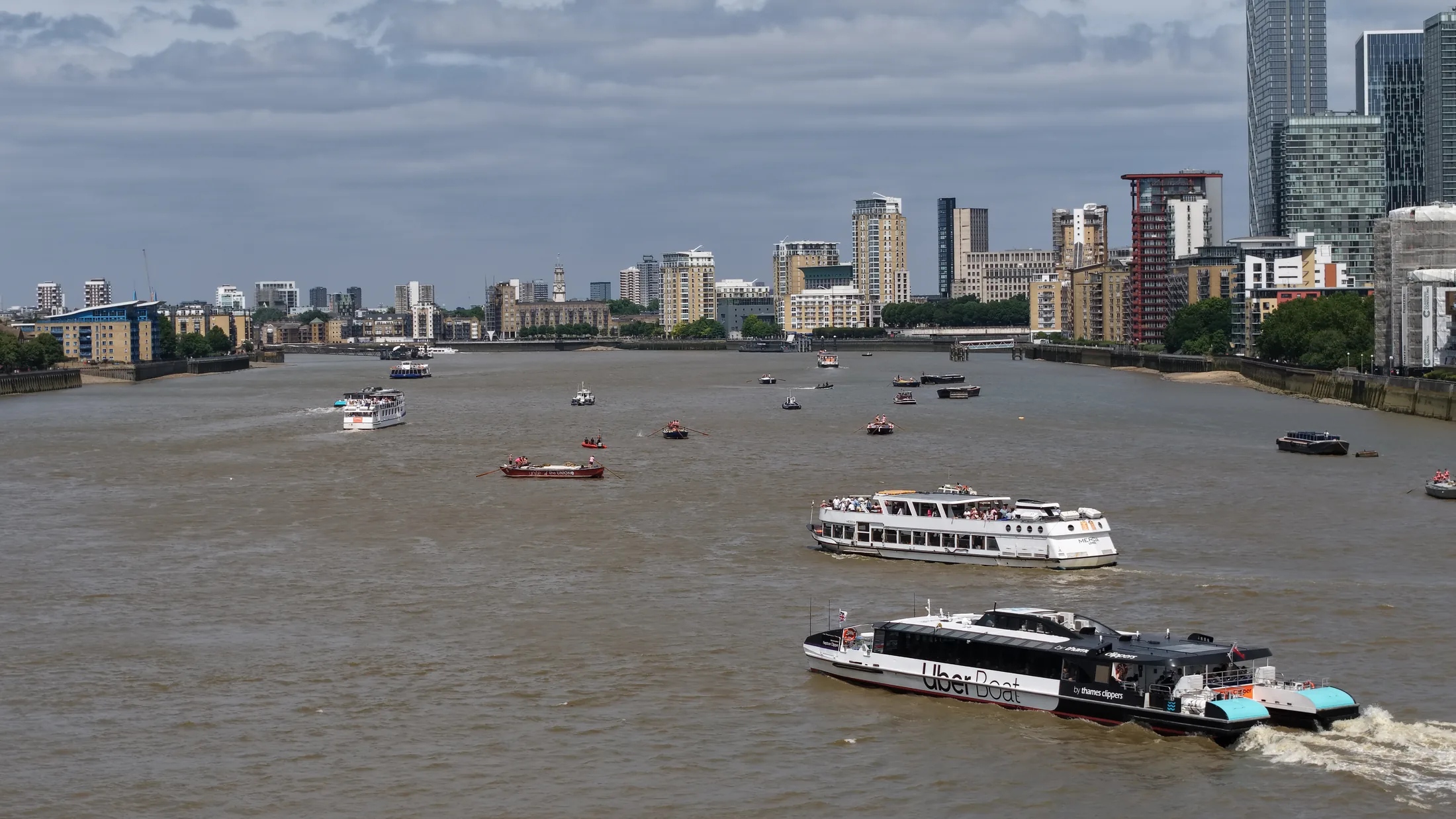
The thing that surprises people watching for the first time is that the river carries on around it. The Thames is a live commercial and passenger waterway, and the race threads through the traffic rather than replacing it. Our photographs from Limehouse Reach show racing barges spread across the river with clippers, trip boats and freight moving between them.
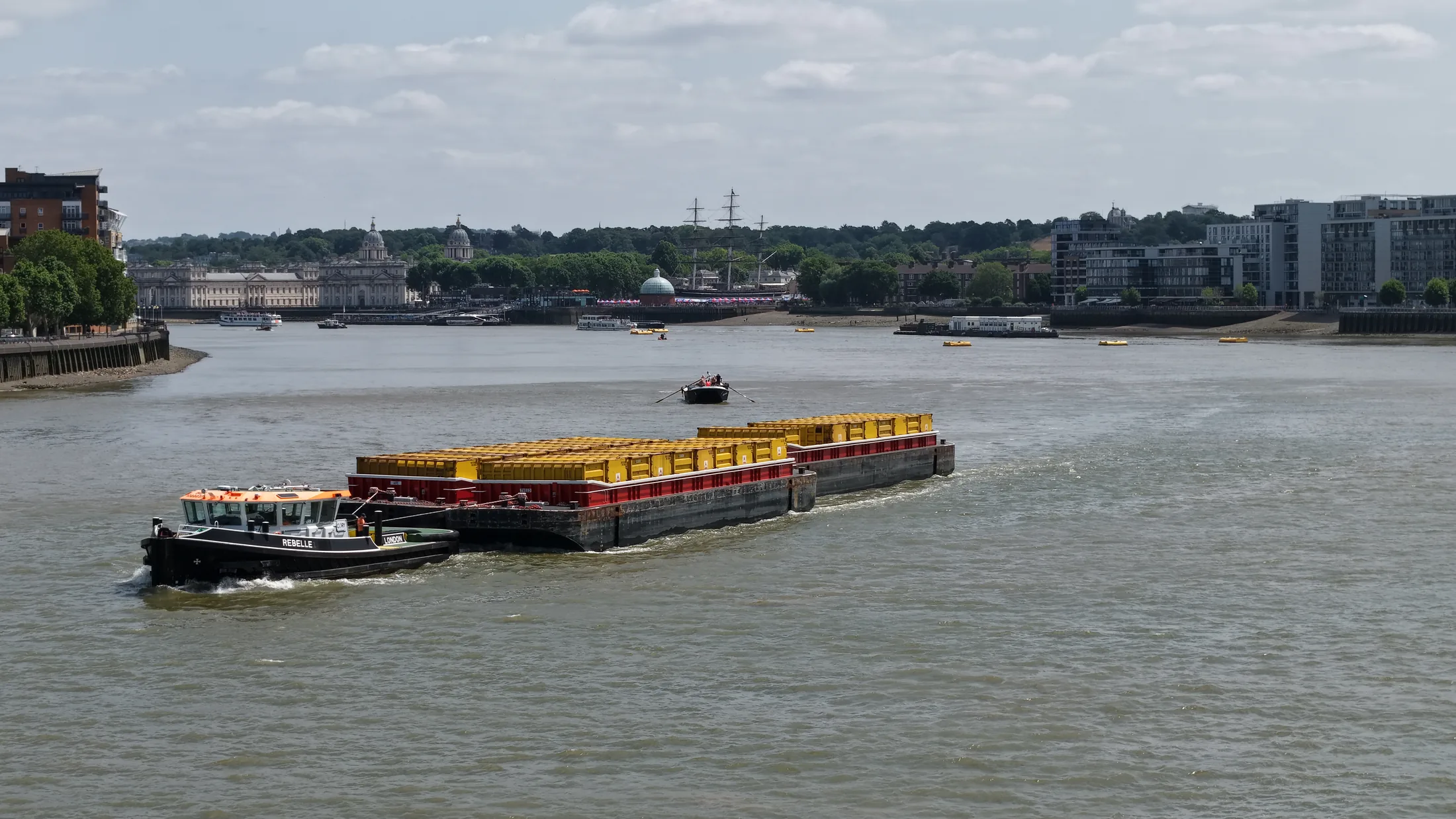
That coexistence is rather the point. The tug in the photograph above is Rebelle, one of Cory's Thames tugs, moving containerised waste downriver to the energy-from-waste plant at Belvedere, traffic that Cory reckons keeps around 400 lorry movements a day off London's streets. Freight still moves by river here, and the race is a direct descendant of the trade that shaped the reaches it passes through.
Not the same thing as the barge match
Two Thames barge events get confused constantly, and they have almost nothing in common. The Thames Historic Barge Driving Race is the event described here: unpowered lighters, no sails, rowed and steered under oars on the tidal Thames in central London, run by the Thames Barge Driving Trust. The Thames Sailing Barge Match is a sailing event for rigged Thames sailing barges, an entirely different class of vessel, with a separate and much older history dating from 1863. If you have been searching for one and finding the other, that is why.
If you want to watch it
Most of the bridges on the course are open to pedestrians, so the riverside walkways and bridge parapets are the natural vantage points. The Trust has also referred to a following vessel, MV Mercia, embarking passengers at Greenwich Pier and cruising the course. Arrangements change year to year, so check the Thames Barge Driving Trust website for confirmed dates, timings and any following-boat tickets before planning a trip. The Trust is a registered charity, number 278115.
For the record: UAS London is not affiliated with the Trust and was not engaged, commissioned or accredited in connection with the 2026 race. These photographs were made independently as an aerial record of a public event on the tideway, flown under our standard permissions and planned around river traffic in the usual way. Barge and vessel names above are taken from lettering visible in the photographs; we have not attributed results, positions or crew identities.
Covering river events from the air
Aerial coverage of a live river event is a planning problem before it is a camera problem. The tide sets the timing, the fleet moves continuously over seven miles, and the airspace over central London is among the most constrained in the country.
We cover this kind of work as part of our river event filming and Thames drone filming services, and our team's background as working Thames skippers is usually the difference between footage that follows the action and footage that arrives just after it.
For related work on the tideway, see our Thames drone services hub, our crew transfer photography at Chatham, and our record of HMS President's final tow, photographed the day before this race, further down the same river.