
The light that flatters a building at street level is not the light that works from the air, because from above most of the frame is roof, road and water rather than facade. A practical guide to when to fly in London and why.
Ground-level photography and aerial photography want different light, and the reason is simple geometry. At street level most of the frame is vertical: facades, people, trees. From the air most of the frame is horizontal: roofs, roads, water, yards and parks. Those surfaces behave completely differently under the same sun.
That is why a time of day that produces a beautiful street photograph frequently produces a flat, grey aerial, and why the reverse is also true.
Golden hour: shape and separation
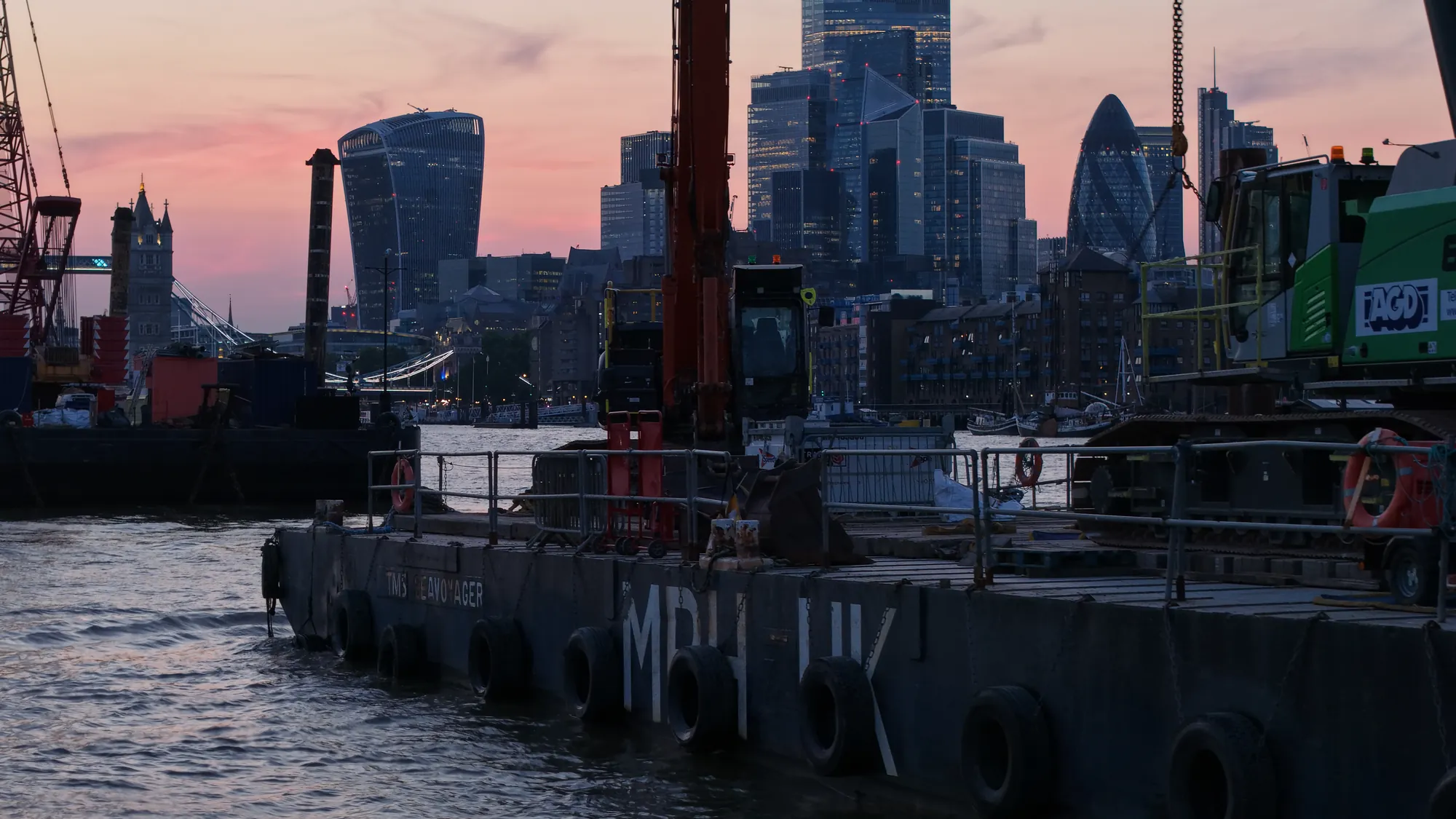
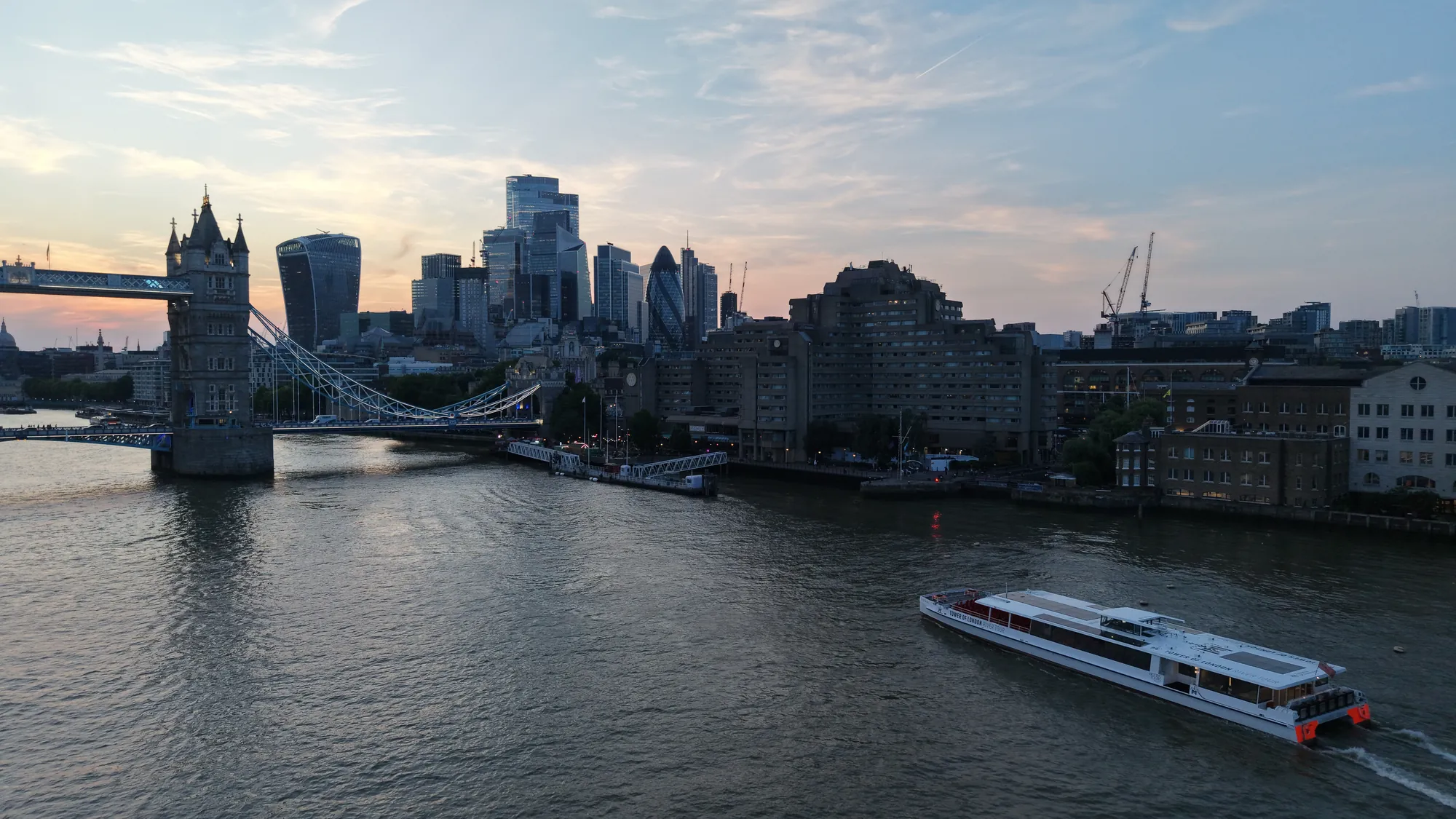
The hour or so after sunrise and before sunset gives low, warm, directional light. From the air it does two useful things.
It creates long shadows across horizontal surfaces, and shadows are what give an aerial image depth. Without them a top-down view of a city flattens into a diagram. With them, buildings acquire mass and streets acquire structure.
It separates subjects from backgrounds. A vessel on the river at midday is a bright object on a bright surface. The same vessel at golden hour is lit on one side with a long shadow and a bright wake, and it detaches from the water entirely.
The cost is that it is short, and it is directional. Golden hour only works if the subject is on the correct side of the light, which for a fixed building means one of the two windows is right and the other is wrong. Work that out before the day, not on it.
Blue hour: the technical sweet spot
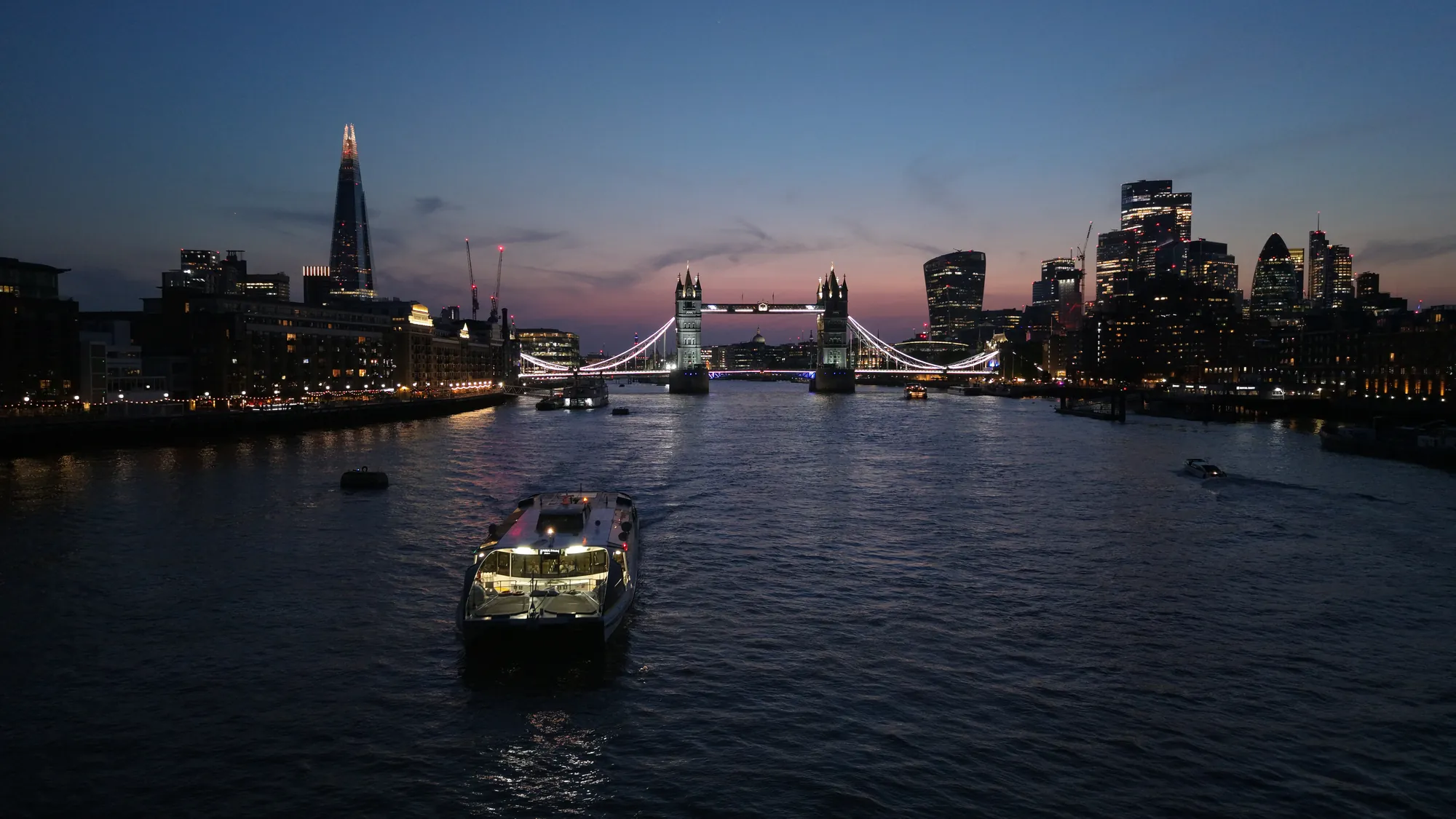
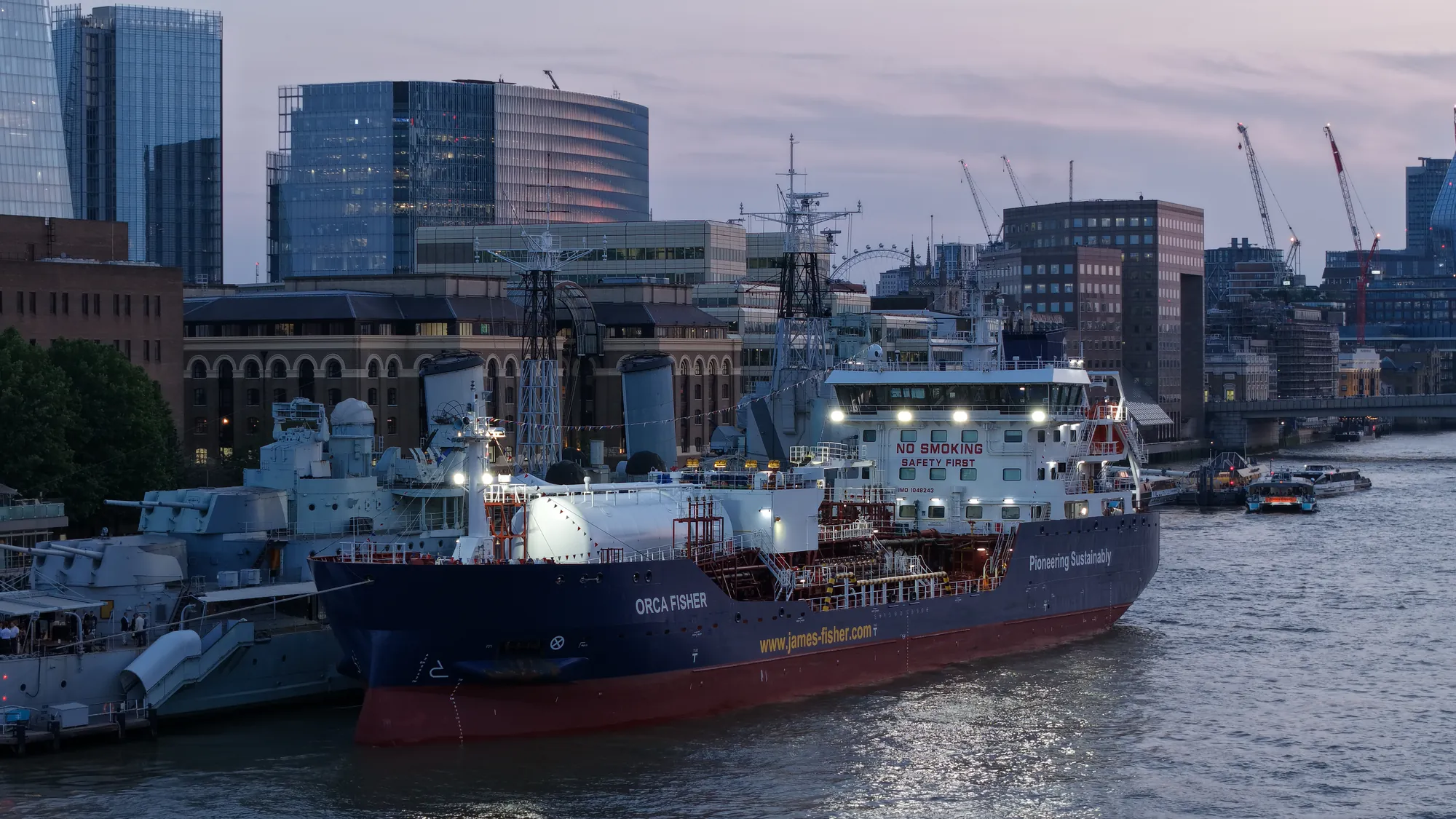
The twenty to forty minutes after sunset is when a city becomes photographable in a way it is not at any other time.
The reason is dynamic range. During the day, artificial lighting is invisible against the sun. After full dark, the sky is empty and the lights blow out. In between, there is a window where the sky still holds deep blue and the building and street lighting has come up to roughly the same brightness, and a single exposure holds both.
In London this window is the difference between a photograph of a building at night and a photograph of a city that is alive. It is also brutally short, and it moves through the year. Everything has to be in position before it starts, because there is no time to reposition once it does.
Overcast: better than its reputation
Flat cloud is honest, even light. It shows colour and condition accurately, has no blown highlights and no black shadows, and it is the correct choice for anything documentary: condition surveys, technical records, progress monitoring, vessel documentation.
What it will not give you is drama or depth, which is why it is the wrong choice for a hero image. The mistake is treating overcast as a cancelled day. For half of what we do it is the preferred condition. Our survey work is better in flat light than in sun, because shadow hides defects.
Full dark: reflections or nothing
Once the sky is black it contributes nothing, so the frame has to be carried by lit structure and by reflections on water. On the Thames that is workable and often spectacular, because the river doubles every light on it and from above that reflection is far longer and more graphic than it appears from the bank.
Away from water, full dark aerials tend to be less interesting than people expect: a grid of orange street lights and some dark blocks.
Planning around it in practice
Three rules cover most of it:
- •Decide which condition the subject needs before choosing a date. Documentary work wants flat light and is therefore the most schedulable. Hero work wants golden or blue hour and is therefore the least.
- •Work out the direction. A south-facing facade and a north-facing facade want opposite ends of the day. A vessel moving downstream and one moving upstream are lit differently at the same hour.
- •Book the window, not the day. Blue hour lasts half an hour. Everything else is preparation.
More on scheduling around river operations specifically: the tide runs the schedule.
See aerial photography in London, our portfolio, or get in touch.