
A thermal camera does not see damp, missing insulation or a fault. It sees surface temperature, and everything else is inference. Used properly that is enormously powerful. Used carelessly it produces confident, colourful nonsense.
A thermal camera measures one thing: the infrared radiating from a surface, which it renders as apparent surface temperature. It does not see damp. It does not see missing insulation. It does not see a failing connection in a junction box.
What it sees is that one patch of a surface is warmer or cooler than the patch next to it. Everything beyond that is inference, and the quality of a thermal survey is entirely a question of whether that inference was made carefully.
The three things it is genuinely good at
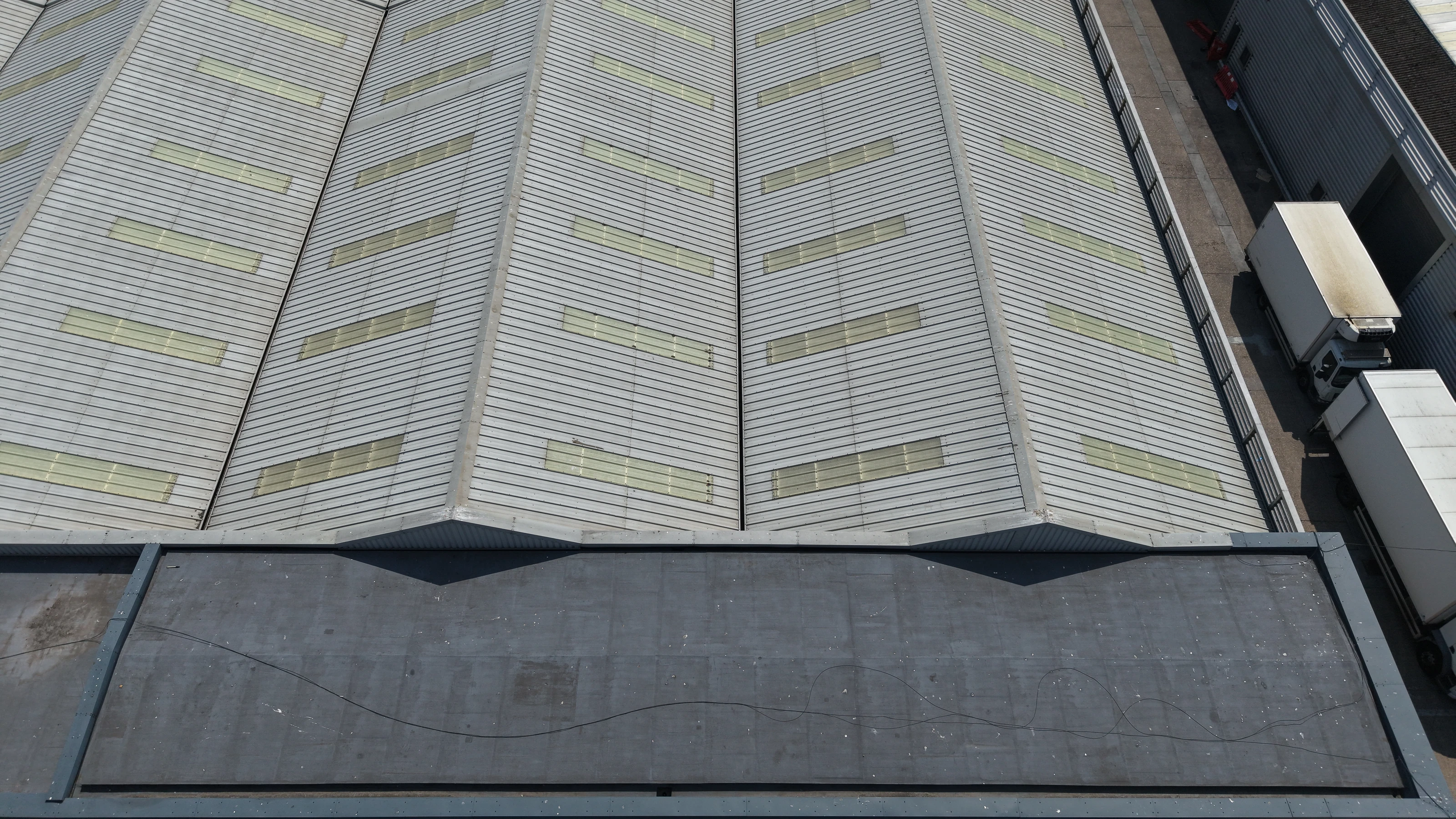
Flat roof moisture. This is the strongest use case by a distance. Water trapped in a flat roof build-up has a far higher thermal mass than the dry insulation around it. On a clear day the whole roof heats up, and after sunset the dry areas cool quickly while the wet areas hold heat and glow for hours. Flown in the right window, the survey draws you a map of the saturated zones, which is the difference between patch-repairing forty square metres and re-covering two thousand.
Building heat loss. Thermal bridging, missing or slumped insulation, air leakage around openings, uninsulated service penetrations. On a cold day with a warm interior, these show as warm patches on the outside of the envelope. It is very effective on a repeating structure, because you are comparing eighty identical flats and looking for the ones that do not match.
Solar arrays. A cell or string that is not generating gets hot. Hot spots, bypass diode failures and disconnected strings all appear immediately on a thermal pass, and on a large roof array or a solar farm this is the only practical way to inspect at all.
The conditions are not negotiable
This is where most thermal surveys go wrong, and it is worth being blunt about it, because it constrains when your survey can happen.
You need a temperature difference. No delta, no image. Heat loss surveys need a meaningful difference between inside and outside, which in practice means the heating season and typically early morning or after dark. A heat loss survey in July is a waste of money.
You need the right time of day. Flat roof moisture surveys are flown after sunset, in the window where the dry areas have cooled and the wet ones have not. Too early and solar loading swamps everything; too late and it has all evened out.
Recent weather matters. Rain on a surface, standing water, or strong wind will all produce misleading results. Direct sun in the hours before a survey loads the surface with heat that has nothing to do with the defect you are looking for.
Surfaces lie. Different materials emit infrared differently, so a shiny metal flashing and the membrane next to it can be the same actual temperature and appear wildly different. Any survey that does not account for emissivity is producing pictures rather than data.
What it cannot do
It cannot see through anything. Thermal imaging shows surface effects, and a defect only appears if it changes the temperature of a surface you can see.
It cannot tell you what a warm patch is. A warm area on a wall might be missing insulation, a hot water pipe, a thermal bridge, or the sun having been on it an hour earlier. Interpretation requires knowing the building.
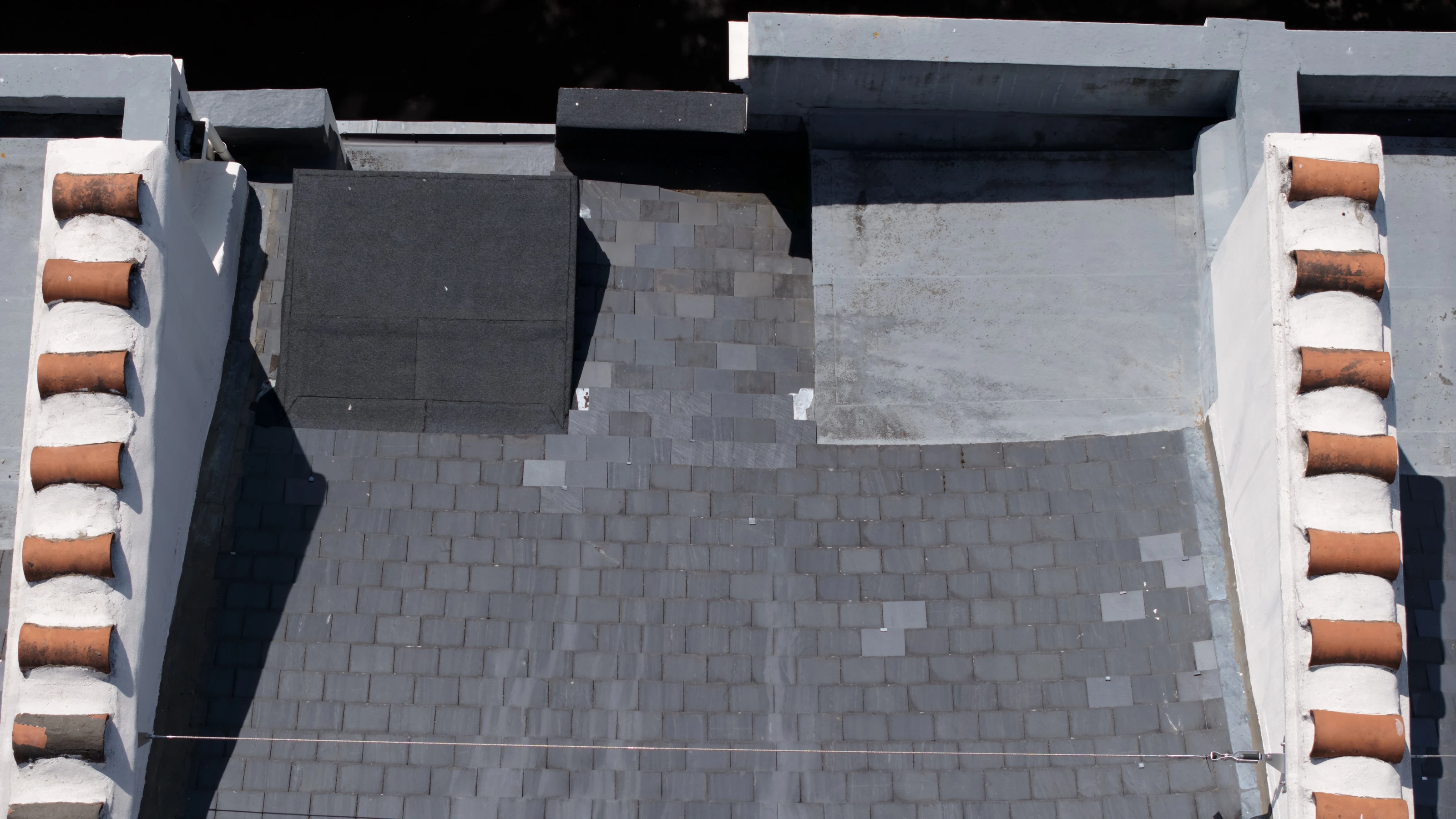
It cannot measure. Thermal imagery is not a survey deliverable on its own. It is paired with visual imagery, so that a finding can be located precisely on the actual roof.
It cannot replace an intrusive investigation. Thermal narrows down where to open something up. It does not tell you what you will find.
What a good thermal survey looks like as a deliverable
Not a folder of orange pictures. It should contain:
- •Paired thermal and visual images of the same view, so every finding can be located on the real building.
- •The survey conditions recorded: date, time, ambient temperature, internal temperature where relevant, cloud cover, wind, and recent precipitation.
- •Findings marked and described, with the inference stated as an inference.
- •A clear statement of what could not be assessed, and why.
If you receive a thermal report without the conditions in it, you cannot judge whether the findings are real.
When to use it and when not to
Use it when you have a symptom and need to find the source: a leak somewhere in a large flat roof, unexplained heat loss across a block, an underperforming array.
Do not use it as a first-pass condition survey. If the question is "what condition is this roof in", a high resolution visual survey answers it better, faster and cheaper. Our industrial roof survey is an example of a job that needed exactly that and nothing more.
See thermal drone inspection, drone inspection, or get in touch describing the symptom rather than the survey type, and we will tell you which one answers it.