
A conventional camera drone and an FPV drone are not variations on the same thing. They solve opposite problems, and using both on the same operation is what turns a record of a tow into something people watch to the end.
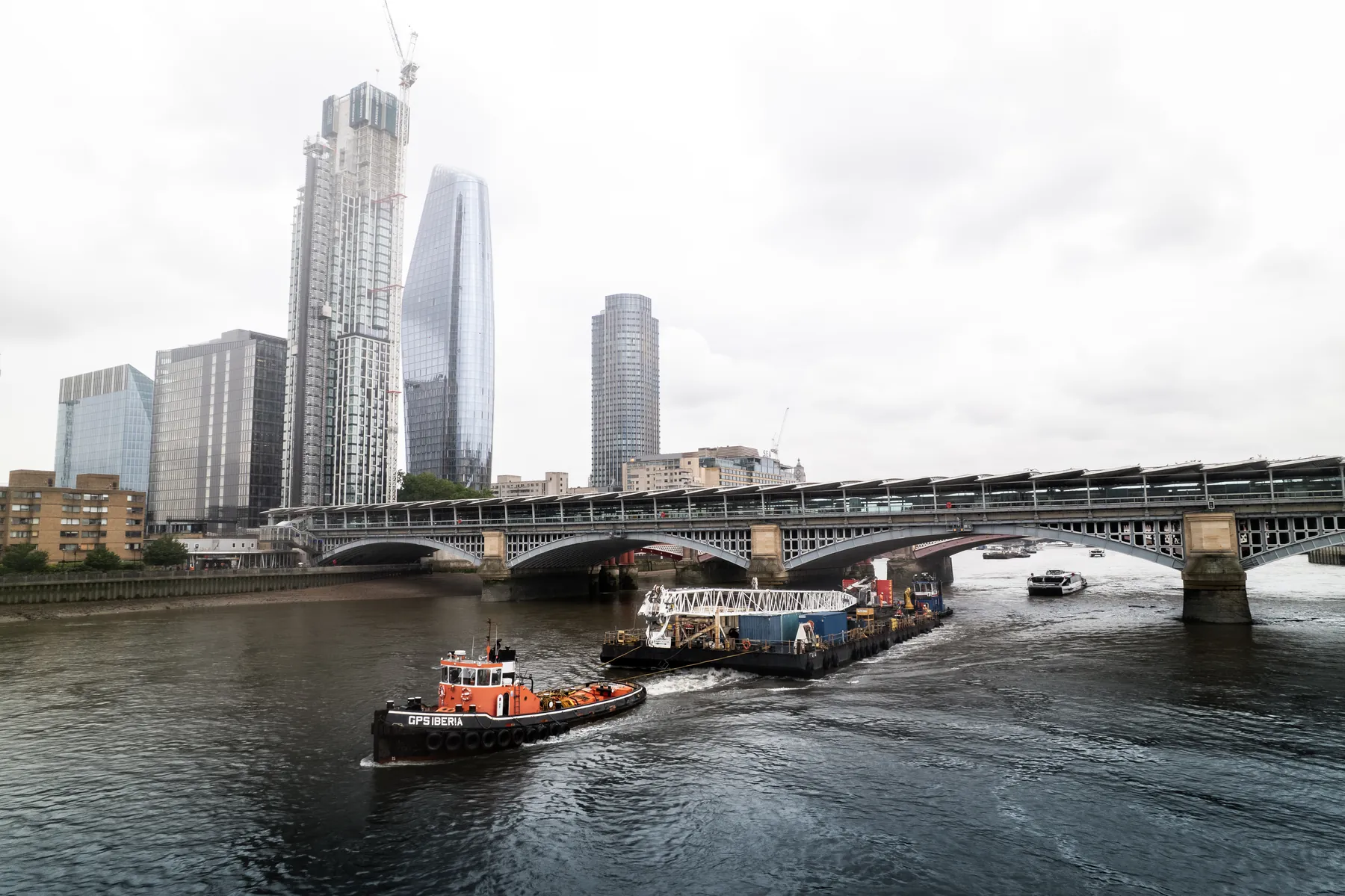
CPBS Marine Services have operated out of Temple Pier in central London since 2002, running multicats, tugs and workboats on jobs across the UK. We were asked to cover the final tow of the vessel Shakedog, taking a crane barge down the Thames through the middle of the city.
A last passage is a specific kind of brief. It happens once, it cannot be restaged, and the people who care about it care a great deal.
Two aircraft, two entirely different jobs
The instinct is to think of FPV as a faster camera drone. It is not. They answer opposite questions.
The cinematic platform is about stability, reach and image quality. It sits off the beam at a distance, on a long lens, and it produces the frames that establish where you are: the tow against the skyline, the shape of the convoy, the scale of the barge against the bridges. It is deliberate, slow and clean, and it is where the stills come from.
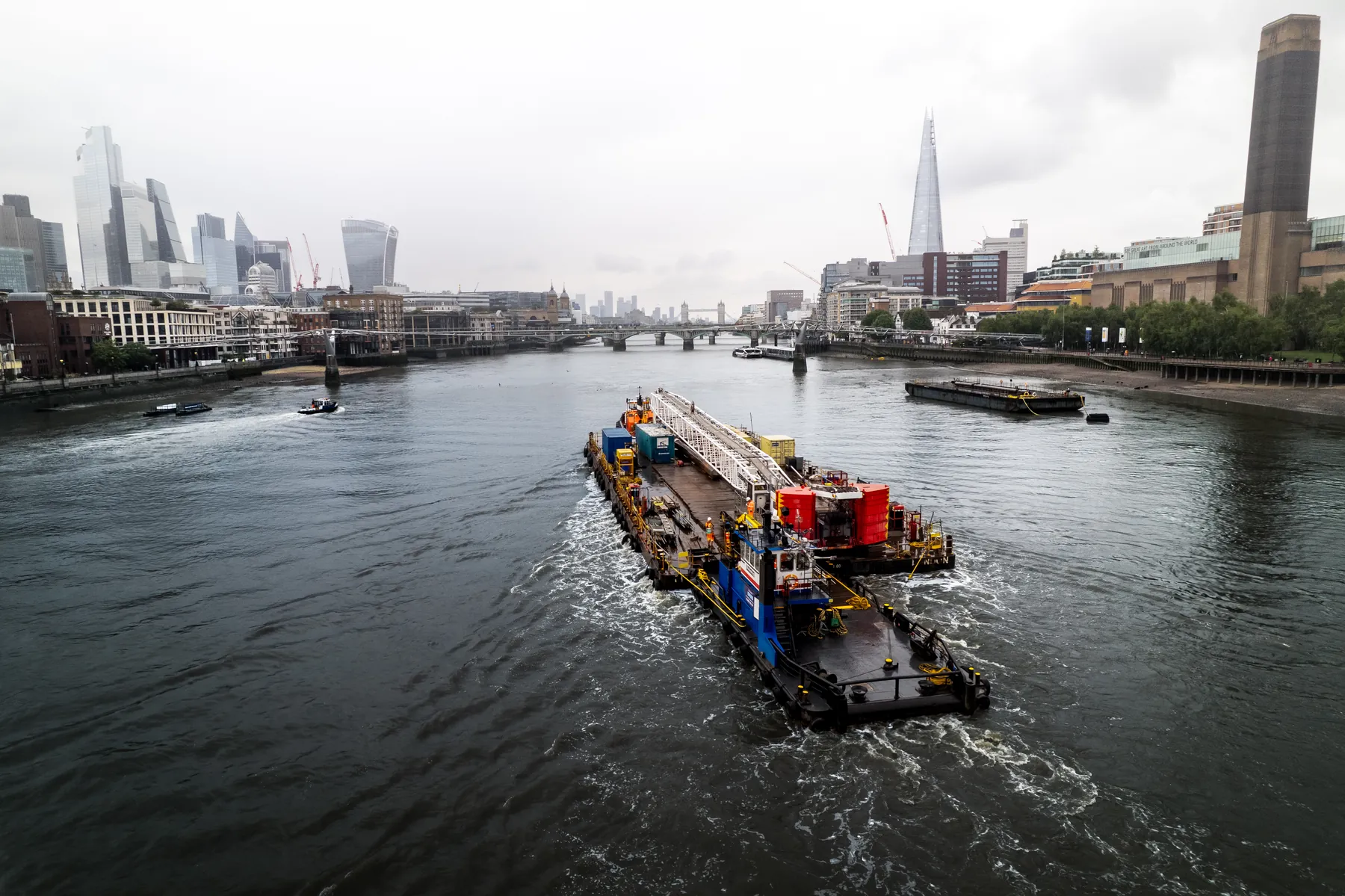
The FPV aircraft is about movement and point of view. It goes where a camera cannot otherwise go, at speed and close to the deck, and it produces the shots that put a viewer inside the operation rather than observing it. A pass down the length of a tow, a drop from bridge height to water level, a move that follows the tow line from the tug to the barge: none of that exists on a conventional platform.
Cut together, the two do something neither does alone. The cinematic frames tell you what is happening and the FPV frames tell you what it feels like.
Why FPV over water is harder than FPV anywhere else
FPV pilots talk about flying through gaps. On a river the difficulty is different and mostly invisible in the footage.
There is nothing to judge height against. Water gives no texture, no parallax and no reference, and a low fast pass over it is genuinely disorienting without discipline and a plan.
The subject is moving, and so is the water under it. A tow is making way through water that is itself moving several knots. Closing speeds are not what they look like, and a run planned against a fixed landmark will arrive early or late.
There is no margin for a mistake. A conventional drone that loses power over land has options. Over a tideway with a working tow underneath it, there are none worth relying on, so the flying is planned to keep the aircraft clear of the vessel and the crew at every point of every pass.
Coordination is most of the job
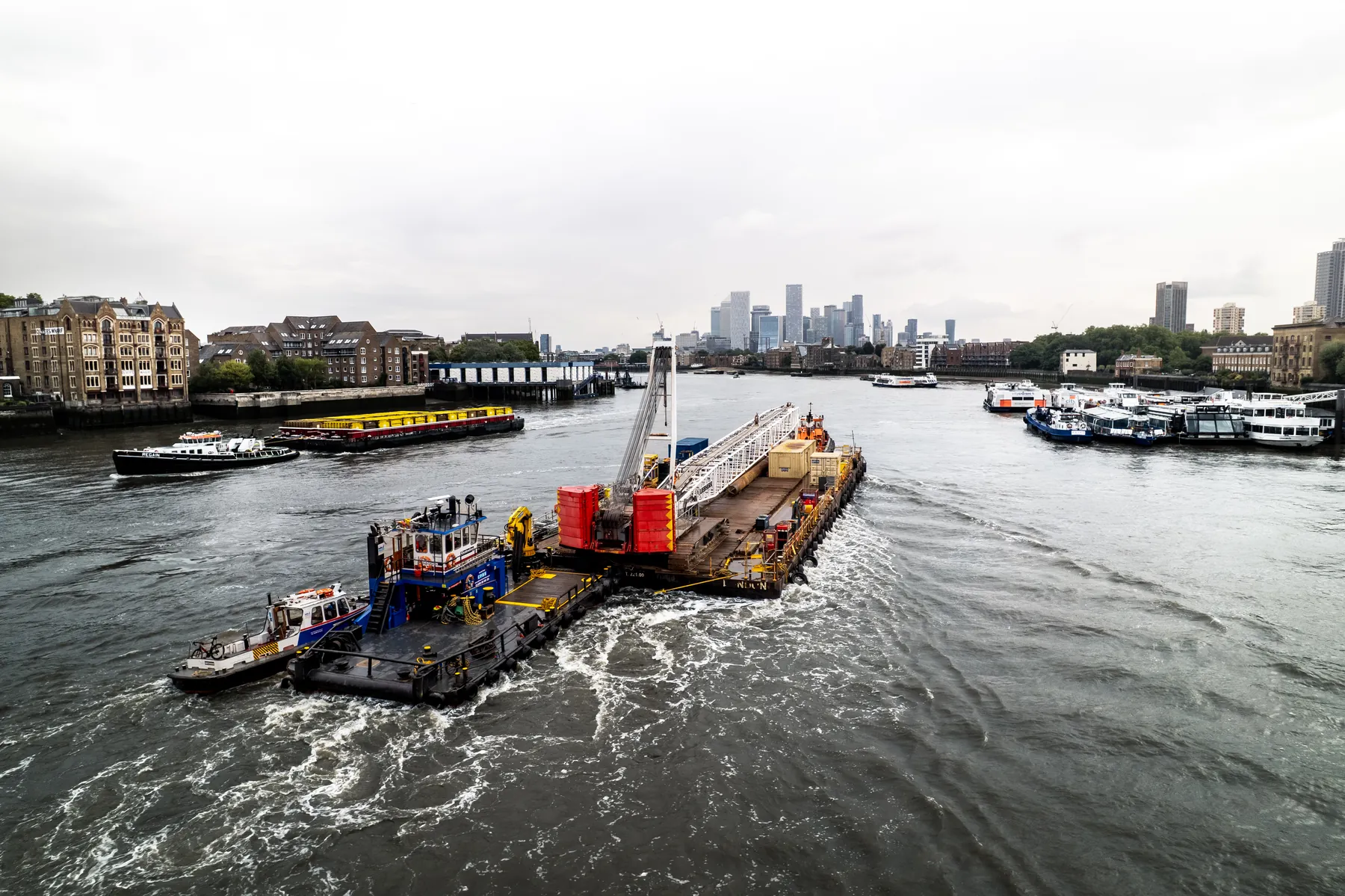
Filming a live tow in central London means working inside two systems at once: the airspace, which required full permissions for the central zone, and the operation, which required continuous contact with the marine crews so that everybody knew where the aircraft was.
That is not a formality. The single biggest hazard on a job like this is a crew being surprised while they are handling gear. Agreed standoffs, a briefed plan and a radio are what remove it, and they are also what makes it possible to fly close enough to get anything worth having.
The full project, including the cut sequence, is on the End of Tideway Tow project page. Our pure FPV work is on the FPV showcase page.
For marine operations coverage, see Thames towage filming, FPV drone filming in London, or get in touch.