
Everyone has photographed Tower Bridge. Almost nobody has photographed it from above, legally, in good light, with the City lined up behind it. A look at what makes the aerial view different, and why the airspace makes it rare.
Tower Bridge is among the most photographed structures on earth. It is also one of the least photographed from above, because the airspace over central London does not permit casual flying and the bridge sits close to the middle of it.
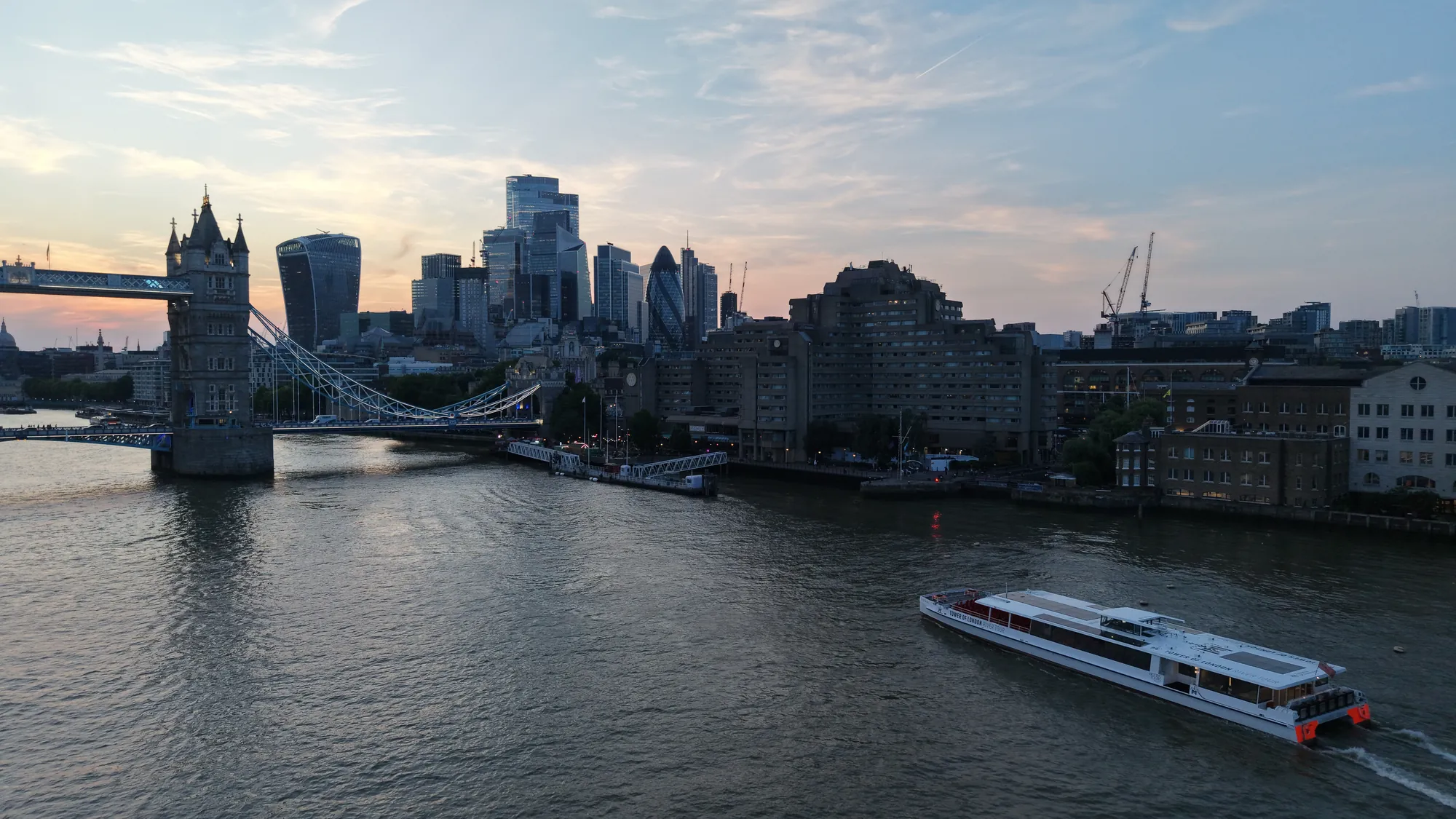
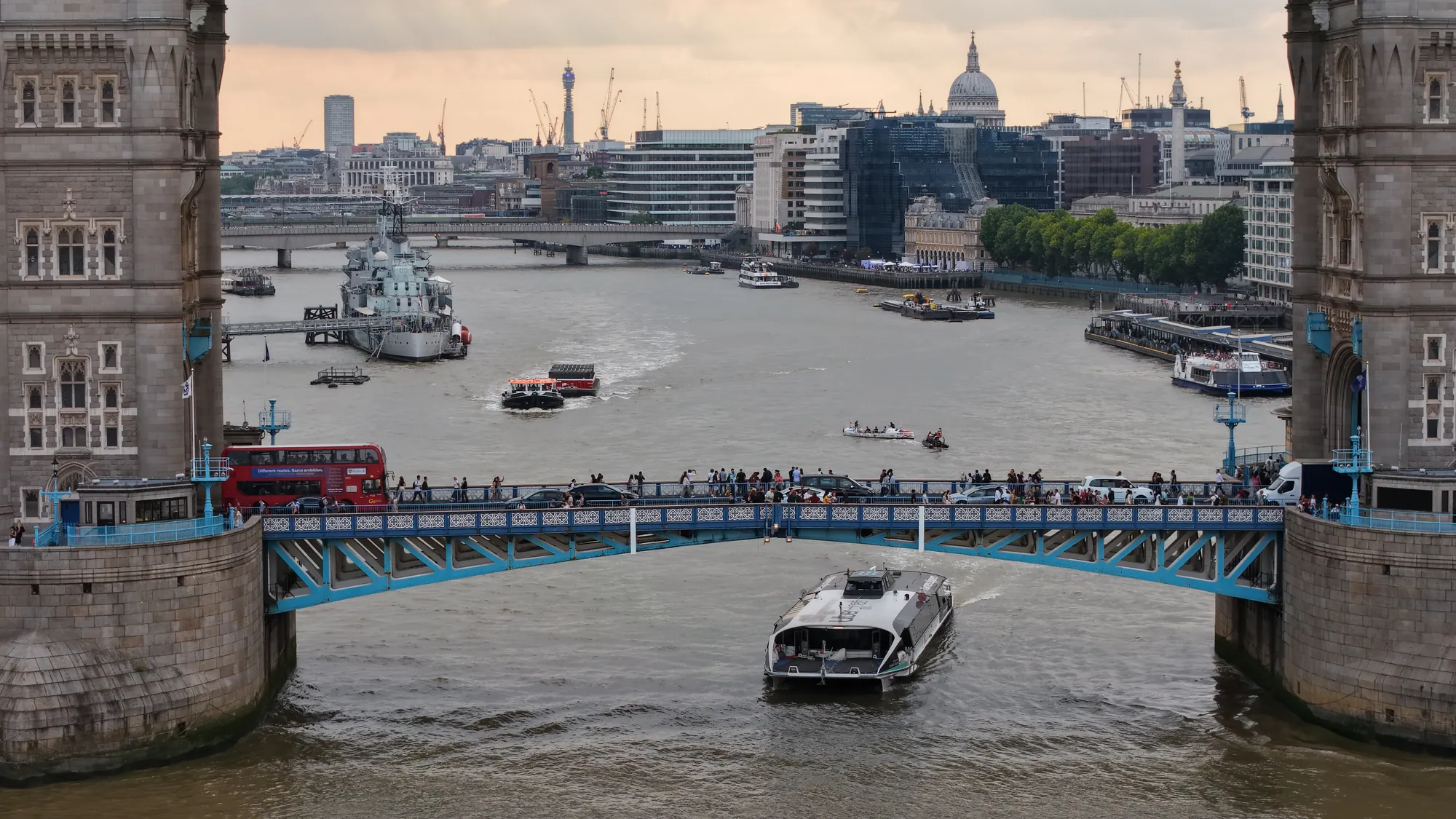
That combination is why aerial frames of it still look unfamiliar. Everyone has seen the bridge from the north bank, from the south bank, from a boat and from the walkways. Very few people have seen the roadway, the bascules and the high level walkways from directly overhead with the City stacked behind them.
What the aerial view actually changes
Three things, and they are all compositional rather than technical.
Alignment. From the air you can put the bridge, the river and St Paul's or the City cluster on the same axis. At ground level those elements are separated by buildings and by the curve of the river, and no lens brings them together.
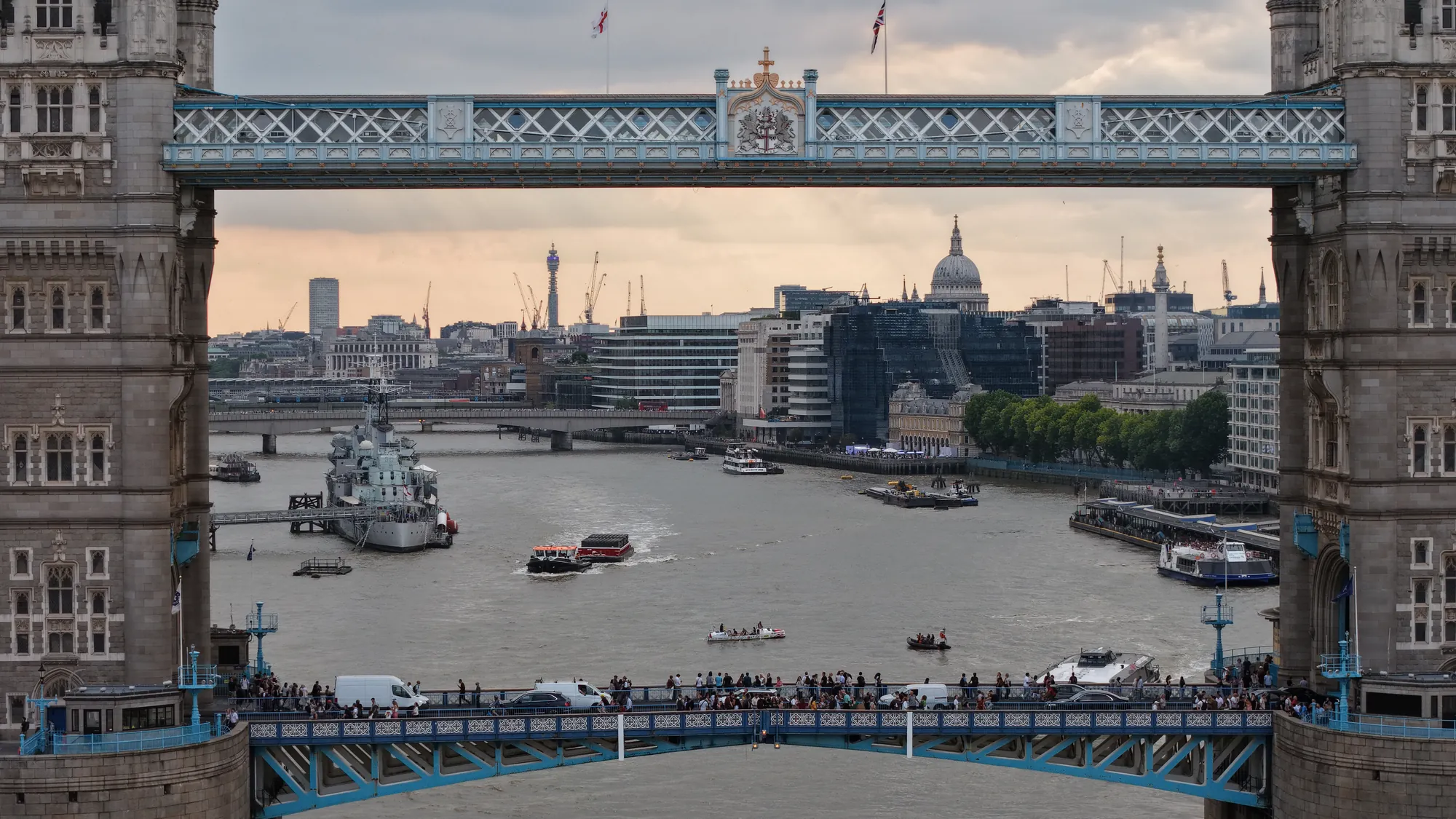
Structure. Looked at from above, the bridge stops being a silhouette and becomes a machine: two bascules, two towers, two suspended spans and the high level walkways tying the towers together. The engineering is legible in a way it is not from the pavement.
Traffic. The bridge carries buses, taxis and pedestrians and the river carries clippers, tugs and trip boats. From above you get both moving through the frame at once, which is what makes an aerial of a working city look alive rather than architectural.
Golden hour, blue hour, and full dark
The same position gives three completely different photographs across about ninety minutes, and it is worth being specific about what each one is for.
Golden hour puts warm, low light onto the Portland stone and the painted ironwork, and lays long shadows down the roadway. It flatters the structure and it is the most saleable version for tourism, hospitality and property use.
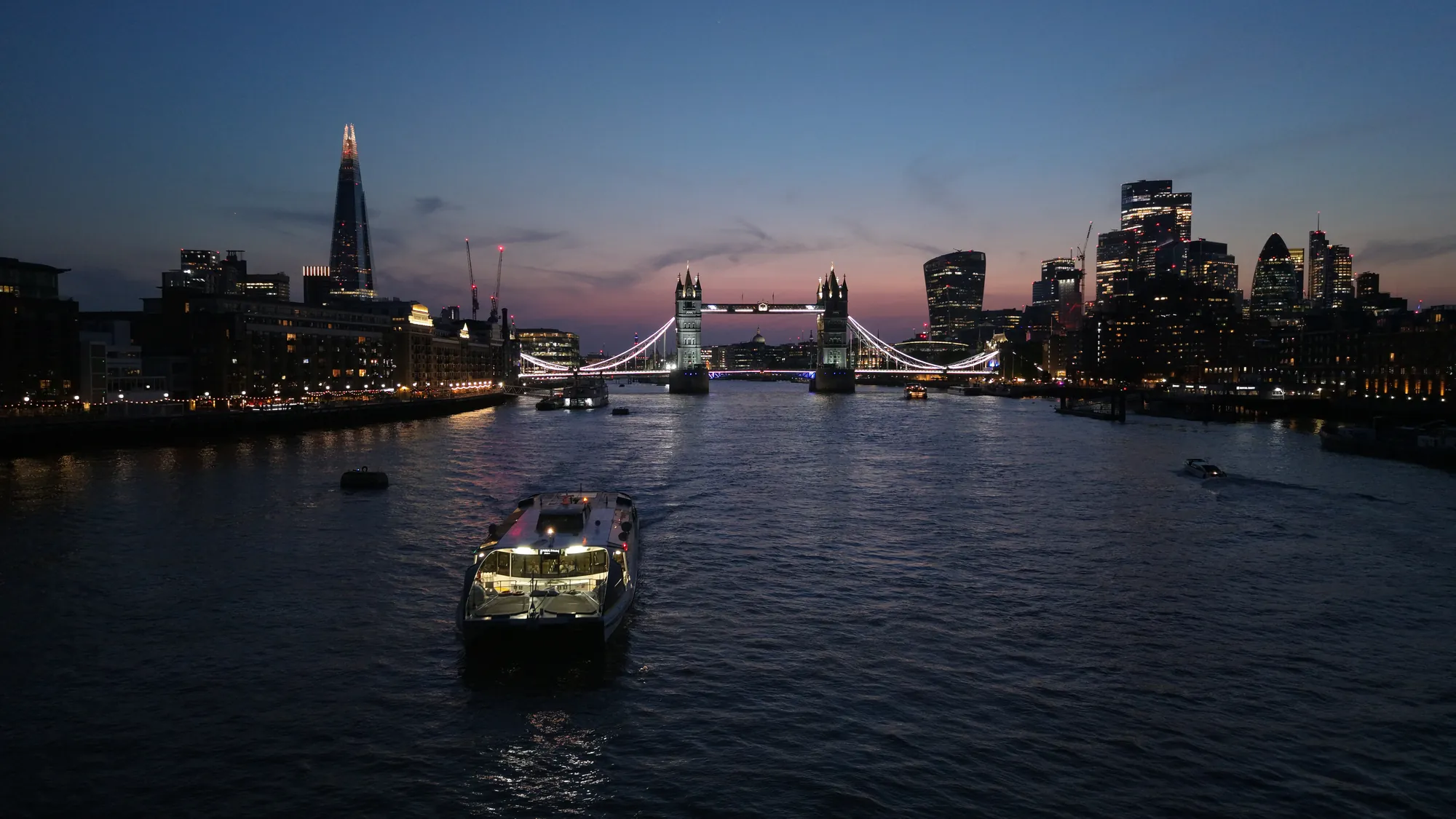
Blue hour, the twenty to forty minutes after sunset, is the technical sweet spot. The sky still holds deep colour, the floodlighting on the bridge and the City lights have come up, and the two are close enough in brightness that a single frame holds both. This is the version that looks expensive.
Full dark is a different beast. The sky goes black and dead, so the composition has to be carried entirely by lit structure and reflections on the water. It works, but it needs the river in the frame doing the heavy lifting.
The airspace, briefly
Flying commercially over central London requires the right operational authorisation, a properly planned flight, and coordination with the bodies that control the airspace. It also requires a launch and recovery site you are actually allowed to use, and separation from uninvolved people, which around Tower Bridge is the tightest constraint of all.
The consequence for a client is simple: this is not a same-day job. The lead time is in the planning, not the flying. Our guide to drone filming in London's restricted airspace covers what is involved, and drone filming on the Thames covers the river side.
The full showcase is on the London aerial showcase project page.
For commissioned work over central London, whether that is property, hospitality, tourism or brand, see aerial photography in London or get in touch.