
Every day, containers of London's rubbish go downriver by barge instead of by lorry. On 4 August 2026 we photographed the Cory tug Rebelle bringing a loaded barge through Tower Bridge, and this is how the operation actually works.
London produces an enormous quantity of rubbish and most people assume it leaves in a lorry. A good deal of it leaves by boat.
Cory run a fleet of tugs and barges that collect containerised waste from riverside transfer stations in central London and tow it downstream to their energy recovery facility at Belvedere. The company's own figure for what that removes from the road network is on the order of a hundred thousand lorry movements a year. Whatever the exact number, the principle is simple: one tug and a string of barges replaces a very long queue of HGVs on the South Circular.
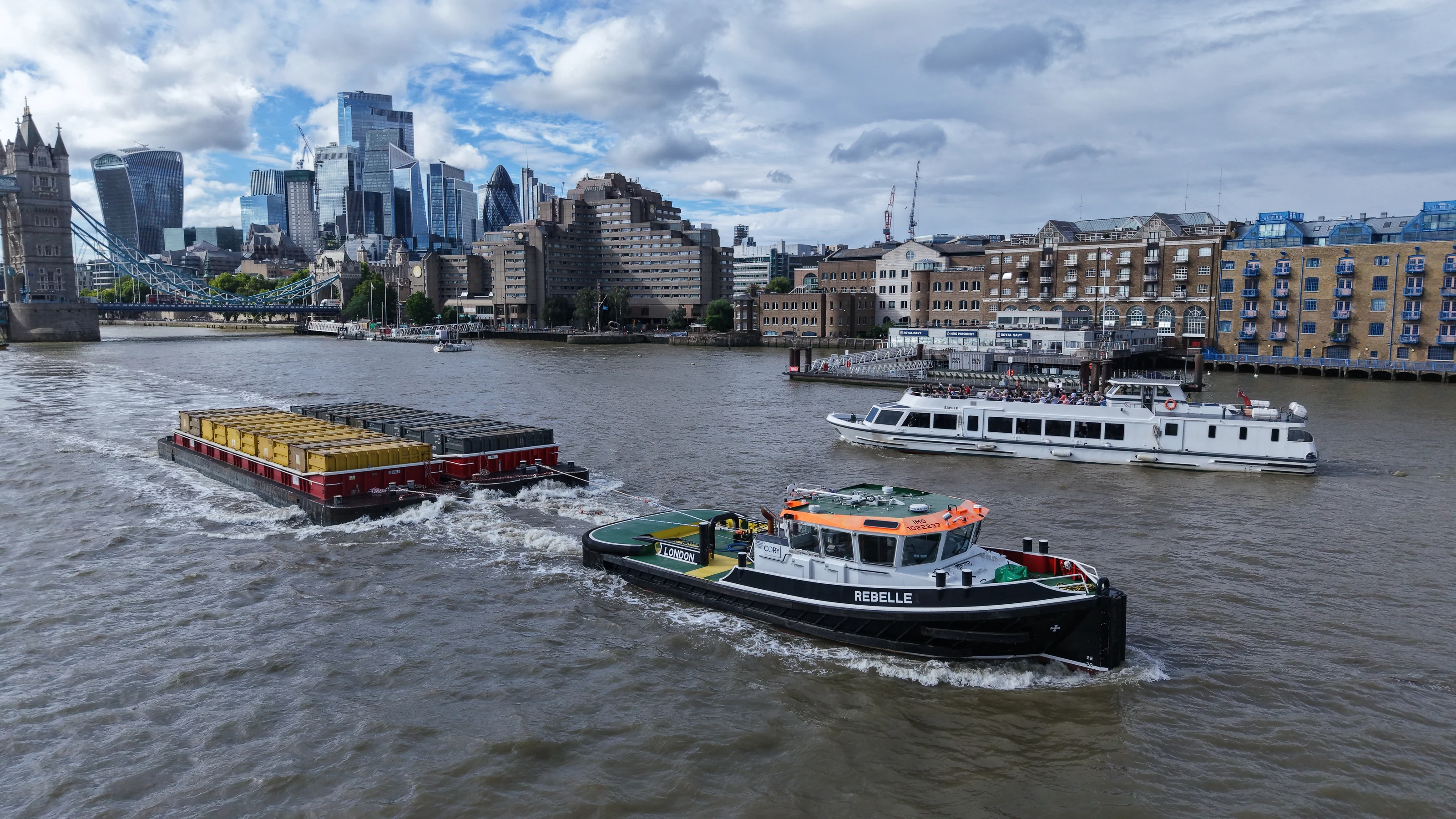
On 4 August 2026 we photographed one of those tows from the air: the tug Rebelle bringing the loaded barge Gemma D through Tower Bridge and down the Pool of London.
The photograph the riverbank cannot give you
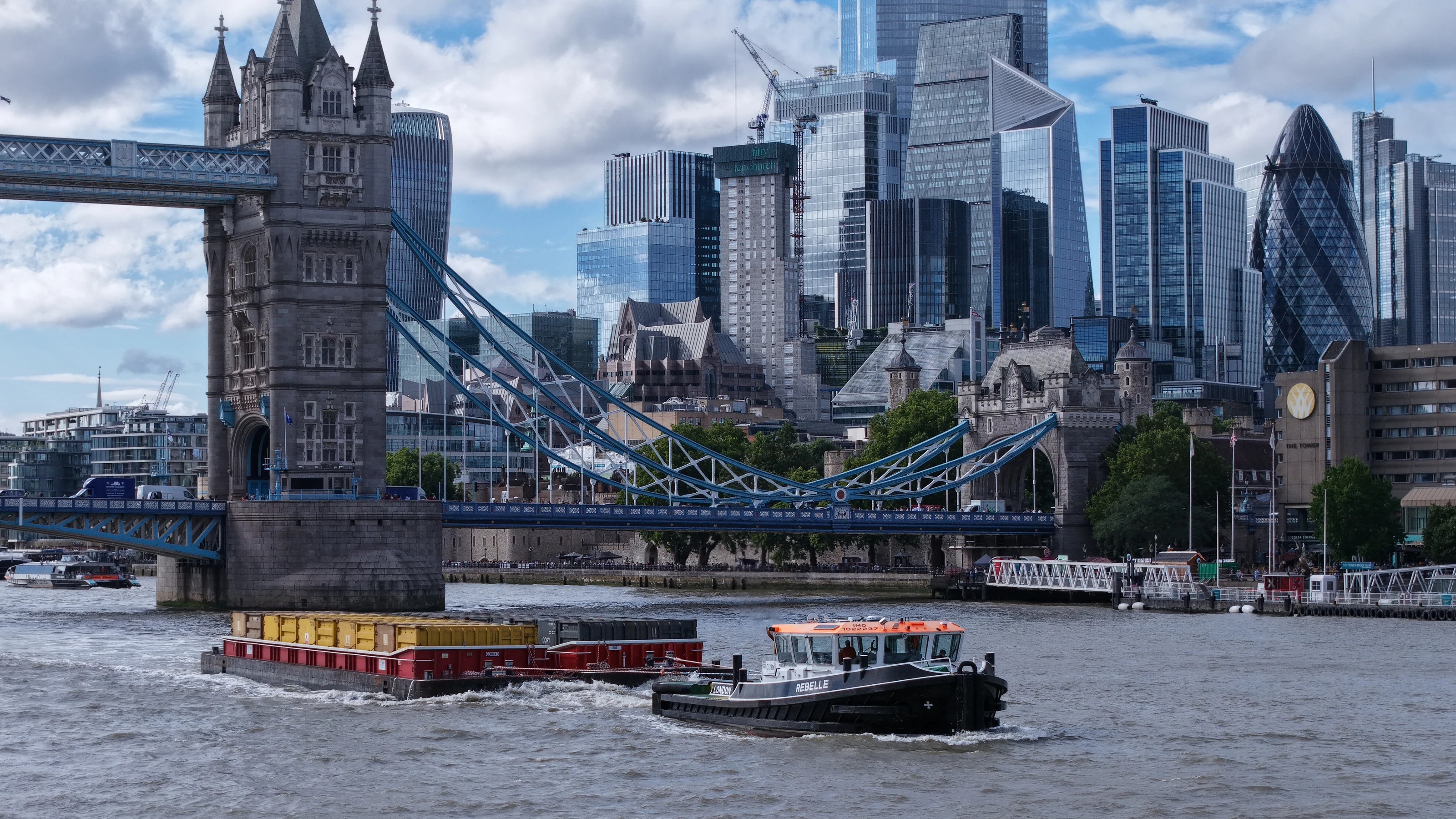
There is one frame worth having on this stretch, and it is the tow passing the bridge with the City behind it. Two Londons in the same picture: the one on the postcards, and the one quietly doing the work underneath it.
You cannot take it from the ground. Stand on the north bank and the bridge structure blocks the skyline. Stand further back and the tug is a speck. From two hundred feet up and a few hundred metres off, the bridge, the tow and the towers all sit in the same plane and the compression does the rest.
That is the entire argument for aerial coverage of river operations, and it applies whether the subject is a waste barge or a superyacht.
What the closer frames are for
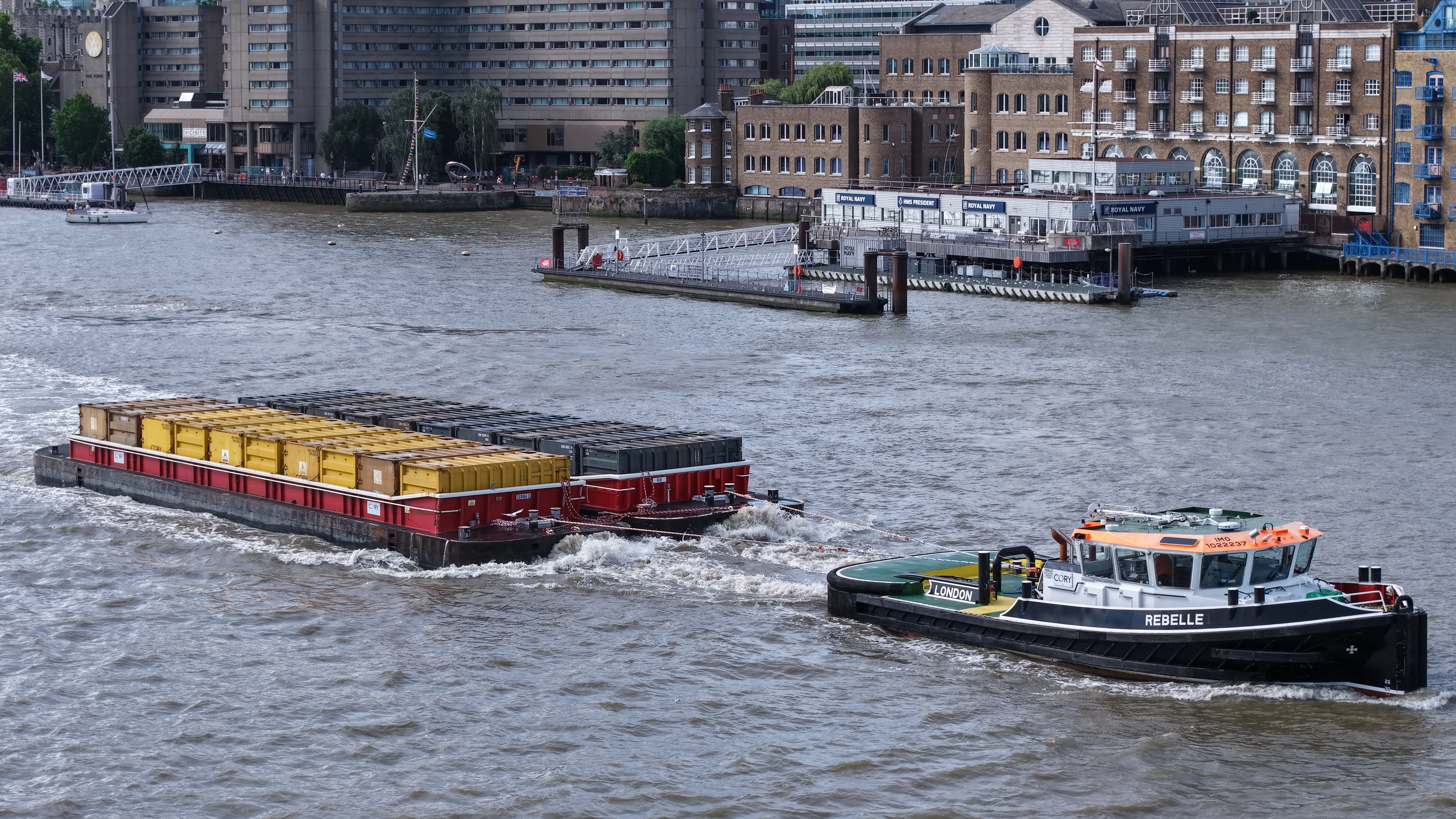
The wide shot is the one that gets shared. The close ones are the ones an operator uses.
Pull in and you can see the tow line under load, the fendering, the way the containers are strapped down and the wash coming off the barge. That is the working detail: it shows competence, it shows scale, and it shows the equipment, which is what matters when the audience is a client, a regulator, a local authority or a recruitment candidate rather than a passer-by.
Most marine operators only have one kind of image, usually the wide one. A useful library needs both, plus a top-down that shows the deck layout, and it needs them of the current fleet rather than the fleet of ten years ago.
Working to the tide, not the diary
A tow like this runs to the tide. Barges are moved with the stream wherever possible because pushing a loaded string against a spring ebb is slow, expensive and hard on the gear. That means the operation happens when the river says so, which might be five in the morning or nine at night, and the schedule shifts by roughly an hour every day as the tides do.
For anyone planning to photograph or film river freight, that is the single most important practical fact. You do not book a tug for Tuesday at ten. You look at the tide table, work out when the movement has to happen, and plan the aerial work around it. Our own background as Thames skippers is mostly why this part is straightforward for us: reading a passage plan is the same skill on the water and above it.
The full gallery is on the Cory tug Rebelle project page, and we have photographed the same fleet before, including the tugs Regain and Resolute, on the Cory Regain project page.
Nobody commissioned these photographs. Cory operate Rebelle; they did not hire us, and this is not a client credit. The images were made independently from the air over the Thames on 4 August 2026, and vessel identification is taken from markings visible in the frames.
More of our river work is on the Thames drone services hub, including Thames towage filming and Thames marine civil filming.