
Night is the hardest condition to fly a camera in and the only one that shows what a floating nightclub actually is. What low-light aerial work on the Thames really requires, from sensor size to the physical problem of a black river with no visual reference.
The Dutch Master is London's largest party boat. Over the years she has carried world-touring DJs, live bands, gambling tables and sit-down dinners, sometimes in the same week. Thames Leisure commissioned us to cover her on the river, and the brief had an obvious problem built into it: the vessel is at her most impressive in the dark.
Why daylight cannot tell this story
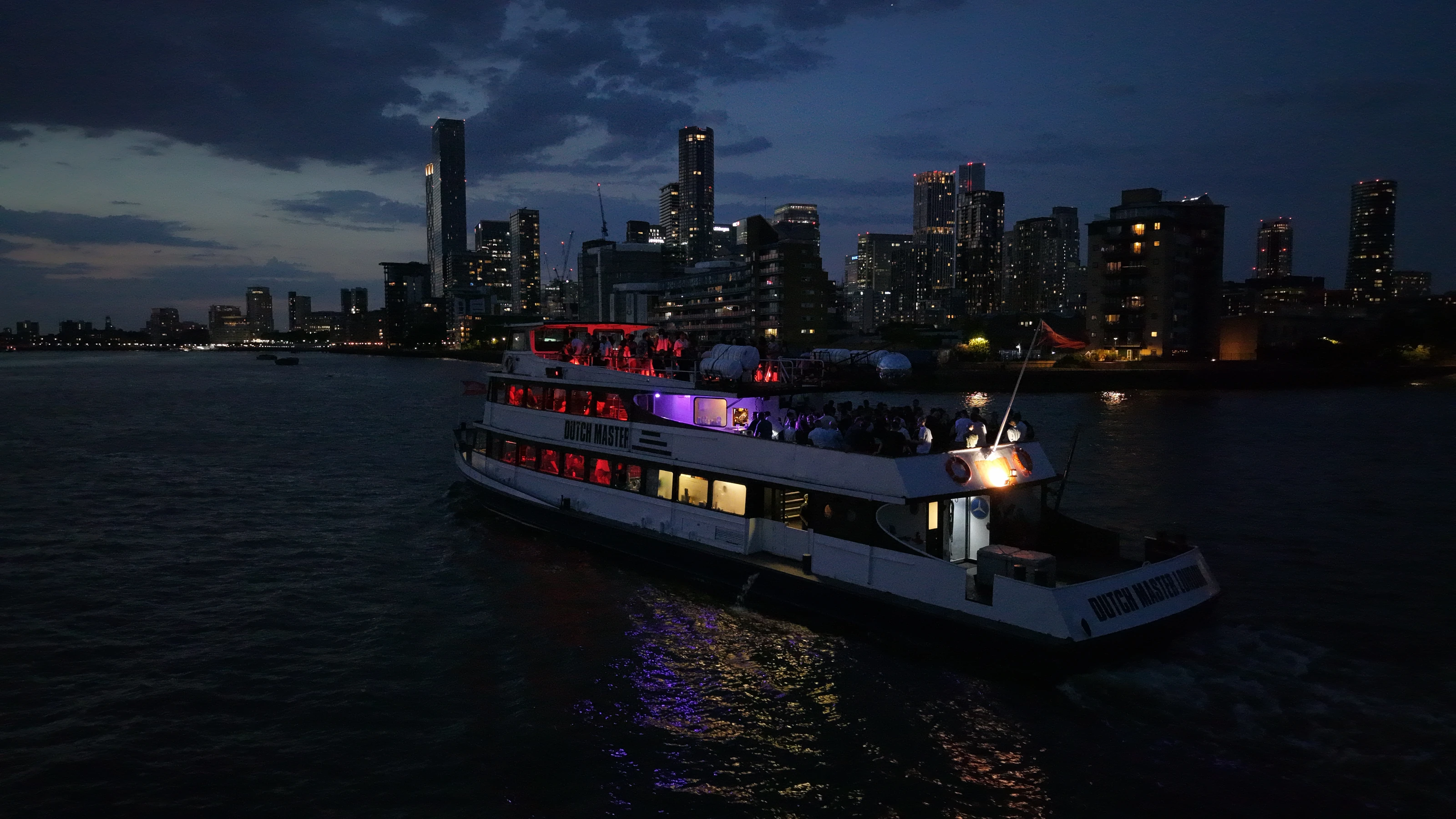
Photograph a party boat at two in the afternoon and you get a white vessel on brown water. Everything that makes it what it is, the light spilling out of the decks, the colour, the reflection dragging across the river, the city glowing behind, only exists after sunset.
So the interesting frames are all in the condition that is hardest to fly in. That is the whole job.
What night flying over water actually involves
Three things get difficult at once.
Visual reference disappears. The tideway at night is a black surface with no texture. Judging height, drift and distance to a moving vessel by eye becomes unreliable, so the flying has to be done on instruments and on a plan made in daylight. We fly the route in the light first wherever we can, so that the positions are known before the sun goes.
The exposure has nowhere to go. A lit vessel against a dark river is an enormous dynamic range. Expose for the skyline and the decks blow out to white; expose for the decks and everything else is black. The workable answer is not a heroic edit, it is the blue hour: the twenty to forty minutes after sunset where the sky still carries colour and the artificial light has come up to meet it. Shoot inside that window and the range collapses to something a sensor can hold. Shoot an hour later and you are fighting.
Noise is a physical limit, not a setting. Low light on a small sensor means either a slow shutter, which smears a moving subject and a moving aircraft, or high ISO, which turns water into mush. Larger sensors and fast glass buy you real stops here, and it is one of the few situations where the equipment genuinely determines whether the shot is possible.
Reflections do the work
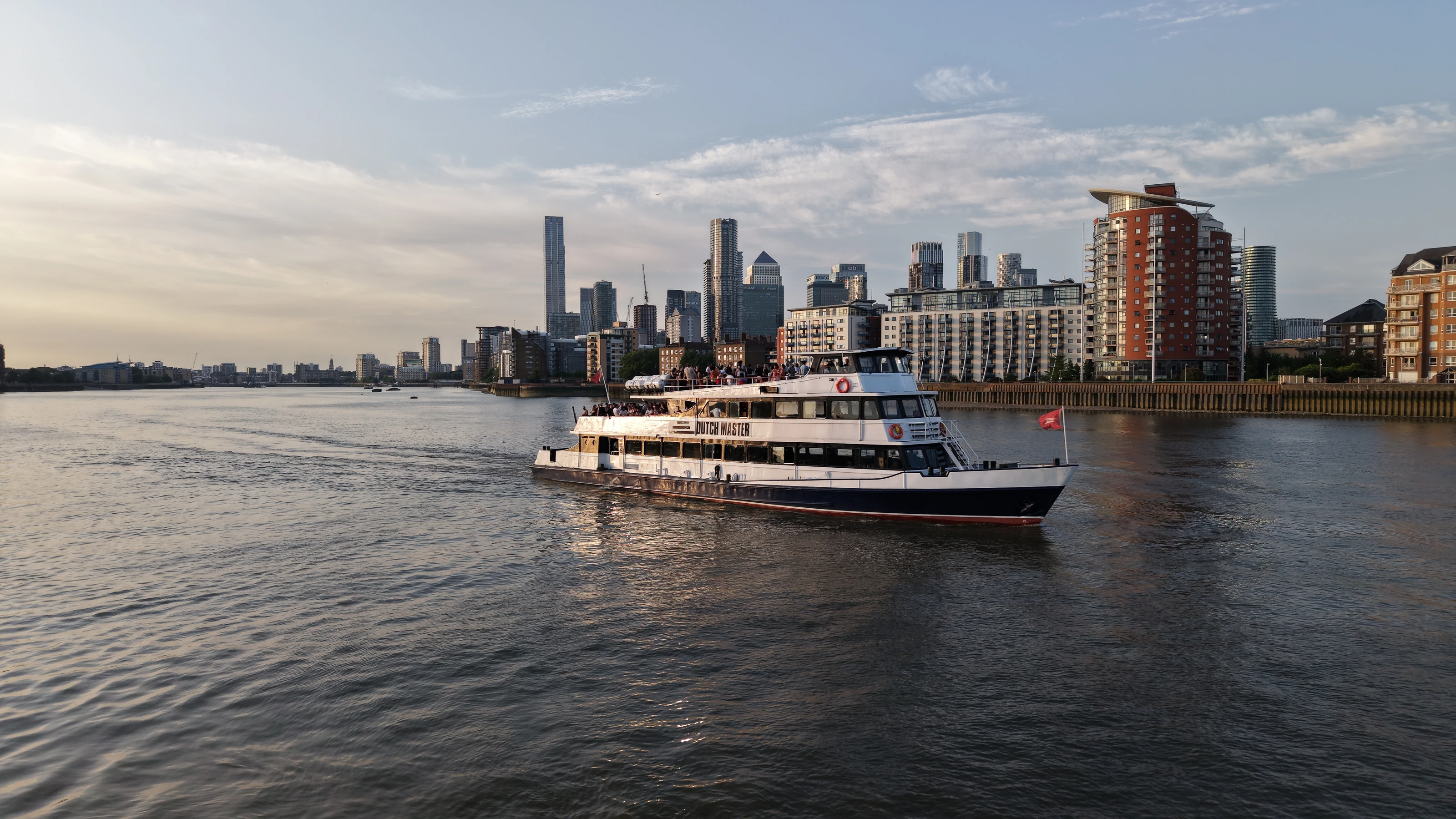
The single most useful feature of a night river is that it doubles everything. Deck lighting, skyline, navigation lights and passing traffic all lay a column of colour across the water, and from above that column is far longer and more graphic than it appears from the bank.
Which means the composition rule at night is the opposite of the daylight one. In daylight you frame to keep the water simple. At night the water is the most interesting part of the frame and you give it room, usually by flying higher and further off the beam than you would in the afternoon.
Permissions do not get easier after dark
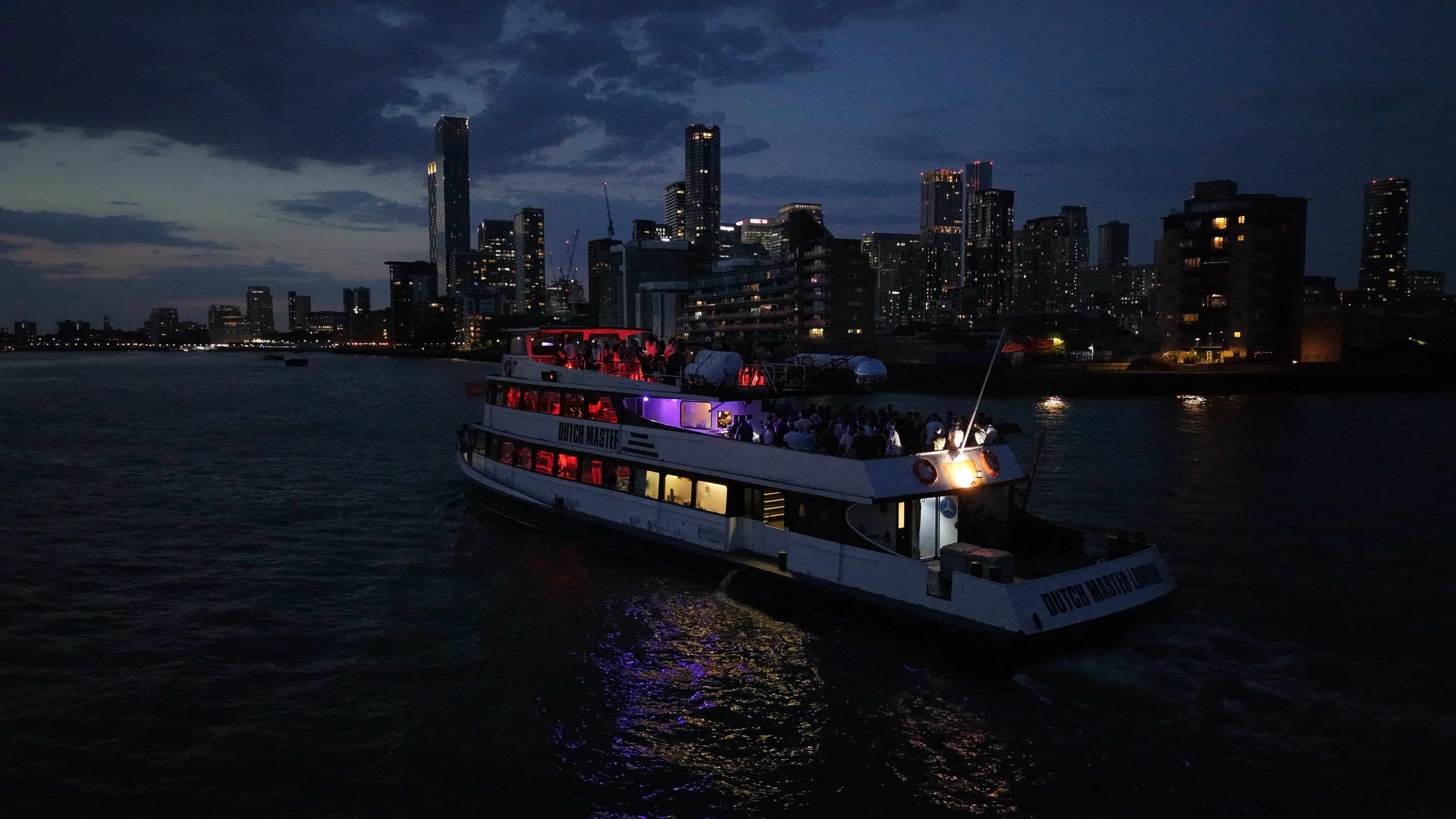
Night operations in central London are not a grey area, they are a planning problem. The airspace restrictions over the capital apply exactly as they do in daylight, the aircraft must be lit, and the operating site has to be assessed for a launch and recovery in the dark with people around, which is a different risk picture from the same site at midday.
None of that is exotic, but it does mean night work has to be planned as night work, not as a daytime job that ran late. Our guide to drone filming in London's restricted airspace covers the airspace side, and drone filming on the Thames covers the river permissions.
The full gallery and the cut sequence are on the Dutch Master project page.
If you operate an event or charter vessel and want it shown at its best, that means shooting it in the hours it actually sells. See boat filming in London or get in touch.