
After a storm, every roofer in London is booked, scaffolders are booked, and your insurer wants evidence of damage you cannot see or reach. An aerial inspection produces dated, high resolution proof in under an hour.
The pattern after a serious storm is always the same. Every roofer within thirty miles is booked for a fortnight, the scaffolders are booked behind them, and your insurer has asked for evidence of the damage. You cannot see the damage, because it is on a roof. So the claim sits.
An aerial inspection breaks that deadlock, because it separates the evidence from the repair.
What insurers actually want
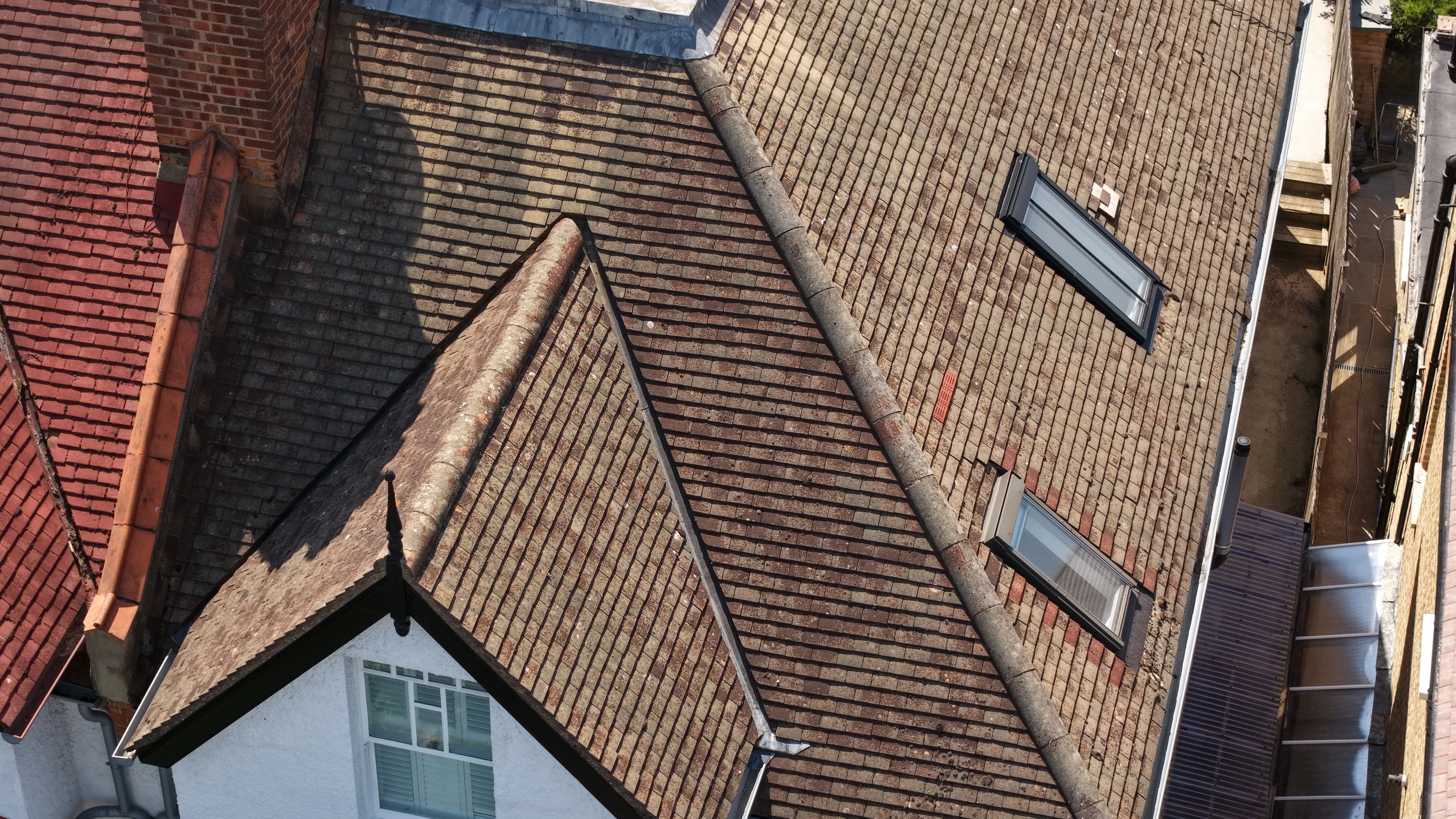
Not a description. Photographs, of the specific damage, with enough context to show it is on your building and enough detail to show what has happened.
In practice a claim goes through faster when the evidence answers four questions without anybody having to ask:
- •What is damaged, shown clearly enough to identify the element: ridge tiles, a valley, flashing, a stack, a section of covering.
- •Where it is on the building, which needs a wider frame as well as the close one, so the detail can be located.
- •How extensive it is, which needs full coverage of every plane rather than a photograph of the one obvious hole.
- •When it was recorded. Digital images carry a capture date, and a survey flown promptly after a storm is far stronger evidence than one flown a month later.
The commonest reason a claim gets pushed back is not that the damage is disputed, it is that the evidence does not distinguish storm damage from pre-existing wear. Full coverage helps here too, because it shows the rest of the roof.
Why it is faster than everything else
Nobody has to work at height, so nothing has to be hired, designed, permitted or scheduled. A domestic roof takes about twenty minutes on site and a commercial roof a morning. There is no scaffold licence, no pavement closure, no waiting for a slot.
That matters most in the days immediately after a storm, when the priority is establishing the extent of the damage so that temporary protection can be arranged sensibly rather than guessed at.
It also gets you comparable quotes
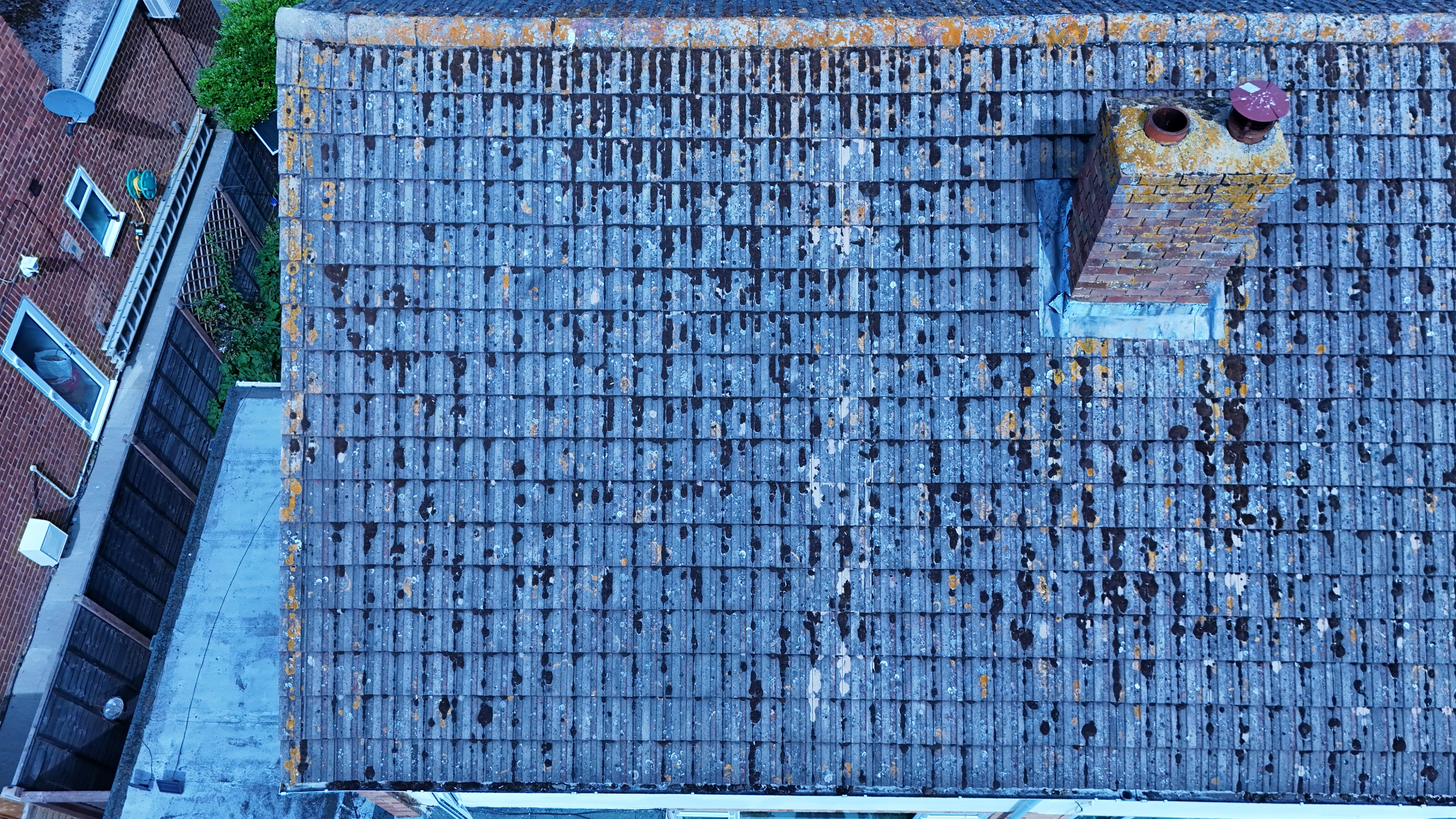
Once you have a full set of images, you can send the same evidence to three roofers and ask each to price the same defined work.
Without images, each of them prices from a different guess, usually made from the pavement, and the quotes are not comparable in any meaningful way. With images, they are. This is worth more than most people expect, particularly on a job where the difference between a repair and a re-covering is tens of thousands of pounds.
The honest limitations
An aerial survey records what can be seen from outside. It does not lift tiles, it does not inspect the underside of a covering, and it does not look in a loft. Where a roof needs an intrusive investigation, it will still need one.
What it does is tell you and your insurer whether that is necessary, and where, which is a decision currently being made blind on a lot of claims.
It also cannot fly in the storm. Aircraft are grounded in high wind and heavy rain, which means an inspection happens after the weather passes, not during it.
What to do first
Photograph anything that has come down at ground level, because that is time-stamped evidence too. Then get the roof recorded before any temporary repair changes it.
If you are a managing agent or a freeholder with several buildings, the efficient version is one visit covering all of them, because the mobilisation is most of the cost.
Worked examples: a residential roof condition survey and an industrial roof condition survey.
For an inspection, get in touch with the postcode, roughly what the building is, and what you can see from the ground. See also drone inspection and asset condition surveys.